Hershey (HSY) — supplier relationships that move the P&L
Thesis: The Hershey Company monetizes its global confectionery franchise by manufacturing and selling branded chocolate, snacks and baked goods through a mix of direct manufacturing, co-packing and retail/customer distribution, while managing raw‑material cost volatility through forward purchasing, hedges and supplier finance programs. Hershey operates as a high-margin consumer staples manufacturer that leverages scale in procurement and a diversified financing posture to protect margins, and investors should evaluate supplier relationships for concentration, contract tenor and the criticality of cocoa and other agricultural inputs. For a deeper supplier-risk view, review the company map at NullExposure homepage.
Quick read: how Hershey makes money and why suppliers matter
Hershey generates revenue by selling finished consumer-packaged goods under enduring brands and captures margin through manufacturing scale, pricing power and productivity programs. The company locks in costs through a combination of short-term hedges (3–24 months) and longer-term supply arrangements, and runs active supplier finance and working-capital programs to smooth payments and protect the supply chain. These operational choices convert commodity exposure into financing and procurement signals investors can read as part of earnings-cycle risk.
- Key commercial driver: cocoa and dairy inputs are mission‑critical to product continuity and margin stability.
- Procurement posture: a mix of short-term hedging for volatility combined with multi-year supplier commitments and lease/credit structures to support manufacturing capacity.
Check the broader supplier network and analytics at NullExposure homepage.
Relationship headlines investors should know
This section covers every relationship surfaced in the supplier-scope results.
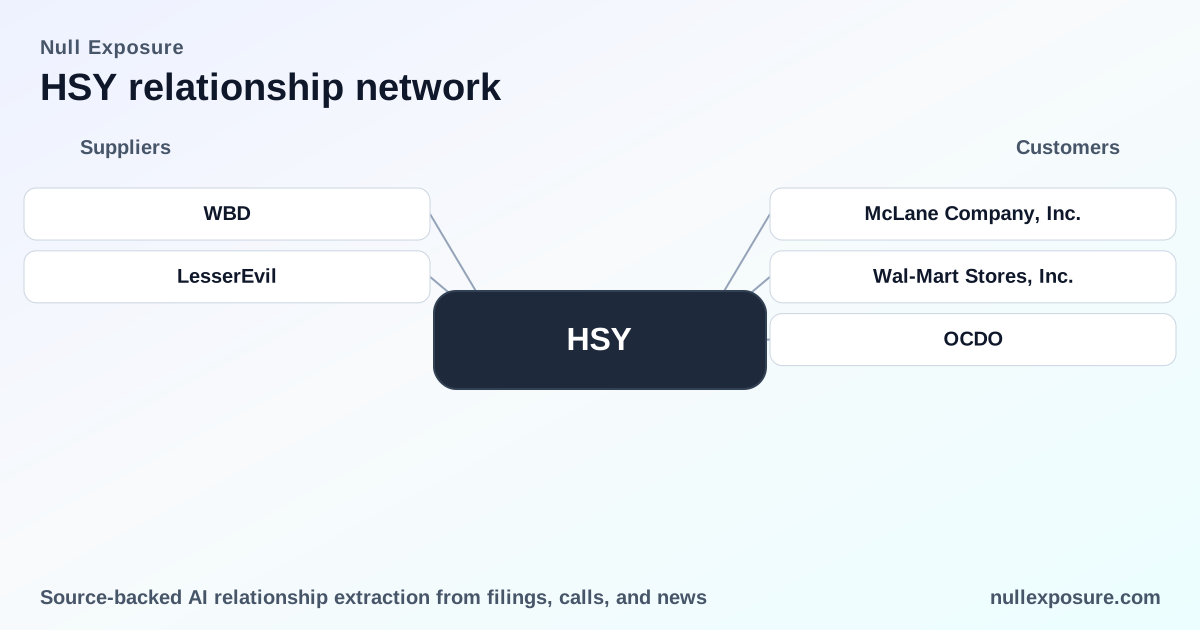
Warner Bros. Discovery Global Consumer Products (WBD)
Hershey announced a limited‑edition product collaboration to produce Harry Potter‑themed Hershey’s Milk Chocolate bars and Hershey’s Kisses for a seasonal launch, signaling co‑branding and promotional partnerships as a revenue and marketing lever. According to Snack & Bakery (March 10, 2026), Hershey and Warner Bros. Discovery Global Consumer Products rolled out the Wizarding World tie‑in for the fall season. (Source: Snack & Bakery, 2026-03-10 — https://www.snackandbakery.com/articles/109560-hersheys-warner-bros-announce-limited-edition-harry-potter-candies)
LesserEvil
Hershey retained advisory and acquisition activity relating to LesserEvil, an organic snacks maker, reflecting its continued inorganic expansion in snacks beyond core chocolate, and use of advisors in M&A execution. An earnings‑call transcript recounted that Hershey engaged advisors in the acquisition process for LesserEvil (InsiderMonkey, Q4 2025 earnings call transcript, referenced March 10, 2026). (Source: InsiderMonkey earnings call transcript, FY2026 mention — https://www.insidermonkey.com/blog/cra-international-inc-nasdaqcrai-q4-2025-earnings-call-transcript-1705327/)
What the relationship mix tells investors about operating constraints
Hershey’s supplier relationships and contract evidence reveal a layered operating model. Presenting these as company‑level signals:
- Contracting posture — both long and short tenors. The company runs long‑term credit facilities, lease liabilities and multi‑year purchase obligations alongside active short‑term hedges and commercial paper for seasonal working capital. This mix supports manufacturing scale while preserving flexibility to respond to commodity cycles.
- Concentration vs. diversity. Procurement is geographically diversified but North America dominates manufacturing and sourcing, with 74% of capacity in the U.S.; cocoa and several commodities are sourced globally, creating twin exposures to U.S. policy and global supply shocks.
- Critical input classification. Cocoa, sugar, dairy and certain nuts are critical to operations; Hershey explicitly treats cocoa products as the most significant raw materials and maintains commodity hedges and forward purchasing to protect supply and margin.
- Maturity and vendor-stage dynamics. Supplier relationships are generally active and operational, evidenced by open derivative contracts, supplier finance programs and ongoing acquisitions (e.g., Weaver assets, Sour Strips), indicating mature procurement processes and recurring counterparty engagement.
- Financial posture and spend scale. Spend ranges run from modest program costs up to >$100 million commitments and purchase obligations, reflecting material financial exposure to select suppliers and financing counterparties.
- Non‑supplier constraints that affect sourcing. Regulatory compliance (EUDR and similar rules), technology and IT vendor certification, and pension/benefits arrangements are company‑level constraints that influence supplier selection and audit intensity.
One explicit framework contract note references an Amended and Restated Master Supply Agreement with Barry Callebaut, AG (dated Aug 31, 2021), which has been incorporated into Hershey’s filings — this demonstrates Hershey’s use of master supply agreements with major commodity suppliers to lock in critical cocoa processing supplies.
Risk profile investors should price in
- Commodity price pass‑through is imperfect. Hershey relies on hedging and forward purchases but acknowledges that sudden raw‑material cost increases or sustained inflation can outpace pricing elasticity and compress margins.
- Operational concentration risk in North America. While global in sourcing, a large share of manufacturing in the U.S. concentrates operational disruption risk domestically (weather, labor, regulatory).
- Regulatory and reputational risk. New rules affecting deforestation and supply‑chain traceability increase compliance cost and potential for market access constraints in regions like the EU.
- Counterparty and liquidity exposure. Supplier finance facilities and commercial paper usage create counterparty links to banks and financial institutions; liquidity stress would raise supplier risk and potential supply disruption.
Key takeaway: investors should treat Hershey’s procurement architecture as deliberately hybrid — long‑dated financial arrangements and manufacturing commitments underpin production capacity while short‑dated hedges and supplier finance tools manage price and working capital volatility.
For a granular supplier-risk dashboard and lineage, visit NullExposure homepage to explore mapped relationships and filings.
What investors and operators should do next
- For investors: prioritize monitoring cocoa and dairy cost curves, counterparty concentration metrics, and changes in purchase obligation disclosures at each quarter close. Track promotional partnerships (like the Warner Bros. tie‑in) for short‑term revenue upside and incremental marketing spend.
- For operators and sourcing teams: codify supplier criticality by input (cocoa, sugar, dairy), expand multi‑region backup sourcing, and stress‑test supplier finance exposures under liquidity shocks.
Conclusion: Hershey’s supplier relationships combine scale, financial sophistication and tactical partnerships to protect margin and drive growth, but the company’s profitability hinges on managing critical agricultural inputs and regulatory compliance. Act on supplier transparency by integrating contract-tenor and materiality signals into valuation and operational scenarios.
Explore the supplier map and supporting primary-source links at NullExposure homepage to turn this analysis into actionable diligence.