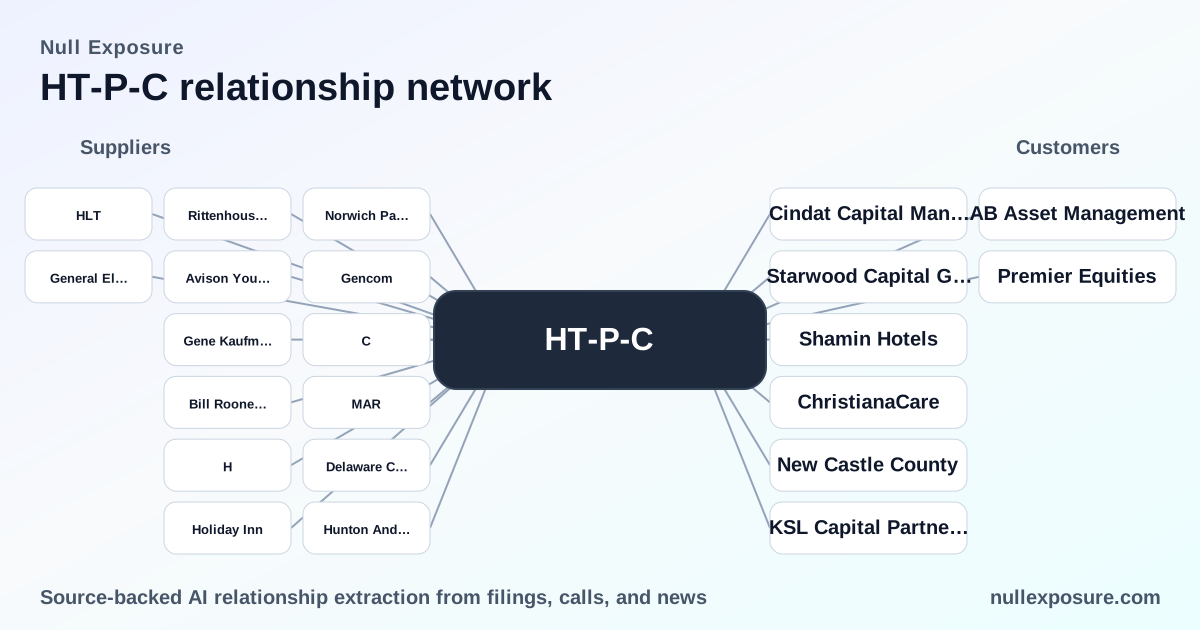
HT-P-C (Hersha Hospitality) — supplier relationships that define asset strategy and execution
Hersha Hospitality Trust operates as a hotel owner-operator and capital recycler, monetizing through hotel operations, franchise/management conversions, selective asset sales, and property-level refinancing. The company extracts value by repositioning coastal and gateway assets with brand partners, then capturing upside through operations and transactional activity—management fees, improved RevPAR, and capital-event proceeds form the core of the economic engine.
If you are evaluating counterparty risk or partnership value for HT-P-C, this profile synthesizes every supplier and partner mention in the public record and translates those links into actionable signals for investors and operators. For a consolidated view of counterparties and supplier exposure, visit https://nullexposure.com/.
Why these relationships matter to investors
Hersha’s public footprints show a repeatable playbook: buy, renovate/rebrand with major brands, finance through institutional lenders, and selectively sell. The supplier roster in the record includes brand franchisors, architects, brokers, lenders, legal advisors, and local developers—each representing a different lever in asset performance and liquidity.
- Contracting posture: Hersha contracts across large hospitality brands (Marriott, Hyatt) and uses specialized vendors (architects, designers, capital markets brokers, law firms) to execute renovations and repositionings.
- Concentration and criticality: Brand and lender relationships are high‑criticality — successful rebranding and refinancing materially affect cashflow and exit options.
- Maturity and longevity: Several relationships date back years (Hyatt, Marriott brands, recurring broker engagements), signalling established operational processes rather than one-off engagements.
Explore how counterparties influence valuation and liquidity at https://nullexposure.com/.
The counterparty roll call — plain-English summaries and sources
Below are every relationship item captured in the public results, each summarized in one or two sentences with source attribution.
-
Norwich Partners — Norwich Partners was the seller of the Envoy Hotel in Boston, a transaction that Hersha executed as part of its asset rotation strategy; this sale was reported in FY2016. Source: Boutique Hotel News, FY2016. https://boutiquehotelnews.com/news/industry/hersha-buys-bostons-envoy-hotel-for-112-5-million/
-
Gencom — Gencom sold the Ritz‑Carlton Coconut Grove to Hersha for approximately $36 million, reflecting Hersha’s acquisition activity in Florida and opportunistic pricing on branded assets in FY2017. Source: The Real Deal, FY2017. https://therealdeal.com/miami/2017/02/03/gencom-sells-ritz-carlton-coconut-grove-for-25m-to-hotel-reit/
-
CitiBank — Citi provided a $232 million refinance for Hersha’s Cadillac Hotel & Beach Club, demonstrating institutional lender appetite for stabilized, branded beachfront assets in FY2022. Source: Commercial Observer, FY2022. https://commercialobserver.com/2022/08/hersha-hospitality-management-cadillac-hotel-beach-club-citibank/
-
Marriott’s Autograph Collection — Hersha reopened the Cadillac after a $47 million renovation under Marriott’s Autograph Collection, showing a deliberate use of boutique-branded flagships to drive premium rates and demand in FY2018–2019. Source: Commercial Observer / Miami Herald cited, FY2018. https://commercialobserver.com/2022/08/hersha-hospitality-management-cadillac-hotel-beach-club-citibank/ and https://www.globenewswire.com/news-release/2018/02/20/1361640/0/en/CADILLAC-HOTEL-BEACH-CLUB-IN-MIAMI-BEACH-TO-OPEN-SPRING-2018.html
-
Delaware Center for Homeless Veterans — Reporting shows Hersha’s exit from the Hope Center followed operational changes that included the ouster of a major contractor, Delaware Center for Homeless Veterans, highlighting local contractor turnover and operational risk at community-oriented properties in FY2024. Source: Delaware Online, FY2024. https://www.delawareonline.com/story/news/local/2024/04/26/new-castle-county-to-take-over-management-of-hope-center/73452025007/
-
Hunton Andrews Kurth LLP — Hunton Andrews Kurth advised Hersha in its $1.4 billion acquisition by KSL Capital Partners, indicating engagement of top-tier legal counsel for material M&A activity in FY2023. Source: Hunton press release, FY2023. https://www.hunton.com/news/hunton-advises-hersha-hospitality-trust-in-14-billion-acquisition-by-ksl-capital-partners
-
Rittenhouse Development Co. — Rittenhouse Development Co. (backed in part by General Electric Investment Corp.) was the owner of the Rittenhouse Hotel that Hersha targeted in an earlier acquisition effort, reflecting Hersha’s interest in boutique luxury assets in FY2012. Source: The Philadelphia Inquirer, FY2012. https://www.inquirer.com/philly/business/20120120_Hersha_chief_says_firm_still_hopes_to_buy_Rittenhouse_Hotel.html
-
Avison Young — Avison Young acted as the broker in the sale of a Marriott-branded Residence Inn in Coconut Grove that Hersha sold for $31 million, illustrating the role of capital markets brokers in Hersha’s asset dispositions in FY2021. Source: The Real Deal / ProfileMiamiRE, FY2021. https://therealdeal.com/miami/2021/03/12/residence-inn-coconut-grove-sells-for-31m-to-be-converted-to-apartments/ and https://profilemiamire.com/miamirealestate/2021/3/16/ab-asset-management-acquires-residence-inn-coconut-grove-from-hersha-hospitality-trust
-
Gene Kaufman Architect — Gene Kaufman Architect designed a conversion/expansion for a FiDi Hampton Inn that Hersha invested about $4.5 million to create, underscoring the use of design specialists in urban conversion projects in FY2018. Source: The Real Deal, FY2018. https://therealdeal.com/new-york/2018/03/09/hersha-hospitality-sells-fidi-hampton-inn-for-32m/
-
Bill Rooney Studio — Bill Rooney Studio led interior design for the Cadillac Hotel & Beach Club renovation, demonstrating Hersha’s investment in premium design firms to reposition marquee properties in FY2018. Source: GlobeNewswire, FY2018. https://www.globenewswire.com/news-release/2018/02/20/1361640/0/en/CADILLAC-HOTEL-BEACH-CLUB-IN-MIAMI-BEACH-TO-OPEN-SPRING-2018.html
-
Marriott International (Autograph Collection Hotels) — Marriott’s Autograph Collection was the brand partner for Cadillac’s relaunch, showing Hersha’s strategy to partner with a major global franchisor to access reservation systems and brand premiums in FY2018. Source: GlobeNewswire, FY2018. https://www.globenewswire.com/news-release/2018/02/20/1361640/0/en/CADILLAC-HOTEL-BEACH-CLUB-IN-MIAMI-BEACH-TO-OPEN-SPRING-2018.html
-
Hyatt Hotels Corporation — Hyatt publicly values its longstanding relationship with Hersha, reflecting multi‑brand operating relationships that support franchise revenues and corporate distribution in FY2013. Source: HospitalityNet, FY2013. https://www.hospitalitynet.org/news/4060327.html
-
Holiday Inn — Hersha operates multiple Holiday Inn properties on the East Coast, indicating legacy midscale brand exposure and steady franchise fee streams as part of its portfolio mix in FY2012. Source: The Philadelphia Inquirer, FY2012. https://www.inquirer.com/philly/business/20120120_Hersha_chief_says_firm_still_hopes_to_buy_Rittenhouse_Hotel.html
-
Hampton Inn — Hampton Inn properties (a Hilton brand) appear in Hersha’s portfolio listings, showing diversification across major franchisors and market segments as early as FY2012. Source: The Philadelphia Inquirer, FY2012. https://www.inquirer.com/philly/business/20120120_Hersha_chief_says_firm_still_hopes_to_buy_Rittenhouse_Hotel.html
-
Courtyard by Marriott — Courtyard properties are likewise part of Hersha’s operating base, reinforcing the company’s exposure to business-travel-oriented midscale rooms with brand distribution benefits since FY2012. Source: The Philadelphia Inquirer, FY2012. https://www.inquirer.com/philly/business/20120120_Hersha_chief_says_firm_still_hopes_to_buy_Rittenhouse_Hotel.html
-
General Electric Investment Corp. — Listed as a partner in Rittenhouse Development Co., GE Investment is connected through ownership structures that Hersha engaged in targeted luxury acquisitions in FY2012. Source: The Philadelphia Inquirer, FY2012. https://www.inquirer.com/philly/business/20120120_Hersha_chief_says_firm_still_hopes_to_buy_Rittenhouse_Hotel.html
Risk and opportunity read
Hersha’s supplier footprint generates clear investment signals. Opportunity: brand conversions (Autograph, Hyatt) and architect/designer investments (Bill Rooney, Gene Kaufman) drive premium pricing and RevPAR upside. Risk: lender and local-contractor dynamics (Citi refinance; Delaware Center for Homeless Veterans management issues) create event-driven exposure and operational discontinuities that can compress yield. Legal and advisory engagement in the KSL acquisition (Hunton Andrews Kurth) signals significant corporate lifecycle activity that materially changes ownership and governance.
Bold takeaways:
- Brand partnerships are high-value levers. Rebranding and franchise distribution are primary return drivers.
- Lenders shape liquidity windows. Large refinances determine capacity for CAPEX and dispositions.
- Local operational partners matter at the property level. Contractor turnover or local disputes can be earnings‑dilutive.
For a deeper supplier-risk scorecard and tailored counterparty mapping, go to https://nullexposure.com/.
Investment actions and next steps
Given the counterparty map and observable behaviors, investors should:
- Monitor refinance activity and lender commitments as early indicators of strategic repositioning.
- Track brand affiliation changes and major renovation disclosures to anticipate revenue uplifts.
- Review legal and M&A advisories for signs of ownership transitions that alter capital structure.
If you want a consolidated, investor-grade view of Hersha’s partners and the implications for cashflow and exit risk, visit https://nullexposure.com/ for more intelligence and analyst tools.