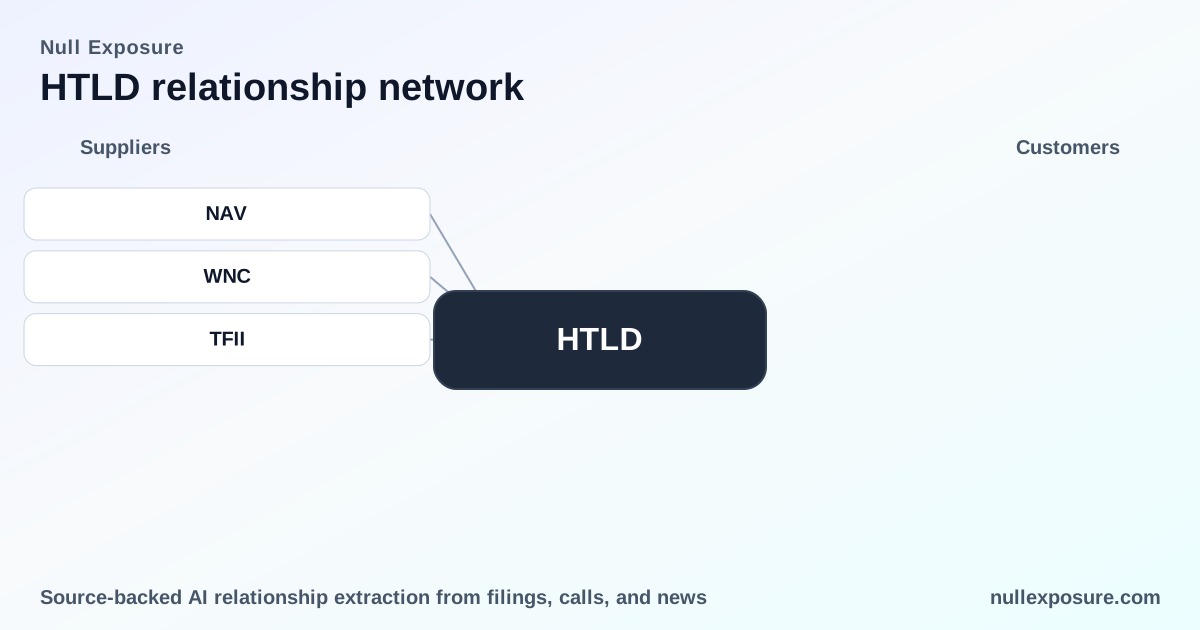
Heartland Express (HTLD): Supplier relationships, fleet investments, and where the real spend risk lives
Heartland Express is an asset‑based short- and medium‑haul truckload carrier that monetizes by owning and operating tractors and trailers, extracting freight rates and fuel surcharges, and growing scale through acquisitions. Profitability depends on tight control of fuel, equipment acquisition and resale economics, and integration of larger purchases such as the CFI business — all of which create concentrated supplier exposure to equipment OEMs, fuel vendors, insurance markets and third‑party carriers. Explore deeper sourcing signals and supplier relationships at https://nullexposure.com/.
How Heartland buys: a mixture of long-term finance and opportunistic purchases
Heartland runs a hybrid purchasing posture. The company maintains long-term credit and lease obligations to finance fleet expansion and acquisitions while preserving the operational flexibility to buy and sell tractors and trailers opportunistically when market conditions favor it.
- Heartland’s public filings and credit disclosures show multi‑year term facilities, a five‑year revolving credit line, and scheduled amortization, supporting sustained capital deployment into revenue equipment and acquisitions.
- At the same time, management explicitly states a history of paying cash for equipment purchases to capture market opportunities, signaling spot buying flexibility alongside structured financing.
- Fuel and equipment are dominant cost centers — fuel alone represented roughly $177 million of operating expense in 2024 — making supplier negotiations and surcharge mechanics direct drivers of margins.
These attributes create a contracting posture that is capital‑intensive and concentrated (large, recurring purchases for tractors/trailers and fuel) but operationally flexible enough to adjust fleet size if earnings or capital availability shift. For additional context on Heartland’s supplier and spend profile visit https://nullexposure.com/.
Relationship summaries from recent reporting
Below are the supplier and OEM mentions surfaced in recent industry coverage; each entry is a plain‑English summary with the original reporting cited.
Internationals — Truckmaker/tractor supplier (result 1)
A TruckingInfo article (March 10, 2026) referenced Heartland’s use of International tractors, noting the company historically maintained a very young tractor fleet (example cited: average age 1.5 years in a historical disclosure), underscoring Heartland’s strategy of buying new International models to improve operating performance. Source: TruckingInfo (2026-03-10), https://www.truckinginfo.com/news/heartland-express-net-income-up-143-for-quarter
Wabash — Trailer supplier (result 2)
The same TruckingInfo piece reported Heartland began upgrading its trailer fleet with Wabash trailers, specifically calling out purchases of 2008 Wabash units, indicating ongoing vendor relationships for trailer procurement. Source: TruckingInfo (2026-03-10), https://www.truckinginfo.com/news/heartland-express-net-income-up-143-for-quarter
TFI International — M&A counterparty (result 3)
TruckingInfo (March 10, 2026) described Heartland’s earlier acquisition of Contract Freighters (CFI) from TFI International in 2022 — Heartland purchased non‑dedicated truckload operations as its largest acquisition to date, materially expanding scale in irregular‑route truckload. Source: TruckingInfo (2026-03-10), https://www.truckinginfo.com/news/cfi-to-be-integrated-into-heartland-express
Navistar International (International) — Tractor OEM (result 4)
A separate TruckingInfo report (March 10, 2026) reiterated the company’s fleet composition using Navistar/International tractors, noting historical fleet age metrics (example: 2.1 years at a referenced period) and continued reliance on International ProStar models for new tractor deliveries. Source: TruckingInfo (2026-03-10), https://www.truckinginfo.com/news/heartland-express-operating-revenues-up-41-for-quarter
Wabash National (Wabash) — Trailer OEM (result 5)
That same operating‑revenue article also detailed trailer fleet composition with Wabash National trailers, reporting an average trailer age and that the fleet consisted of model‑year 2002 or newer Wabash trailers — a vendor relationship that covers significant trailer procurement and replacement cycles. Source: TruckingInfo (2026-03-10), https://www.truckinginfo.com/news/heartland-express-operating-revenues-up-41-for-quarter
International (repeat reference) — Scale of new tractor purchases (result 6)
A TruckingInfo summary of quarterly results (March 10, 2026) reported Heartland delivered 449 new tractors in a quarter and totaled 1,600 new International ProStars for the year, demonstrating large, recurring OEM purchase volumes that directly affect capex and maintenance costs. Source: TruckingInfo (2026-03-10), https://www.truckinginfo.com/news/heartlands-results-reflect-continued-softness-in-freight-demand
See more sourcing signals and network maps at https://nullexposure.com/ to understand how these vendor relationships map to spend and operational risk.
What the constraints tell investors about Heartland’s operating model
Heartland’s constraint signals in filings create a clear picture of supplier risk and business model characteristics:
- Contracting posture: Predominantly long‑term financial commitments (term loans, a five‑year revolving facility, multi‑year insurance programs, and lease schedules) that underpin equipment purchases and acquisitions, while management retains tactical spot buying for opportunistic fleet adjustments.
- Concentration and criticality: Equipment manufacturers (tractor and trailer OEMs) and fuel suppliers are material to the company’s cost base; fuel accounted for double‑digit percentages of operating expense in 2024 and purchase commitments for revenue equipment were large (>$60m net at year‑end). These vendors are critical to operations and sensitive to regulatory shifts.
- Maturity and lifecycle: Many supplier relationships are active and renewing — examples include renewed multi‑year insurance programs and ongoing credit facility amortization — suggesting mature commercial arrangements rather than ad hoc sourcing.
- Geographic footprint: Primary operations and procurement are North America‑centric, with targeted use of third‑party providers in Mexico for cross‑border moves; global trade disruptions and emissions regulations (e.g., CARB/ACT) are company‑level risk drivers that will affect OEM pricing and fleet composition.
- Service mix: Heartland sources both hardware (tractors/trailers) and services (driver training, third‑party carriers, insurance, IT and actuarial services), creating a blended supplier portfolio that requires manufacturing capacity and service provider reliability.
Risk implications and where to focus due diligence
- OEM dependency and regulatory risk: Large, recurring purchases of International tractors and Wabash trailers mean Heartland’s cost structure and residual values are tightly coupled to OEM pricing and emissions regulations (CARB/ACT).
- Fuel volatility: Fuel is a top‑three operating expense; the company’s ability to pass through cost through surcharges is a direct margin lever.
- Integration and insurance: The CFI acquisition increased revenue concentration and elevated internal‑control and insurance complexity; insurance renewals with layered corridors change retained exposure and underwriting terms.
- Operational resiliency: Reliance on third‑party carriers for Mexico and continued use of independent contractors for certain loads make service continuity and compliance critical.
To assess supplier risk further, investors should examine contract tenors with OEMs, hedging or fuel‑surcharge mechanics, and insurance corridor arrangements.
Investment takeaway and next steps
Heartland’s model is capital‑intensive with concentrated supplier exposure to equipment OEMs and fuel providers, supported by structured financing that enables growth but increases fixed obligations. For investors and operators evaluating HTLD supplier relationships, prioritize OEM pricing trends, the used equipment resale market, insurance corridors, and integration progress on the CFI purchase.
Learn more about supplier exposure and procurement signals at https://nullexposure.com/. If you want a supplier risk brief tailored to Heartland’s vendor universe, start at https://nullexposure.com/ and request the HTLD supplier map.