HTO (H2O America): Supplier relationships, contracting posture, and investor implications
H2O America (HTO) is a regulated U.S. water utility operator that monetizes an essential-service franchise through regulated customer rates, wholesale water purchases and long-term supply contracts; it converts those monopoly-like revenue streams into predictable cash flow while funding capital-intensive treatment and distribution through a mix of long-term debt and targeted equity issuance. Investors should evaluate HTO’s supplier profile for concentration in long-dated take-or-pay supply arrangements, exposure to government counterparties and sizeable capital commitments for regulatory compliance and treatment upgrades. For additional supplier intelligence and deal-context, visit https://nullexposure.com/.
How HTO runs the supplier ledger — the operating model in plain English
HTO operates through regulated utility subsidiaries that source water from a mix of groundwater, reclaimed sources, and purchased wholesale water. The company’s revenue mechanism is rate-regulated: costs for purchased water, extraction fees and power are significant inputs that utilities recover through regulated rate cases or pre-authorized offset mechanisms. That structure gives HTO both pricing protection and regulatory lag risk — operating leverage is high for variable production inputs, but cost recovery is largely mediated by regulators.
Key commercial characteristics investors should treat as company-level signals:
- Contracting posture: long-term. HTO’s operations are dominated by multi-decade master contracts and take-or-pay supply agreements that lock in volumes and terms for decades, supporting predictable supply but creating locked-in cost exposure and capital commitments.
- Counterparty mix: heavy public-sector and large-enterprise counterparties. A meaningful share of suppliers are governmental water authorities and investment banks for financing/listings, concentrating operational and financial counterparties.
- Materiality and criticality: both. Purchased water, power and extraction fees are material to margins (production expenses are a primary expense line) and certain third-party vendors (data hosting, infrastructure) are critical for operations and compliance.
- Maturity and spend profile: mixed. Contracts range from small recurring fees to multi-year capex commitments and hundreds of millions in planned PFAS treatment and long-term debt maturities in the 2029+ window.
Who HTO is working with now — named relationships and what they mean
Below are the named counterparties surfaced in recent communications and what each relationship implies for operators and investors.
-
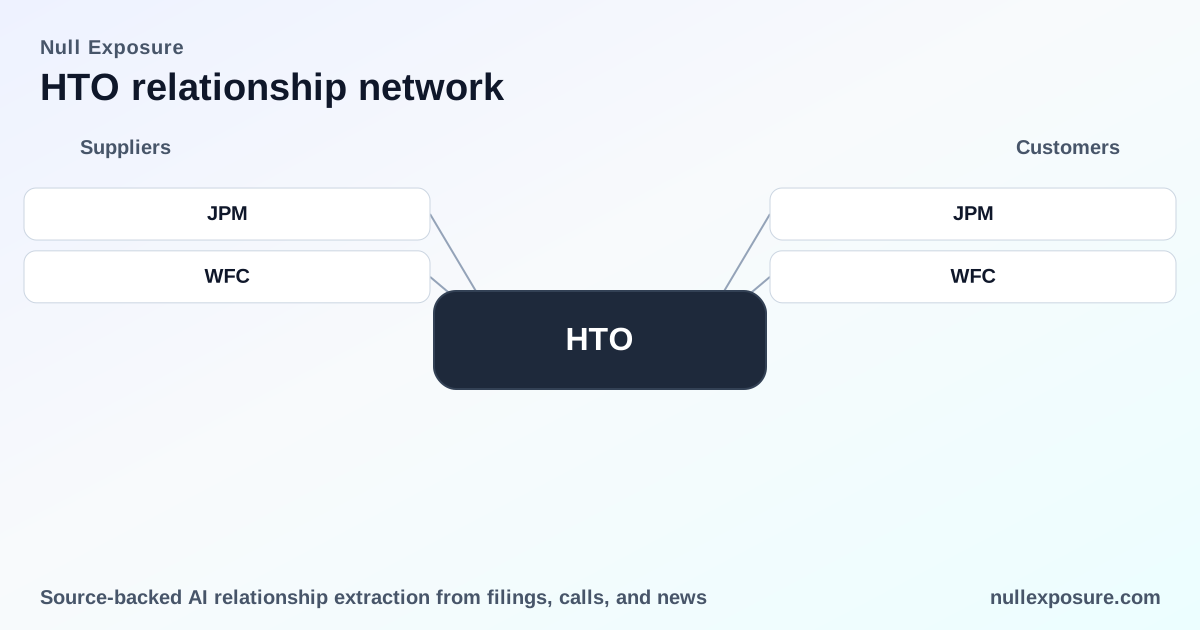
J.P. Morgan — J.P. Morgan is acting as a joint book-running manager and representative of the underwriters for H2O America’s proposed offering with a forward component, supporting capital markets execution and balance-sheet flexibility. According to a GlobeNewswire release distributed via The Manila Times on March 3, 2026, J.P. Morgan is a lead underwriter on the transaction. (ManilaTimes / GlobeNewswire, March 3, 2026; republished Mar 10, 2026)
-
Wells Fargo Securities — Wells Fargo Securities joins as joint book-running manager and underwriter representative for the same proposed equity offering, giving HTO access to multiple syndicate channels for distribution and pricing support. The underwriting appointment was announced in the March 3, 2026 press release distributed via GlobeNewswire. (ManilaTimes / GlobeNewswire, March 3, 2026; republished Mar 10, 2026)
-
J.P. Morgan (secondary republication) — The offering coverage including J.P. Morgan was also republished on Bitget’s news feed on March 10, 2026, confirming broader syndicate visibility and market distribution of the financing plan. (Bitget news page, March 10, 2026)
-
Wells Fargo Securities (secondary republication) — Bitget’s news republication likewise lists Wells Fargo Securities as joint book-running manager, reinforcing that HTO structured the placement with two major dealers to reach institutional demand. (Bitget news page, March 10, 2026)
What the relationship set actually signals for credit and operations
The named relationships are predominantly capital markets oriented rather than operational suppliers. That means immediate counterparty risk to operations is limited — these banks support financing and equity distribution rather than water supply or treatment services — but they are material to liquidity and funding. From a procurement perspective, the company-level constraints in the record point to a very different supplier risk profile:
- Long-term take-or-pay contracts dominate operational exposure. Multiple excerpts document 20–50 year water supply agreements and master contracts with public agencies; those lock in volumes and create predictable capacity but transfer commodity and regulatory risk to the utility’s P&L if purchased water costs rise faster than rate recovery.
- Government counterparties are central. The firm sources significant volumes from municipal and regional authorities and receives state-backed financing in some instances; this reduces counterparty credit risk but increases regulatory dependency.
- Critical third-party services exist beyond water supply. Data hosting, cloud-based arrangements and cybersecurity vendors are flagged as critical service providers, meaning non-water suppliers can create outsized operational risk if they fail.
- Spend bands are mixed from small annual fees to very large, multi-hundred million investment items. Notably, capital for PFAS treatment and long-term debt maturities place meaningful demands on funding capacity; the underwriting relationships with J.P. Morgan and Wells Fargo speak directly to managing that funding need.
If you are evaluating HTO for supplier resilience or counterparty risk, prioritize due diligence on long-dated take-or-pay contracts, the company’s regulatory recovery mechanisms for purchased water and power, and contingencies tied to critical IT vendors. For the best view across relationships and exposures, see the consolidated supplier intelligence on our homepage: https://nullexposure.com/.
Investment implications — what to watch next
- Liquidity and capital markets access matter. The engagement of J.P. Morgan and Wells Fargo for a forward-component equity offering is a deliberate financing move to fund capex and regulatory compliance; closely monitor offering size, dilution and how proceeds are allocated.
- Rate case cadence and regulatory outcomes drive margins. Since purchased water and extraction fees are a large share of production expense, successful regulatory recovery is the primary path to preserve operating margins.
- Operational concentration is structural, not transitory. Long-term public agency contracts and critical third-party vendors mean counterparty risk is structural; scenario-planning for contract re-pricing or vendor outages is essential.
For a consolidated view of HTO’s supplier relationships and to benchmark counterparties against peers, visit our platform: https://nullexposure.com/.
Final read — risk/reward checklist for operators and investors
- Execution risk: underwriter-led offering reduces near-term liquidity risk but introduces capital-structure choices that affect shareholders.
- Operational risk: long-term water contracts provide supply certainty but fix cost exposure; regulatory recovery is the balancing mechanism.
- Counterparty mix: heavy public-sector counterparties lower credit risk but increase regulatory dependency; critical third-party IT vendors require active oversight.
- Spend and capex: PFAS and treatment compliance create multi-year funding needs in the 10s–100s of millions; underwriter engagement is consistent with addressing those needs.
If you want tailored supplier and counterparty dashboards for HTO or peer utilities, start here: https://nullexposure.com/.