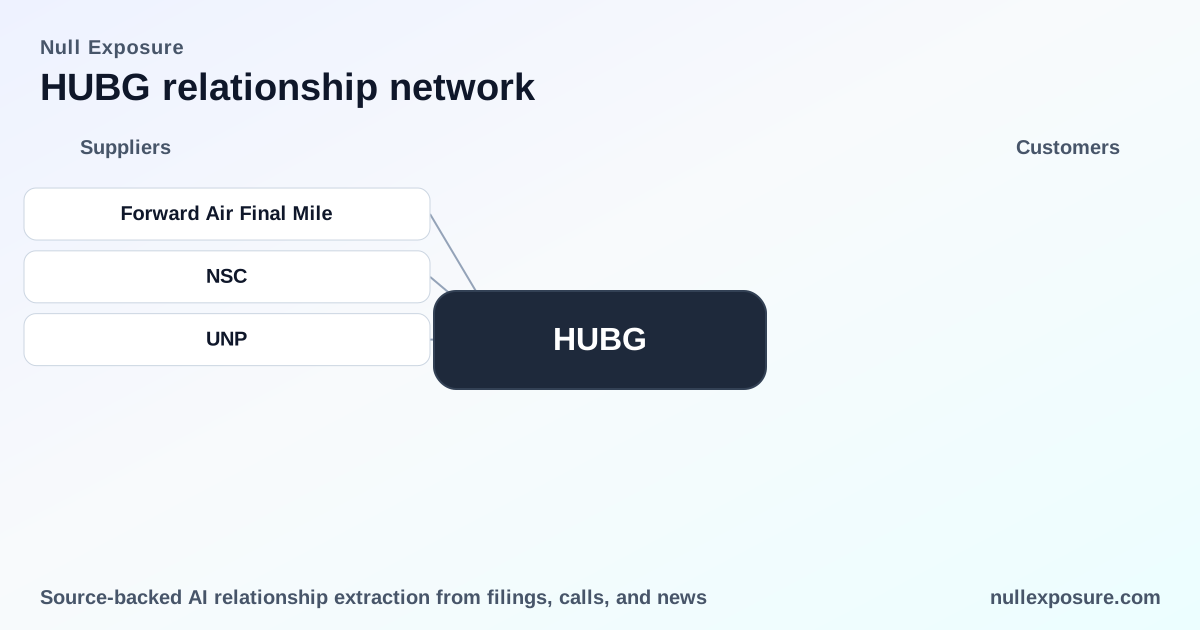
Hub Group (HUBG) — supplier relationships that determine margin leverage and operational risk
Hub Group operates as an asset-light freight management company, monetizing through intermodal, trucking, brokerage, managed transportation and last‑mile services while contracting third parties to perform most physical moves. Revenue is driven by freight volume and mix; margins and cash flow are determined largely by third‑party transportation and warehousing costs, which comprised about 74–75% of revenue in 2024. Investors should evaluate how Hub’s supplier footprint, contract tenor and concentration across major railroads and final‑mile carriers translate into margin volatility and strategic optionality. For a structured view of Hub’s counterparty landscape visit https://nullexposure.com/.
Why the supplier map matters for valuation and operations
Hub’s operating model is built around an asset‑light posture that gives commercial flexibility but shifts execution risk to suppliers. Key characteristics from the company filing and recent disclosures:
- Contracting posture: Hub has a mix of multi‑year contracts with railroads and long‑term leases/debt for equipment, while also relying on short‑term service arrangements for drayage, brokerage and final‑mile vendors. The 2024 Form 10‑K documents multi‑year railroad agreements alongside operating and finance leases with multi‑year terms.
- Concentration and criticality: Purchased transportation and warehousing represented roughly 74–75% of consolidated revenue, making supplier performance a critical earnings driver. The company explicitly describes dependence on a small set of major North American railroads for intermodal operations.
- Counterparty mix and maturity: Hub combines relationships with large national carriers, independent owner‑operators and contract warehouse vendors; some supplier relationships are mature and governed by dedicated operational support, while others are active and contingent (e.g., independent contractors and final‑mile partners).
- Geographic profile: Primary exposure is North America, with selective LatAm presence through acquisitions (Mexico) and a global reliance on open shipping lanes and imported equipment. These are company‑level signals from the 2024 filings.
These elements define where margin risk lives and where operational escalation will be resolved—at the railroad boardrooms and in the vendor network.
Named counterparties and why each matters
Forward Air Final Mile (FAFM)
Hub acquired 100% of Forward Air Final Mile on December 20, 2023; FAFM provides residential last‑mile delivery and installation of big‑and‑bulky goods with a focus on appliances. FAFM expands Hub’s final‑mile footprint via a non‑asset model that leverages a nationwide carrier network and introduces a sizeable cash investment. Source: Hub Group 2024 Form 10‑K, acquisition disclosure for FY2024.
Norfolk Southern
Market commentary has positioned Norfolk Southern as a central variable in a potential rail consolidation: Evercore ISI suggests Hub could benefit from a proposed Union Pacific–Norfolk Southern merger given Hub’s scale across both networks and its intermodal positioning. This is relevant because Hub’s intermodal economics improve if rail capacity and pricing dynamics change in Hub’s favor. Source: SahmCapital summary of Evercore ISI (January 18, 2026).
Union Pacific
The same Evercore ISI analysis cited in the market commentary identifies Union Pacific as the other merger party whose consolidation would materially affect intermodal routing and competitive dynamics. Any structural change to Union Pacific’s network economics or service levels will propagate directly to Hub’s purchased transportation cost line. Source: SahmCapital summary of Evercore ISI (January 18, 2026).
How constraints in the filings shape supplier strategy
Several constraints highlighted in the 2024 Form 10‑K translate into actionable company‑level signals for investors and operators:
- Long‑term commitments coexist with short‑term exposure. Hub discloses multi‑year railroad contracts and significant long‑term lease liabilities, while also carrying short‑term letters of credit and leases under twelve months that are not capitalized. This mix preserves flexibility but creates timing mismatches between contracted rail capacity and spot drayage or carrier availability.
- Supplier criticality is high. Purchased transportation and warehousing costs represented roughly three quarters of revenue, a structural margin lever: increases in supplier rates or capacity constraints flow directly to Hub’s gross margin unless rate recovery is possible.
- Large strategic spend and M&A are reshaping vendor footprint. Hub’s 2023–2024 M&A (for example, FAFM for $257.2 million and other transactions in the $50–100 million range) changed supplier composition by bringing non‑asset final‑mile capability and Mexican intermodal exposure into the group. These transactions are capital‑intensive and shift where Hub sources execution.
- Counterparty mix includes many individuals and contractors. The company contracts hundreds of independent drivers and hundreds of independent service providers for warehouses and delivery, which creates operational flexibility but increases management, safety and insurance complexity.
- Geography is primarily North America but with LatAm and global touchpoints. Hub’s cross‑border intermodal activity and Mexican terminal network introduce exposure to cross‑border capacity and regulatory risk.
All of the above are drawn from the company’s 2024 Form 10‑K disclosures.
Visit https://nullexposure.com/ for an interactive breakdown of these constraint signals and a visualization of supplier concentration.
Strategic implications for investors and operators
- Upstream rail dynamics are the primary macro lever. Because rail providers are both high‑value suppliers and limited in number, service changes, labor actions or consolidation (e.g., a UP‑NS transaction) will directly affect Hub’s cost of goods sold and route economics. Monitor rail service levels and merger developments as lead indicators for margin re‑rating.
- Final‑mile integration is a deliberate margin play. The FAFM acquisition accelerates Hub’s exposure to last‑mile installation and appliance delivery, shifting some margin capture from brokers to managed final‑mile operations—but also bringing non‑asset carrier network execution risk and incremental claims/insurance costs in the near term.
- Asset‑light execution requires active vendor governance. Hub’s dependence on independent contractors and third‑party warehouses demands tight operational controls, claims management and insurance placements; any deterioration here will be visible in insurance expense and claims accruals reported in subsequent filings.
- Capital allocation will swing between equipment, leases and M&A. Recent guidance and notes show 2025 capex expectations and a history of financing equipment via secured notes; investors should track capex vs. acquisitions to judge whether growth is organic or transaction‑driven.
Practical next steps — what to watch and when
- Track quarterly trends in purchased transportation and warehousing as a percent of revenue and absolute dollars; this is the single clearest supplier‑risk metric.
- Monitor news and regulatory filings on the Union Pacific–Norfolk Southern merger narrative; changes there are industry‑level catalysts for Hub’s intermodal margins. (See market commentary from Evercore as summarized January 2026.)
- Watch integration metrics for FAFM (cost run‑rate, insurance/claims, carrier utilization) across the next four quarters to assess whether the acquisition improves Hub’s end‑to‑end margin capture.
- Keep an eye on capital deployment: lease liabilities, secured equipment notes and share buyback activity reveal whether the company prioritizes growth, fleet investment or capital return.
For a deeper supplier risk profile and relationship scoring for Hub Group, go to https://nullexposure.com/.
Conclusion: Hub Group’s earnings are driven by its ability to manage a concentrated and critical supplier base—major railroads and a dispersed final‑mile carrier network—while executing an M&A strategy that changes where margin is captured. For investors, the core questions are whether Hub can extract better economics from its supplier contracts and whether rail consolidation improves or disrupts its intermodal advantage. For operators, the immediate focus is governance over third‑party execution, claims and insurance cost control.