HUMAW (Humacyte Inc) — Supplier relationships that determine commercial scalability
Humacyte commercializes engineered human acellular vessels (HAVs) and monetizes through product sales (Symvess where approved), clinical development partnerships and licensed IP. The company's advanced manufacturing model depends on a handful of specialized suppliers and long-standing academic licenses; revenue is nascent (TTM revenue ~$1.57m) while operating losses and negative returns demonstrate that supplier continuity and license rights are the primary operational levers for value realization. For deeper supplier diligence and counterparty risk analysis, visit https://nullexposure.com/.
What Humacyte sells and the supplier logic behind it
Humacyte’s product set centers on biologically derived vascular grafts produced in a controlled manufacturing process that requires human plasma, polymer mesh and bioprocess media. Commercial scale-up depends less on market demand today than on reliable supply of critical biological inputs and enforceable license rights. The FY2024 10‑K shows significant R&D and manufacturing expense and an operating margin profile that reflects heavy investment ahead of commercial scale.
The supplier map — who supplies what and why it matters
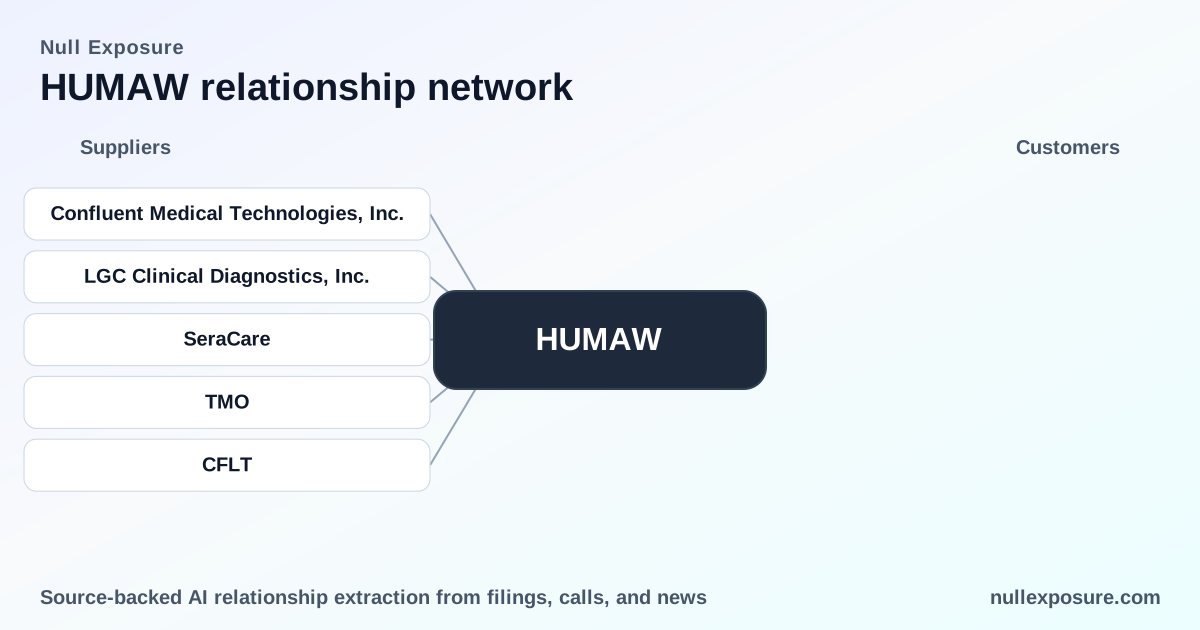
Below are the relationships disclosed in the company’s FY2024 Form 10‑K. Each entry is a plain-English summary with the filing as the source.
-
Confluent Medical Technologies, Inc. — Humacyte identifies Confluent as the single‑source supplier of the polymer mesh used in its vessels, a component required in ATEV/HAV production. According to the FY2024 Form 10‑K, Confluent supplies polymer mesh critical to manufacturing. (Humacyte FY2024 10‑K, filed 2024)
-
LGC Clinical Diagnostics, Inc. — LGC is listed as the acquirer of SeraCare; the filing notes that SeraCare (now part of LGC) is the current single‑source supplier of human plasma used in manufacturing. The 10‑K cites the acquisition and the role of SeraCare/LGC as the plasma supplier. (Humacyte FY2024 10‑K, filed 2024)
-
SeraCare — Separately referenced in the 10‑K, SeraCare is the named supplier of human plasma for Humacyte’s process and is described as a single‑source for those biological inputs. The company discloses contractual terms and renewal mechanics for the SeraCare agreement in the filing. (Humacyte FY2024 10‑K, filed 2024)
-
Thermo Fisher Scientific (TMO) — Humacyte sources culture media and decellularization buffers from a division of Thermo Fisher Scientific; the filing highlights that Thermo Fisher maintains a second production site to provide redundant production capacity for media and buffers. This redundancy reduces single‑point risk for media/buffer supply. (Humacyte FY2024 10‑K, filed 2024)
-
Confluent (CFLT) — The 10‑K repeats the Confluent relationship in a separate entry noting supply of polymer mesh and contractual obligations around redundancy at volume thresholds. This confirms Confluent’s role as a manufacturer partner with explicit contractual responsibilities. (Humacyte FY2024 10‑K, filed 2024)
What the contractual and disclosure constraints say about Humacyte’s operating model
Humacyte’s public disclosures create a coherent portrait of how the business operates and where supplier risk concentrates.
-
Contracting posture: long‑term and conditional. The company uses multi‑year arrangements (leases through 2033, license terms that persist until patent expiry) and supply agreements with renewal mechanics and termination notice periods. These structures lock in suppliers and site capacity while creating exit friction for Humacyte if a supplier fails to perform. Evidence in the 10‑K includes multi‑year lease schedules and descriptions of license and supply agreement terms. (Humacyte FY2024 10‑K)
-
Concentration risk is real and identifiable. Humacyte relies on single‑source suppliers for two core manufacturing inputs: human plasma (SeraCare / LGC) and polymer mesh (Confluent). The company discloses that it purchases a substantial majority of plasma from SeraCare and explicitly calls out Confluent as the single mesh supplier, indicating high supplier concentration that is intrinsic to the current commercial model. (Humacyte FY2024 10‑K)
-
Materiality and criticality of supply. Multiple excerpts classify these suppliers and materials as material to operations: failures to supply components would delay or halt clinical trials and commercialization. The 10‑K frames these inputs as critical to Symvess and other program manufacturing. (Humacyte FY2024 10‑K)
-
Maturity and licensing posture. Humacyte holds long‑standing exclusive licenses from research universities (Duke, Yale) that underpin the platform; these licenses include milestone and royalty mechanics and can limit flexibility (e.g., conversion of exclusivity or termination rights). Licensing is a strategic asset and a recurring cash usage item (license fees and milestone payments recorded in 2024). (Humacyte FY2024 10‑K)
-
Operational redundancy is partial, not universal. Thermo Fisher provides redundant media/buffer production, reducing one category of risk, but redundancy is not established across all critical inputs; Humacyte continues to explore redundant vendors and change control processes. (Humacyte FY2024 10‑K)
If you evaluate supplier risk for investment or operations, a focused supplier contingency and qualification plan is essential. For a supplier risk scorecard and visualization, see https://nullexposure.com/.
Risk implications and mitigants for investors and operators
-
Short‑term revenue sensitivity is low but operational runway is supply‑sensitive. With revenue still early stage and substantial operating losses, production interruptions would primarily affect the timing of commercialization and cash burn rather than immediate revenue shortfalls. The supply agreements and license obligations create fixed and contingent cash needs (recorded license payments and purchase commitments are disclosed in FY2024). (Humacyte FY2024 10‑K)
-
Counterparty selection determines scale economics. Single‑source suppliers increase supplier negotiation leverage and execution risk; Thermo Fisher’s redundant capacity is an example of contract design that reduces risk. Contracts that allow automatic renewal or include minimum purchase commitments shift the balance toward suppliers unless Humacyte establishes qualified alternates. (Humacyte FY2024 10‑K)
-
Intellectual property risk compounds supplier risk. License terms with Yale and Duke include diligence and milestone covenants and royalty structures; disputes or terminations would have material operational effects given Humacyte’s dependence on those rights. (Humacyte FY2024 10‑K)
Midway through your diligence, prioritize supplier audits for Confluent and SeraCare/LGC, and request evidence of qualified alternates and change‑control histories. You can begin that process through our platform: https://nullexposure.com/.
Investment takeaway and next steps
Humacyte’s value hinges on converting clinical and regulatory progress into reproducible manufacturing at scale. Key investment discriminators are the company’s ability to de‑risk single‑source suppliers, preserve and manage licensed IP economics, and demonstrate repeatable manufacturing with lower per‑unit cost. The FY2024 10‑K documents both the risk concentration (single‑source plasma and mesh) and selective mitigation (redundant media supply from Thermo Fisher and active exploration of redundant vendors).
For operational partners and investors: demand supplier continuity plans, audit reports for Confluent and SeraCare/LGC, and clarity on license milestone trajectories. For action-oriented diligence and supplier profiling, go to https://nullexposure.com/ — our coverage aggregates these counterparty signals into concise vendor risk ratings.
Bold execution on supplier diversification and license management is the immediate path from advanced R&D to durable, investable commercial returns for Humacyte.