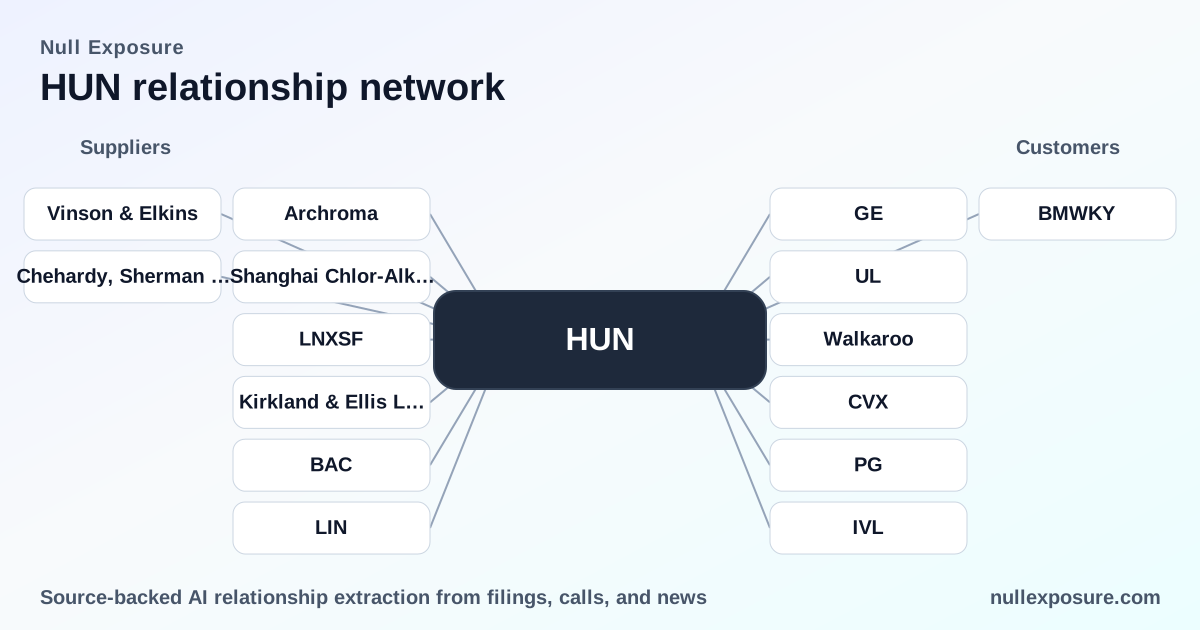
Huntsman Corporation (HUN) — supplier relationships, contracts and operating implications
Huntsman manufactures and sells differentiated organic chemicals and monetizes through integrated manufacturing, long-term raw-material purchase agreements, joint ventures that it consolidates or markets, and the sale of specialty product streams. The company captures margin via upstream feedstock integration (aniline/MDI flows), long-term capital commitments and market-priced finished-product sales, while financing operations through a mix of long-term notes and revolving credit. For investors assessing supplier counterparty risk, the combination of large purchase commitments, joint‑venture manufacturing links and occasional litigious supplier disputes defines Huntsman’s real operational risk profile. Learn more at https://nullexposure.com/.
How Huntsman structures supplier relationships in practice
Huntsman’s supplier posture is a hybrid of long-term strategic contracts and short-term market purchases. The company operates manufacturing joint ventures where Huntsman often purchases or markets all production, holds multi-year lease obligations for plants and equipment, and uses both capital markets and bank facilities to fund working capital.
- Contracting posture: Predominantly long-term for core feedstocks (butane, benzene, industrial gases, aniline) with spot purchases for certain commodities and short-term FX or hedging exposures.
- Concentration and spend: Large-scale commitments (>$11 billion in unconditional purchase commitments and multiple $100M+ notional hedges) make supplier affordability and continuity critical to operations.
- Criticality and maturity: Key supplier links — industrial gases, aniline and certain specialty inputs — are materially important and supported by long-term arrangements or JV structures; leases and debt maturities extend out multiple years.
- Operational implication: Supply interruptions, credit tightening, or JV disputes have direct, measurable impacts on production and liquidity.
If you want a deeper supplier risk breakdown, visit https://nullexposure.com/ for provider-level intelligence.
Supplier and advisor relationships that matter right now
Below are every relationship cited in the source materials, each summarized in plain English with a source reference.
- Archroma — Huntsman completed the sale of its Textile Effects Business to Archroma (an SK Capital portfolio company) on February 28, 2023, representing a strategic divestiture of Textile Effects operations. Source: Huntsman FY2024 Form 10‑K disclosure (transaction closing date referenced in FY2024 filing) and contemporaneous media coverage.
- Shanghai Chlor‑Alkali Chemical Company, Ltd — Huntsman operates an independent crude‑MDI manufacturing facility at Caojing, China, as part of a splitting joint venture (Huntsman Polyurethanes Shanghai Ltd.) with Shanghai Chlor‑Alkali that produces crude MDI and other MDI variants. Source: Huntsman FY2024 Form 10‑K (facility and JV description).
- Lanxess AG — Lanxess is the joint‑venture partner in Rubicon LLC, which owns aniline, nitrobenzene and DPA manufacturing facilities in Geismar, Louisiana; Huntsman identifies this JV as integral to its MDI feedstock chain. Source: Huntsman FY2024 Form 10‑K (Rubicon JV description).
- Kirkland & Ellis LLP — Kirkland & Ellis acted as Huntsman’s legal counsel in the Archroma transaction, serving as external legal advisor on the divestiture. Source: trade press coverage of the Archroma acquisition (WWD, FY2022 reporting).
- BofA Securities (BAC) — BofA Securities served as Huntsman’s financial adviser on the Archroma sale, acting as the deal’s investment bank. Source: WWD coverage of the Archroma transaction (FY2022 reporting).
- Praxair/Linde (LIN) — Praxair/Linde was an industrial gas supplier to Huntsman’s Geismar MDI site; a New Orleans jury awarded Huntsman approximately $93.9 million in the company’s legal dispute with Praxair/Linde over supply issues. Source: Huntsman press release reporting the jury award and related litigation filings (PR Newswire, FY2022 reporting).
- Vinson & Elkins — Vinson & Elkins represented Huntsman in the Praxair/Linde litigation, serving as outside counsel alongside local trial counsel. Source: PR Newswire coverage of the jury award and counsel listing (FY2022 reporting).
- Chehardy, Sherman & Williams — The New Orleans‑based trial firm Chehardy, Sherman & Williams also represented Huntsman in the litigation against Praxair/Linde. Source: PR Newswire coverage of the jury award and counsel listing (FY2022 reporting).
What these relationships tell investors about risk and resiliency
The relationship map underscores a few investment-grade operational realities:
- Supply integration is strategic. Huntsman’s business model integrates upstream feedstocks (aniline, butane, benzene) through JVs and long-term contracts to protect MDI production economics; where integration is absent, the company relies on long-term supply agreements. Evidence in the 10‑K emphasizes both the need for integration and the risks if long‑term agreements fail.
- Large-scale financial commitments create counterparty leverage points. Huntsman discloses substantial unconditional purchase commitments and multi‑hundred‑million dollar debt instruments, which increases sensitivity to supplier performance and credit cycles.
- Legal and operational friction is real and quantifiable. The jury award against Praxair/Linde demonstrates that supplier disputes can result in material recoveries — and conversely that supplier failures can have material operational consequences.
- Hybrid contracting lowers near‑term volatility but preserves exposure to commodity cycles. Huntsman uses spot purchases for certain inputs and hedging instruments for FX and rates, but core raw materials are locked into multi‑year contracts or JV arrangements that transfer different kinds of risk to suppliers and the company.
Risks investors should watch closely
- Concentration and critical suppliers: Industrial gases and aniline supply relationships are material and potentially critical to MDI production; any supplier failure or contract renegotiation will have immediate operational impact.
- Debt and liquidity sensitivity: Huntsman relies on access to capital markets and a $1.2B revolver; covenant terms, maturity ladders and leverage could amplify supplier shocks.
- Counterparty and legal risk: Past litigation with a major supplier demonstrates both the legal recourse and the operational disruption associated with supplier disputes.
- Geographic exposure: Supply and production are distributed across North America, EMEA and APAC, which diversifies some risk but introduces geopolitical and FX exposures.
If your mandate requires a supplier-level diligence package or portfolio-level exposure report, start with https://nullexposure.com/ to request tailored intelligence.
Bottom line and next steps for investors
Huntsman runs a capital‑intensive, feedstock‑integrated chemical business where long‑term supplier contracts and joint ventures are central to production economics. The supplier base is large in dollar terms and strategically critical; failure of a key feedstock supplier or disruption to JV output would be material to cash flow and margins. Monitor debt maturities, purchase‑commitment schedules and the status of key JV relationships (Rubicon, HPS/AAC) as primary indicators of supplier stability.
For a tailored briefing on Huntsman’s supplier risk exposures and counterparties, go to https://nullexposure.com/ and request a supplier intelligence package.