Havertys (HVT): Supplier relationships, operational constraints, and what investors should price in
Havertys is a regional specialty furniture retailer that monetizes through retail sales, financed customer transactions (arranged by third‑party finance companies), and product protection and delivery services. The company sources a substantial share of merchandise from third‑party manufacturers (both domestic and foreign), operates a distribution network of DCs and home delivery centers, and funds operations with operating leases and a revolving credit facility; its profitability is driven by vendor pricing, product mix, and efficient distribution. For investors evaluating supplier risk, the central dynamic is Havertys’ reliance on a mix of non‑exclusive foreign manufacturers and third‑party logistics partners to deliver merchandise on schedule and at target margins. Learn more or run a deeper supplier-risk scan at the NullExposure homepage: https://nullexposure.com/.
Snapshot investors should keep top of mind
Havertys reported roughly $759 million in revenue (TTM) with gross profit of $460 million and EBITDA of $45 million; 58% of product purchases in 2024 were sourced outside the U.S. The company operates 129 stores across 17 states, uses three distribution centers plus multiple home delivery centers, and had $218 million in operating lease liabilities at year‑end 2024. According to its filings, Havertys carries an $80 million revolving credit facility that matures in 2027 and had no outstanding borrowings as of December 31, 2024. These financial and operational facts shape counterparty selection, contracting length, and sourcing exposure.
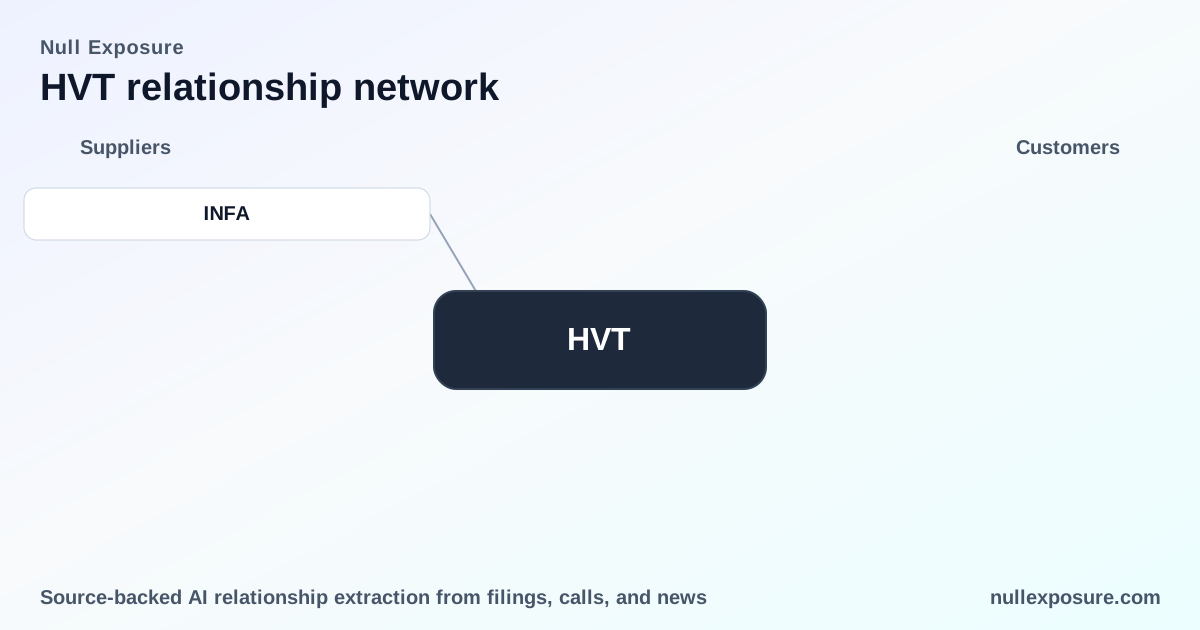
One explicit supplier relationship uncovered: supply‑chain orchestration with Infor
- Havertys uses Infor’s Nexus solution alongside internal systems to orchestrate its multi‑party supply chain, improving visibility from manufacturer through transit to delivery. According to a Logistics Viewpoints article covering Havertys’ supply‑chain approach, this integration supports order tracking and customer delivery commitments (Logistics Viewpoints, April 2019).
What the constraints and disclosures collectively signal about Havertys’ operating model
The company filing language and extracted constraints paint a clear operating profile. Presenting these as company‑level signals:
- Contracting posture is mixed: short‑term operational agreements plus long‑term structural commitments. The company operates many annual or variable arrangements—insurance collateral and short‑term cash equivalents—while simultaneously carrying long lease terms for stores and distribution footprint extending into the mid‑2030s and a multi‑year bank facility (credit agreement amended in 2022 to extend maturity to October 24, 2027). These disclosures indicate a portfolio of contracts that requires active cash and lease management (company filings, FY2024).
- Supplier concentration is meaningful but not monopolistic. The largest ten vendors accounted for about 41.3% of product purchases in 2024, signaling vendor leverage on key items but also diversity across many smaller suppliers (company filing, FY2024).
- Supplier criticality is high. Havertys sources most products from non‑exclusive third‑party producers and relies on third‑party transportation providers for essentially all inbound and home‑delivery logistics; failure of producers or carriers would directly affect on‑shelf availability and sales (company filing, FY2024).
- Maturity and duration of supplier relationships are substantial. The company describes long‑term relationships with many suppliers, even while competing for manufacturer capacity; contract tenors and procurement commitments reflect an operational model that balances stable sourcing with periodic renegotiation for capacity and pricing (company filing, FY2024).
- Geographic sourcing footprint is global and multi‑regional. Roughly 58% of purchases are non‑U.S., with case goods largely imported from Asia and leather products sourced from Asia or Mexico; this elevates exposure to trade, freight, and FX dynamics (company filing, FY2024).
- Spend profile indicates both large structural commitments and variable operating spend. Large lease obligations (hundreds of millions undiscounted) and distribution/transportation SG&A in the tens of millions indicate a spend profile spanning the 10M–100M and 100M+ bands for major categories like real estate and distribution, while other items (advertising, retirement contributions) sit in smaller bands (company filing, FY2024).
Operational implications for suppliers and investors
These company‑level signals translate to concrete behaviors and negotiating dynamics:
- Suppliers with scale and capacity control pricing leverage. Given concentration in the top ten vendors and competition for production capacity, large manufacturers retain negotiating power when demand tightens (company filing, FY2024).
- Logistics and visibility solutions are strategic, not discretionary. Havertys’ use of Infor Nexus and internal orchestration demonstrates that inventory visibility and shipment tracking materially affect customer delivery promises and working capital outcomes (Logistics Viewpoints, 2019).
- Contract structure mixes fixed commitments and variable fees. Store leases and equipment leases include long terms and renewal options, while some retail leases and equipment contracts include variable payments tied to sales or usage; cash flow forecasting must account for this hybrid model (company filing, FY2024).
- Global sourcing drives supply‑chain risk concentration in APAC and Mexico. Material reliance on imports for case goods and leather elevates exposure to tariffs, freight delays, and regulatory compliance issues; investors should model supply disruption scenarios and cost pass‑through on margin sensitivity (company filing, FY2024).
- Third‑party logistics providers are effectively critical suppliers. Havertys outsources inbound and over‑the‑road deliveries—failure or rate shocks among carriers will directly increase SG&A and hurt fulfillment rates (company filing, FY2024).
Explore supplier exposures and third‑party risk mapping for your portfolio at the NullExposure homepage: https://nullexposure.com/.
Risk factors to prioritize in diligence
- Fulfillment dependency: third‑party carriers and DC throughput constraints are single points of failure.
- Concentration risk: top vendors account for a large share of purchases; vendor insolvency or capacity reallocation would be high‑impact.
- Global sourcing volatility: freight, tariffs, and exchange rates change landed costs quickly.
- Contract mix: long real‑estate leases lock fixed costs while variable lease elements create revenue‑linked expense swings.
Final takeaways and recommended next steps for investors and operators
Havertys operates a capital‑light retail model in terms of owned real estate but is operationally capital‑intensive in distribution and logistics. The firm's supplier relationships are strategic and critical: manufacturers supply the product base while third‑party logistics and orchestration platforms like Infor Nexus enable delivery and customer satisfaction. For investors, valuation and downside scenarios should incorporate disruptions in APAC sourcing, carrier capacity shocks, and vendor pricing volatility. For operators, focus procurement diligence on vendor capacity commitments, dual‑sourcing opportunities for key SKUs, and strengthening contractual protections with logistics providers.
If you need a bespoke supplier‑risk assessment or want to monitor Havertys’ third‑party exposures continuously, start here: https://nullexposure.com/.
Sources referenced in this article include Havertys’ public filings through FY2024 (lease schedules, supplier concentration and credit facility disclosures) and a Logistics Viewpoints profile of Havertys’ supply‑chain orchestration describing the integration with Infor Nexus (April 2019).