Hyster‑Yale (HY): supplier relationships and operational constraints investors should track
Hyster‑Yale designs, manufactures and sells industrial lift trucks and aftermarket parts worldwide and monetizes through equipment sales, recurring parts & service revenue and captive & third‑party financing. The company's operating model combines manufacturing scale, a global dealer network and selective joint ventures and supplier partnerships to deliver both capital goods and recurring aftermarket cash flows. For investors assessing supplier risk and strategic partners, the balance between long‑term capital commitments (leases, term loans, large purchasing obligations) and critical supplier concentration (engines, castings, drive systems, steel) is the primary underwriting lens. Visit Null Exposure for supplier relationship intelligence and deeper documents.
Why the supplier map matters for capital allocators
Hyster‑Yale's supplier landscape is a telling shortcut to cash‑flow durability and downside risk. The company runs a global manufacturing footprint with manufacturing and sourcing in North America, EMEA and APAC, supported by 115 independent dealers; that structure gives revenue reach but also exposes operations to geopolitical disruption and FX volatility. Its procurement posture combines short‑term transactional buys for commodity inputs and longer‑dated contractual relationships for equipment, financing and leases — a split that increases operational complexity but preserves flexibility in inflationary cycles.
Key characteristics that drive valuation and operational focus:
- Contracting posture: the firm uses both short‑term contracts for materials and forward FX contracts and significant long‑term leases and a term loan that extends capital commitments through 2028.
- Concentration and criticality: Hyster‑Yale depends on a limited set of suppliers for engines, drive systems and cast counterweights — these relationships are operationally critical and can directly affect production and margins.
- Maturity and spend profile: procurement includes both mid‑range recurring buys and large purchase obligations and financing facilities running into the hundreds of millions of dollars, which is material to liquidity planning.
- Global exposure: sourcing across APAC, EMEA and North America reduces unit cost but raises trade‑policy and logistics risk, and requires active hedging and supplier oversight.
If you want a structured supplier intelligence brief tailored to HY for investment due diligence, start at Null Exposure.
Detailed supplier relationships pulled from filings and press
Below I list every relationship item surfaced in the source set. Each entry includes a concise, plain‑English summary and the source reference.
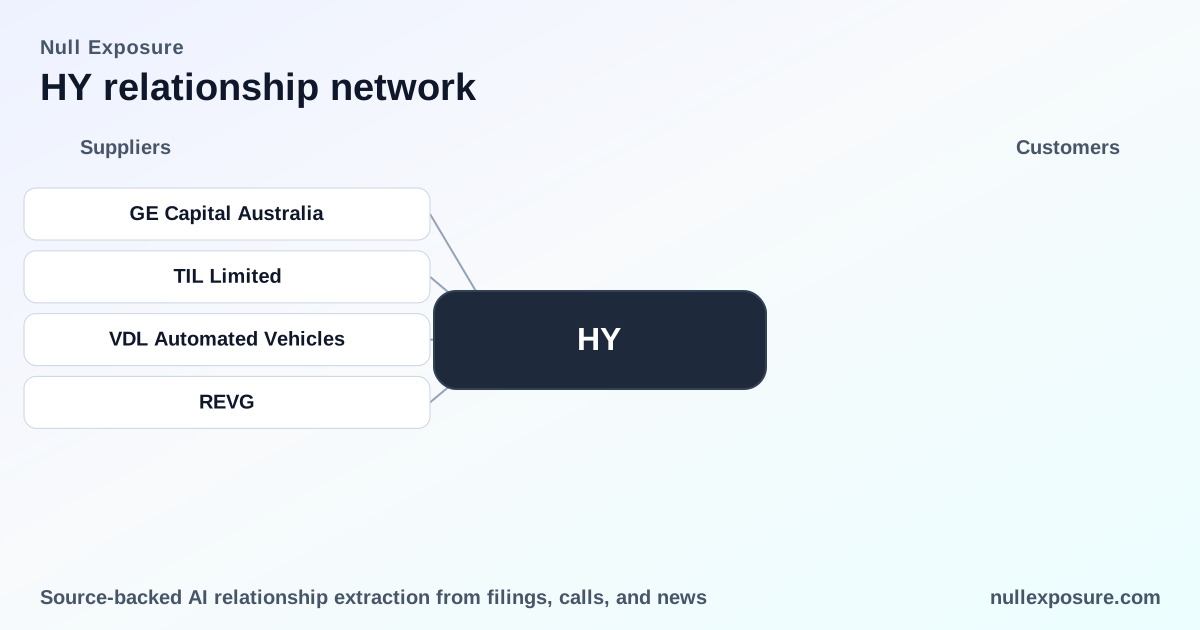
GE Capital Australia
Hyster‑Yale's FY2024 Form 10‑K incorporates an A$ Facility Agreement dated November 22, 2000 between GE Capital Australia and National Fleet Network Pty Limited, indicating a financing arrangement referenced in the company's disclosures. This points to historical financing structures in Australia that are still relevant to the company's legal and financing record. Source: Hyster‑Yale 2024 Form 10‑K (incorporated exhibits).
TIL Limited — reachstacker production (Economic Times article 1)
An Economic Times manufacturing report noted TIL Limited rolled out the 400th Hyster‑TIL reachstacker from its Kharagpur facility and referenced past sales to Hyster‑Yale for export markets including SE Asia and Australia, evidencing a manufacturing‑for‑export relationship and trust in Indian‑made equipment for global supply. Source: Economic Times manufacturing report, March 10, 2026 (manufacturing.economictimes.indiatimes.com).
TIL Limited — reachstacker production (Economic Times article 2)
A second Economic Times piece reiterates that TIL’s production supports Hyster‑Yale customer requirements in export markets and frames the relationship as validating TIL’s quality and innovation focus, underlining that Hyster‑Yale uses external manufacturing partners in India for certain global shipments. Source: Economic Times manufacturing report, March 2026 (manufacturing.economictimes.indiatimes.com).
VDL Automated Vehicles
Hyster‑Yale signed a collaboration to co‑develop electric, automation‑ready terminal tractors where VDL Automated Vehicles (a VDL Groep BV subsidiary) is designated as the preferred integration partner and supplier for automation — this positions VDL as a strategic automation supplier in Hyster‑Yale’s electrification roadmap. Source: The SCXchange article on Hyster‑Yale and Capacity Trucks collaboration (SCXchange, original FY2020 announcement covered).
Capacity Trucks
Hyster‑Yale and Capacity Trucks executed an MOU to co‑develop electric and hydrogen terminal tractors with automation‑ready capabilities, including exclusive manufacturing and supply provisions and co‑branding options (units sold as Capacity® or Hyster®). That deal signals Hyster‑Yale’s approach to outsource or co‑develop adjacent vehicle platforms while preserving brand presence in ports and terminals. Source: The SCXchange article on the joint development agreement (SCXchange, FY2020 coverage).
What the constraints signal about the business model
The constraints pulled from filings are company‑level signals that explain how Hyster‑Yale runs the business and where operational leverage and risk concentrate:
- Contract maturity mix: Hyster‑Yale runs both short‑term hedges and spot purchases for commodity inputs and long‑term leases and bank facilities (a $300M revolver expiring June 2026 and a $225M term loan maturing May 2028). That creates a funding calendar that must be actively managed and hedged.
- Global complexity and trade sensitivity: manufacturing across Japan, Philippines, Vietnam and other countries and forward FX contracts with substantial notionals demonstrate the company actively manages currency and trade exposure. Trade policy and tariffs are a valuation lever.
- Supplier criticality and concentration: repeated disclosure that a limited number of suppliers provide diesel/gasoline engines, drive systems and castings is a structural operational constraint — procurement disruption here is directly material to production.
- Spend and liquidity profile: purchase obligations and large notional hedges put procurement spend in the mid‑to‑high tens/hundreds of millions, implying procurement decisions and supplier negotiations materially affect margins and working capital.
For investors, these constraints translate into a checklist: monitor lender covenant timing, supplier single‑source exposures, and progress on electrification partnerships that substitute internal capital with partner engineering & manufacturing.
Mid‑report resource: to compare supplier terms and covenant timing across peers, consult Null Exposure for integrated supplier and covenant intelligence.
Actionable takeaways for operators and investors
- Treat engine, drive‑system and counterweight suppliers as mission‑critical counterparties; prioritize alternative sourcing or buffer inventory where feasible.
- Manage the funding cliff: the revolver and term loan maturities require active refinancing planning and covenant monitoring. Covenant compliance and liquidity are principal near‑term risk factors.
- Electrification partnerships (Capacity, VDL) de‑risk product transitions by sharing R&D and manufacturing burden; investors should value these as strategic outsourcing that preserves dealer reach while accelerating product roadmap.
- Track APAC manufacturing and export channels (e.g., TIL in India) as both a lever for lower cost production and a potential trade‑policy exposure node.
Next steps — how to use this intelligence
If you require a focused supplier diligence pack, counterparty risk scoring or a covenant timing calendar tied to supplier concentration, start with Null Exposure for document‑level sourcing and triaged relationship summaries. For portfolio managers, the priority checklist is: confirm refinancing paths for 2026–2028 obligations, stress‑test critical single‑source suppliers, and evaluate how Hyster‑Yale’s partnerships accelerate electrified product revenue.
Hyster‑Yale runs a capital‑intensive manufacturing business with visible supplier concentration and material financing commitments; those two vectors define both upside from operational improvements and downside if supply or refinancing stress occurs. Visit Null Exposure to convert these relationship signals into a prioritized due‑diligence plan.