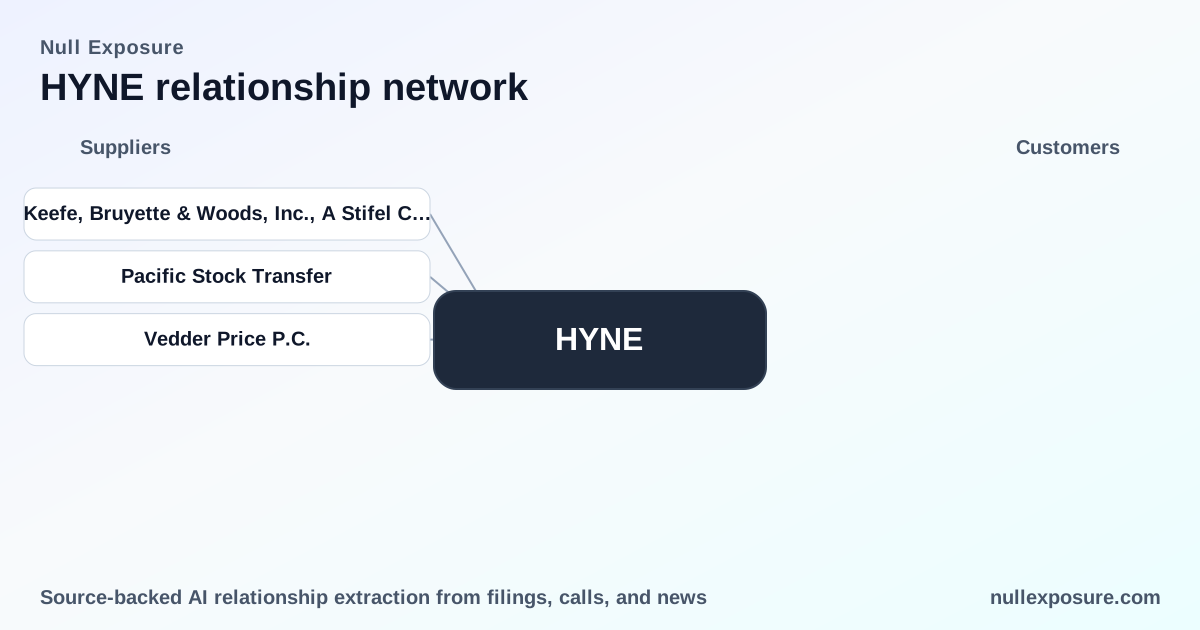
Hoyne Bancorp (HYNE): supplier map and implications for investors
Hoyne Bancorp is a small regional bank holding company that monetizes through traditional banking operations via Hoyne Savings Bank—net interest income from lending and deposit-taking, plus fee income—and by executing capital market actions such as its recent conversion and subscription offering that raise equity and reset public ownership. Hoyne’s current supplier profile is transaction-heavy: advisory, transfer-agent, and legal services tied to a capital raise and conversion, rather than a roster of long-term operational vendors. For investors evaluating counterparty exposure and governance signaling, these relationships reveal how management executes corporate transactions and the degree of professional support behind issuer-side corporate actions. For further supplier intelligence and tracking, visit https://nullexposure.com/.
Why the supplier list matters to investors
Capital-raising events compress many governance and counterparty signals into a short window. Who leads the offering, who handles share registration and delivery, and who provides legal support all influence execution quality, timetable, and shareholder experience. For a small-cap bank with limited institutional ownership and thin trading liquidity, these choices also shape market reception and post-offering stability.
Key business model drivers to keep top of mind:
- Event-driven professional fees: Investment banking and legal counsel are likely fee-intensive but non-recurring, connected to the conversion and subscription offering.
- Operational continuity: The transfer agent represents recurring administrative dependency—share delivery, DRS statements, and recordkeeping are materially important for shareholder relations.
- Capital and governance signal: Choice of advisor and counsel indicates management’s intent to present the company credibly to public markets.
What the disclosed supplier relationships are and what they mean
Below I cover every relationship disclosed in the company’s public announcement related to the conversion and offering. Each entry includes a concise summary and the source.
Keefe, Bruyette & Woods, Inc., a Stifel Company
Keefe, Bruyette & Woods acted as the selling agent for the Subscription Offering and served as financial advisor to Hoyne Bancorp and the Bank in connection with the Conversion. This places a reputable regional bank-focused adviser in charge of distribution and transaction structuring, which helps execution and institutional placement for a micro-cap issuer. Source: PR Newswire press release announcing expected closing date of the conversion and stock offering, FY2025 (published March 10, 2026).
Pacific Stock Transfer
Pacific Stock Transfer is the company’s transfer agent and was responsible for mailing Direct Registration System (DRS) book-entry statements and handling refunds and interest checks associated with the offering, with mailings scheduled on or about December 3, 2025. That ongoing transfer-agent role is operationally critical for shareholder recordkeeping and post-offering logistics. Source: PR Newswire press release on the offering and conversion, FY2025 (published March 10, 2026).
Vedder Price P.C.
Vedder Price P.C., a Chicago-based law firm, acted as legal counsel to Hoyne Bancorp and the Bank for the Conversion. Engaging an established regional law firm provides legal rigor on regulatory, disclosure, and transactional documentation for the conversion event. Source: PR Newswire press release detailing the offering and expected closing, FY2025 (published March 10, 2026).
What these relationships signal about Hoyne’s operating and contracting posture
- Contracting posture: The vendor mix is predominantly event-driven (investment bank and legal counsel) with one ongoing operational supplier (transfer agent). This indicates management procures specialized expertise for capital events rather than keeping large retainer relationships.
- Concentration and criticality: Supplier concentration is low in number but concentrated in function: a single transfer agent for ongoing shareholder services is a single point of operational dependency. Investment banking and legal counsel are replaceable between transactions but are critical during execution windows.
- Maturity and sophistication: The choice of Keefe, Bruyette & Woods (Stifel) and Vedder Price reflects institutional-grade advisory for a micro-cap conversion—an indicator of competent transaction execution for external stakeholders.
- Cost profile: Expect a front-loaded cost structure tied to the offering (advisor fees, legal fees) rather than a material expansion of recurring SG&A linked to new suppliers.
Financial and governance context that colors supplier risk
Hoyne’s public filings and summary metrics show a small capitalization base and modest revenue scale: revenue TTM roughly $13.2 million and market capitalization around $114 million. EPS is negative on a trailing basis and institutional ownership sits at about 12.9 percent, while insider ownership is low. Low analyst coverage and limited institutional ownership increase the importance of flawless execution and credible documentation from external advisors. The transfer agent’s role in ensuring timely DRS statements is therefore not a clerical detail—it materially affects investor experience in a thinly traded security.
Quick investor takeaways:
- Execution risk is concentrated around the conversion window. The advisory and legal relationships are the fulcrum of successful capital raising.
- Operational dependency on a single transfer agent is a real, continuous counterparty consideration.
- Small-cap governance: low insider ownership and modest institutional stakes heighten the need for transparent communications and reliable supplier performance.
For deeper supplier mapping and ongoing monitoring of counterparties to small-cap issuers, explore tools and reports at https://nullexposure.com/.
How investors and operators should act on this profile
- Monitor the transfer agent communications (DRS statements and refund schedules) as a leading indicator of operational execution and shareholder treatment post-offer. Timing noted in the release put DRS mailings on or about December 3, 2025, which investors can use to verify fulfillment.
- Track the advisor’s placement and stabilization activities in the weeks after closing; Keefe, Bruyette & Woods’ role as selling agent means they influence immediate aftermarket liquidity and investor mix.
- Review legal filings for any standard conversion-related covenants or indemnities that could transfer contingent liabilities to the company.
Final verdict and next steps
Hoyne’s disclosed supplier relationships are conventional and appropriate for a bank-sized conversion: institutional advisory, reputable legal counsel, and a single dedicated transfer agent. The arrangement supports credible execution but creates a short window of dependency on event-driven service providers and a continuous single-vendor point for shareholder services. Investors should focus on post-closing operational follow-through and whether advisor-driven distribution translated into a diversified, long-term shareholder base.
To track changes in Hoyne’s supplier roster and to receive alerts on future counterparty disclosures, visit https://nullexposure.com/. For investors evaluating counterparties across small-cap financial issuers, start with the supplier intelligence platform at https://nullexposure.com/ to convert vendor signals into investment insights.