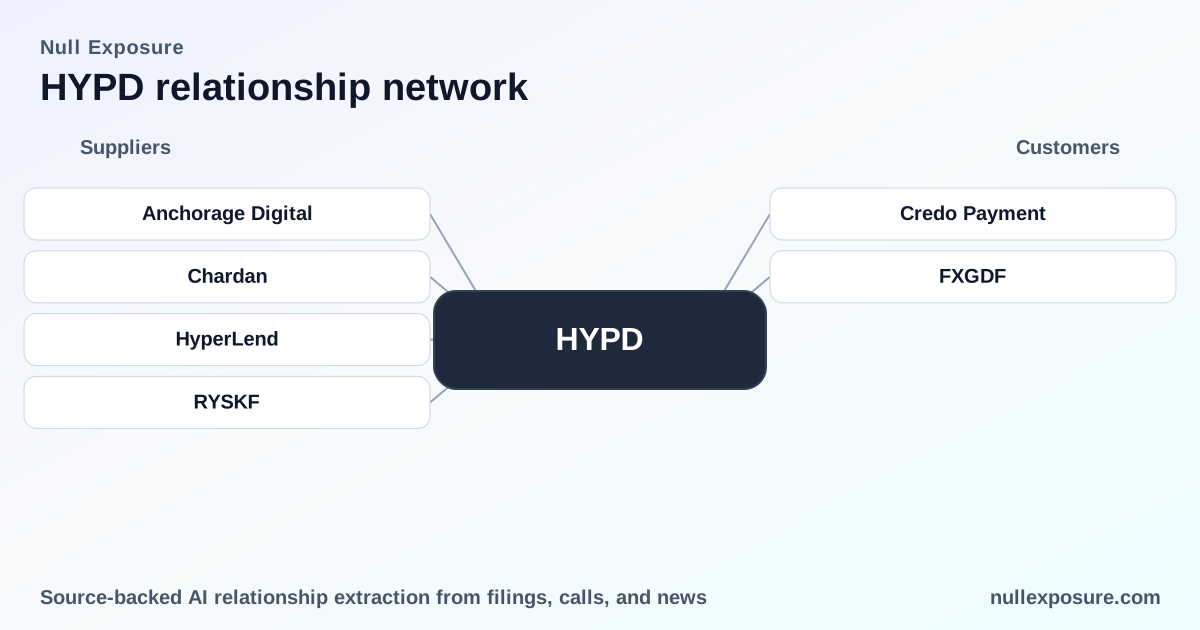
Hyperion DeFi (HYPD): supplier relationships that reshape risk and optionality
Hyperion DeFi, Inc. operates as an ophthalmic technology company that develops and commercializes ophthalmic products and monetizes through a combination of licensed product sales, strategic licensing transactions and capital markets activity. The company’s revenue base is currently tiny relative to its market capitalization, and management is leveraging partnerships—both traditional (investment banks, manufacturers, licensors) and nontraditional (crypto custody and DeFi protocols)—to fund growth and manage treasury assets. Investors and operators should treat HYPD as a hybrid commercial-stage biotech with an active capital-markets and digital-asset strategy.
For a concise supplier-risk briefing and to track counterparties across filings and press releases, visit https://nullexposure.com/.
Why these supplier relationships matter now
Hyperion’s supplier map shows a mix of traditional life-science counterparties (licensors, contract manufacturers, financial advisors) and emerging digital-asset providers. This mix changes the company’s risk profile along three vectors: operational continuity (manufacturing and distribution), intellectual property economics (licenses and royalties), and treasury/custody exposure (crypto partners and DeFi protocols). The company’s filings signal long-term licensing commitments, concentrated manufacturing reliance, and material financing covenants, all of which amplify the importance of each supplier relationship.
Visit https://nullexposure.com/ to see how these relationships are tracked across public documents.
Company-level operating signals (constraints you should model)
- Contracting posture: Hybrids of long-term and short-term contracts. Filings document multi-year licenses that carry royalty obligations and fixed terms, alongside short-term notes and lease maturities—an operating posture that mixes strategic IP commitments with near-term liquidity pressure (company filings, FY2024–FY2025).
- Concentration and criticality: Manufacturing and certain licensed IP rights are critical to commercialization; disruption at a third-party manufacturer or failure to maintain license rights would have drastic commercial consequences (SEC filing excerpts, FY2024).
- Maturity and cash flow timing: The company carries material debt facilities with staged tranches and deferred payment amendments; near-term maturities and lender conversion options influence both capital structure and dilution dynamics (Loan and Security Agreement disclosures).
- Supplier roles and spend: The supplier base skews toward service providers and manufacturers; disclosed spend bands show meaningful commitments in the $100k–$10m range depending on counterparty and transaction type (financial statement commitments).
- Named service-provider signals: Filings explicitly name Chardan as a financial advisor and sales agent in capital-markets activity, which confirms an active reliance on external placement and ATM channels (SEC filings, Dec 2024).
The relationships disclosed in press and filings (what to know, quickly)
Below are every counterparty captured in the results set; each entry contains a plain-English summary and the public source.
-
Anchorage Digital — Hyperion intends to secure HYPE staking and crypto treasury assets through a custodial partnership with Anchorage Digital, shifting custody and operational risk into a regulated crypto custodian model. According to a GlobeNewswire press release (June 17, 2025), the company will use Anchorage to secure assets for a HYPE staking program.
Source: GlobeNewswire press release, June 17, 2025. -
Chardan — Chardan is acting as the sole placement agent and financial advisor for capital markets transactions and the company’s at-the-market (ATM) program; Chardan also replaced prior sales agents for equity placement activity. Company announcements and filings indicate Chardan’s engagement in both advisory and sales-agent roles for strategic alternatives and equity programs (company press release and SEC filings, Dec 2024–2025).
Source: GlobeNewswire press release, June 17, 2025; related SEC disclosure, Dec 2024. -
HyperLend — Hyperion disclosed an engagement with the HyperLend protocol, indicating a strategic relationship to use a DeFi lending or liquidity protocol as part of its treasury or token strategy. The engagement is described in the company’s June 2025 press release announcing the Hyperliquid HYPE-token initiative.
Source: GlobeNewswire press release, June 17, 2025. -
Rysk (RYSKF) — Hyperion has engaged with the Rysk protocol as a counterparty in its token and treasury strategy, reflecting a move to use on-chain risk management and DeFi-native counterparties. The engagement is listed in the June 2025 GlobeNewswire announcement.
Source: GlobeNewswire press release, June 17, 2025.
What these counterparties imply for investors and procurement
The combination of traditional capital markets counterparties (Chardan) and crypto/DeFi providers (Anchorage, HyperLend, Rysk) creates a layered risk profile:
- Operational risk remains anchored in manufacturing and licensing. The company’s commercialization relies on licensed products and a limited set of manufacturers; any supplier failure would be materially disruptive (company filings, FY2024).
- Treasury risk now includes custody and protocol counterparty risk. Custody with Anchorage reduces self-custody risk but introduces regulatory and custodial-concentrations; DeFi engagements (HyperLend, Rysk) add smart-contract and market-liquidity exposure that is atypical for a healthcare supplier portfolio (press release, June 2025).
- Capital markets activity is explicit and ongoing. Chardan’s role as placement agent and advisor signals continuing equity raise activity and ATM utilization, which affects dilution outlook and available liquidity for supplier payments (SEC filings, Dec 2024).
- Contract mix matters for negotiation posture. Long-term licensing royalties and minimum payments suggest limited short-term flexibility on IP economics, while short-term debt maturities force near-term cash management decisions—procurement teams will need to prioritize suppliers that accept staged payments or milestone-based arrangements (filings).
For operational teams: require custody insurance proof and audit rights for any crypto custodian; insist on performance SLAs and secondary suppliers for manufacturing-critical components.
You can explore counterparty profiles and monitoring workflows at https://nullexposure.com/.
Risk checklist operators should act on (practical)
- Validate custody and regulatory status for Anchorage Digital and any custodian relationships.
- Audit DeFi counterparties for code audits, liquidity depth, and token volatility before committing treasury funds.
- Secure secondary manufacturers or explicit transition plans for any single-source production lines.
- Quantify royalty and milestone obligations in licensing agreements to model cash flow impact under different revenue scenarios (company license disclosures).
- Monitor debt amendments and conversion features in the Avenue-related facility for dilution and covenant triggers.
Bottom line and recommended next steps
Hyperion has blended life-science supply chains with digital-asset counterparties, creating differentiated upside and novel operational risks. The named relationships—Anchorage Digital (custody), Chardan (capital markets), HyperLend and Rysk (DeFi)—are strategically important and require active oversight across legal, treasury and procurement functions. Given the company’s limited revenue base and material debt commitments, these supplier choices materially influence execution risk and investor returns.
For a tracked and searchable supplier dossier and to receive alerts when these relationships move in filings or press, visit https://nullexposure.com/.
If you manage procurement or investor diligence for HYPD exposure, start by requesting custodial agreements and proof of manufacturing redundancy; then subscribe for regular supplier-monitoring updates at https://nullexposure.com/.