Hyzon Motors: Supplier Network and Operational Risks for Investors
Hyzon Motors designs and sells hydrogen fuel cell powertrains and zero-emission commercial vehicles, monetizing through vehicle sales, repower/upfit contracts, and strategic integration partnerships with chassis OEMs and upfitters. The company outsources significant portions of vehicle assembly and chassis sourcing, capturing margin on fuel cell systems and integration services rather than full vertical manufacturing. For direct access to supplier relationship intelligence and ongoing monitoring, visit https://nullexposure.com/.
Executive summary: why the supplier map matters now
Hyzon’s commercial model is integration-first and partnership-dependent: it installs proprietary fuel cells and hydrogen systems into third-party chassis and relies on assembly partners to scale production. That posture delivers fast go-to-market capability but concentrates operational risk in a small set of manufacturing and chassis relationships. With revenue still nascent and negative operating margins, supplier reliability and contractual terms will determine short- to mid-term delivery cadence and capital efficiency for investors.
The network, relationship by relationship
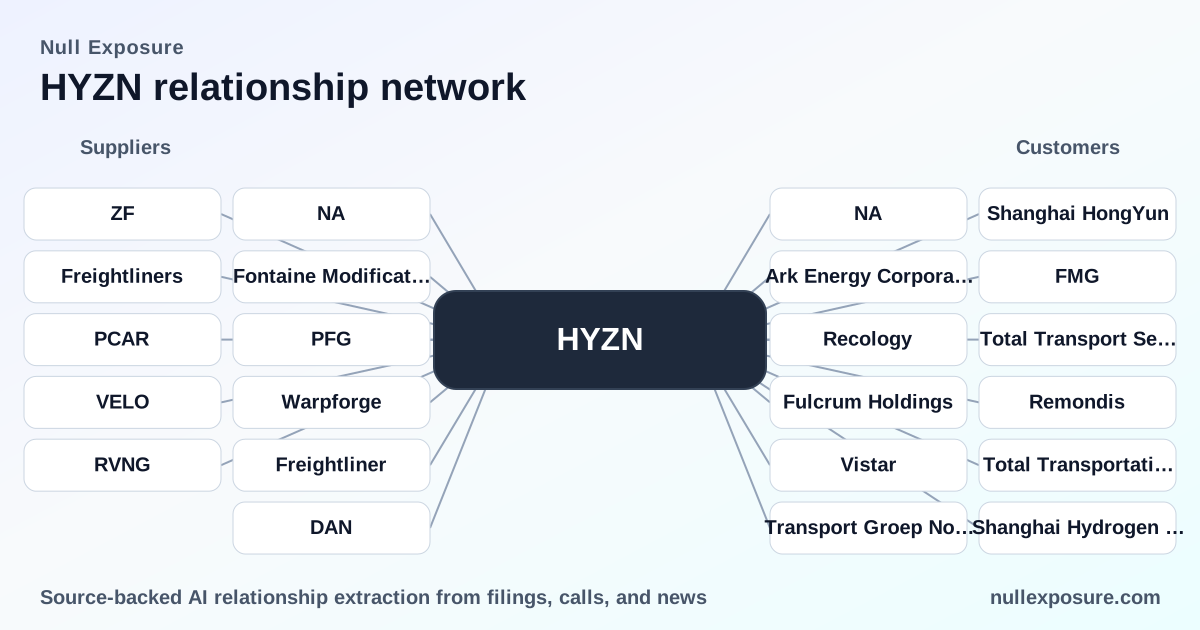
Below are plain-English summaries of every supplier relationship cited in the available materials, with source context for verification.
Fontaine Modification
Hyzon uses Fontaine Modification as a production and upfitting partner to transition prototypes into production and to execute repower/upfit programs that remove diesel components and install Hyzon’s fuel cell and hydrogen storage systems. This collaboration was referenced in Hyzon’s Q3 2024 earnings call and in a repower program description reported in 2022 by TheBuzzEV. (Hyzon Q3 2024 earnings call; TheBuzzEV repower report, FY2022)
New Way Trucks
Hyzon is executing a refuse truck program in partnership with New Way Trucks, leveraging New Way’s body-manufacturing expertise to combine conventional refuse bodies with Hyzon’s zero-emission drivetrain. The Q3 2024 earnings call describes this as an active program. (Hyzon Q3 2024 earnings call)
PFG
Hyzon has an offtake or supply relationship with PFG for hydrogen-fuel vehicles, noted in coverage of a supply announcement in 2024; this indicates commercial traction in waste/refuse or service fleets. (TheBuzzEV news on Hyzon–PFG, FY2024)
Warpforge
Warpforge supplies composite materials and automated manufacturing capability for bus body shells, helping Hyzon reduce vehicle weight on projects like the Superbus. This partnership dates back to product development activity reported in 2020. (Sustainable Bus coverage, FY2020)
Freightliner
Freightliner chassis are consistently used as the base for Hyzon’s installations and repower projects; Hyzon has demonstrated fuel cell installations in new and recent-model Freightliner Cascadia chassis. Multiple press and show coverage document Freightliner chassis use in North America. (Transport Topics and Fleet Equipment coverage, FY2021–FY2022)
Freightliners (show/demo context)
Hyzon showcased upfitted Freightliner vehicles at industry events, highlighting the commercial integration between Hyzon powertrains and Freightliner platforms during demonstrations and exhibitions. (Fleet Equipment photo gallery and ACT Expo coverage, FY2022)
Dana
Dana components have been used in Hyzon vehicles presented at trade shows, indicating supply relationships for driveline or powertrain components on demonstration fleets. (Fleet Equipment show coverage, FY2021)
ZF
ZF drivelines are referenced as part of Hyzon’s vehicle configurations, signaling that certain vehicle variants use established driveline suppliers rather than Hyzon-designed components. (Fleet Equipment coverage, FY2021)
DAF
Hyzon built a HyMax 450 Puller on a DAF Class-8 chassis for a commercial customer demonstrator, pointing to DAF as a chassis source for select international builds. (DairyReporter coverage of FrieslandCampina project, FY2021)
Velocity
Velocity has been a regional collaborator in Southern California, bringing battery-electric vehicle experience to Hyzon’s hydrogen vehicle deployments, suggesting geographic and technical support for pilot fleets. (Fleet Equipment coverage, FY2021)
Raven
Hyzon is working with Raven to develop up to 250 waste-to-green-hydrogen hubs, indicating an upstream hydrogen-supply partnership aimed at securing fuel availability for fleet customers. (Fleet Equipment coverage, FY2021)
What these partnerships collectively reveal about Hyzon’s operating model
- Contracting posture: Hyzon operates as an integrator, not a fully vertical OEM—chassis, bodywork, and several drivetrain components are sourced from third parties while Hyzon supplies the fuel cell stack, hydrogen storage, and integration services.
- Supplier concentration and criticality: A small number of assembly and chassis partners (Fontaine, Freightliner, DAF) are critical to production scale. That concentration raises execution risk if any partner’s capacity or contractual terms change.
- Maturity of relationships: Several partnerships are in pilot, demonstration, or limited-production phases (exhibitions and repowers dominate the record), indicating early commercial maturity rather than sustained, high-volume production.
- Commercial leverage: Hyzon captures value through system sales and upfits rather than chassis manufacturing, which lowers capital intensity but increases dependency on third-party manufacturing capacity and long-term supplier agreements.
For more on how supplier structure affects enterprise risk and valuation, see our research hub at https://nullexposure.com/.
Investment implications: risk and upside checklist
- Execution risk is front and center. With limited in-house chassis manufacturing, Hyzon’s ability to meet delivery schedules depends on coordination with upfitters and OEM chassis availability.
- Revenue scalability depends on repower and fleet contracts. Partnerships like PFG and Raven target fleet customers and fuel supply — these are strategic to convert demonstrations into recurring revenue.
- Cost control and margins hinge on supplier terms. Using external driveline and composite suppliers reduces CapEx but compresses gross margin if integration costs or supplier prices rise.
- Geographic and product diversification is limited but growing. Relationships span North America, Europe, and Australia, signaling nascent international deployment but still low global scale today.
Final takeaways and next steps for investors
Hyzon’s business model is integration-led, partnership-dependent, and capital-light relative to traditional OEMs—a structure that accelerates market entry but concentrates operational risk in a handful of assembly and chassis suppliers. Investors should prioritize monitoring contractual milestones with Fontaine, Freightliner/DAF channels, and hydrogen-supply initiatives such as Raven, because these relationships will determine Hyzon’s ability to move from pilots to volume sales.
To review live supplier mappings and get alerts when partner statuses change, visit https://nullexposure.com/. For bespoke diligence and supplier-level scenario analysis, start with our platform at https://nullexposure.com/ and request a briefing.