Integra LifeSciences (IART): supplier relationships, strategic posture, and what investors should price in
Integra LifeSciences develops and sells surgical implants and instruments across neurosurgery, orthopedics and general surgery, monetizing through direct product sales, contract manufacturing, and value-accretive acquisitions that expand its hardware and biologics portfolio. Revenue drivers are a mix of recurring product sales, long-term supply agreements, and milestone‑contingent acquisition payments, while financing and hedging arrangements support working capital and cross‑currency exposure. For a deeper supplier-risk and partner map, visit https://nullexposure.com/.
How Integra’s supplier posture drives operating leverage and risk
Integra runs a hybrid operating model: a vertically integrated manufacturer and acquirer that still depends on third‑party vendors for specialized components, sterilization and IT services. That structure creates predictable gross margins on proprietary collagen and matrix products while exposing the firm to supplier concentration and regulatory risk.
- Contracting posture: Long‑term contractual commitments drive capital planning — term loans, securitization facility amendments and long supplier agreements dominate the picture — but active short‑term hedging and forward contracts handle currency and working capital needs.
- Concentration and criticality: The business depends on a handful of sole‑source suppliers for certain raw materials and on regulated contract manufacturers for sterilization and compliance‑critical steps, which elevates operational risk.
- Maturity: Supply relationships are a mix of mature, long‑dated arrangements (multi‑year leases, term loans, supplier relationships amortized over 30 years) and active short‑term contracts (FX forwards, vehicle leases, receivables financing).
- Spend profile: Capital deployment is lumpy — multiple >$100M transactions (Acclarent, securitization and term loan exposures) coexist with mid‑range M&A and smaller operating leases.
For a consolidated supplier and counterparty intelligence feed tailored to investors, see https://nullexposure.com/.
Material relationships you must know (each cited)
Below are every relationship referenced in the collected results, with a concise plain‑English summary and a source.
-
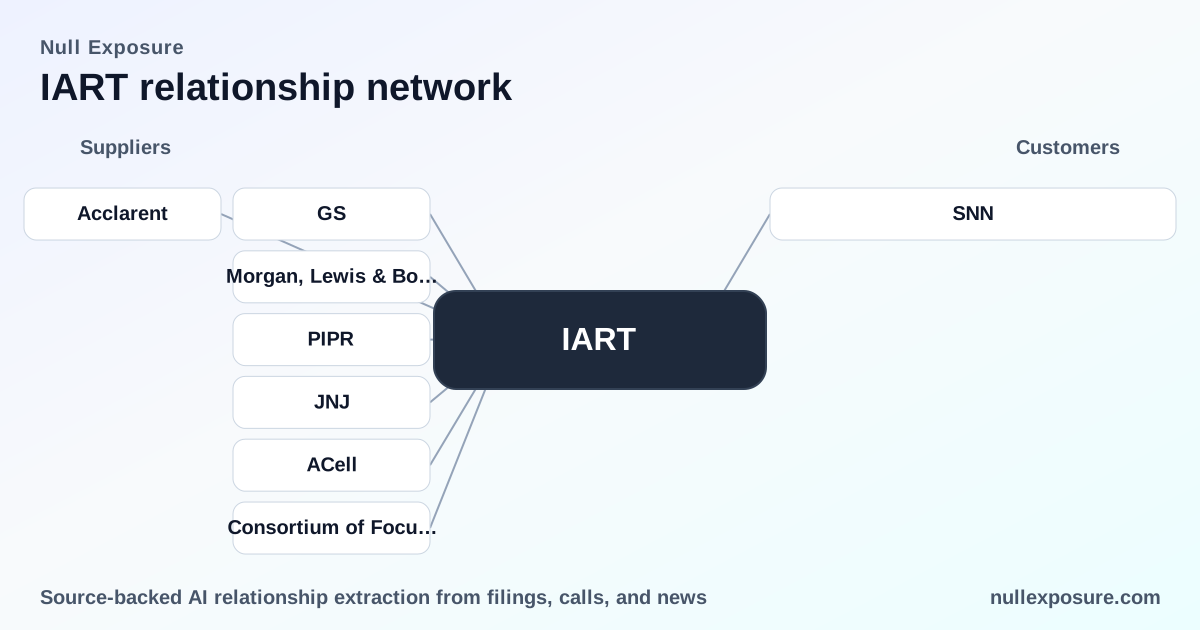
Goldman, Sachs & Co. served as Integra’s exclusive financial advisor on the announced Acclarent acquisition, underwriting the strategic buy and advising deal economics. Source: GlobeNewswire press release, December 13, 2023 — https://www.globenewswire.com/news-release/2023/12/13/2795373/0/en/Integra-LifeSciences-Announces-Definitive-Agreement-to-Acquire-Acclarent.html
-
Morgan, Lewis & Bockius LLP acted as legal counsel to Integra on the FY2020 divestiture and again on later transactions, providing transactional and regulatory counsel for sale and acquisition processes. Source: GlobeNewswire press release, September 29, 2020 — https://www.globenewswire.com/news-release/2020/09/29/2100557/0/en/Integra-LifeSciences-Announces-Definitive-Agreement-to-Divest-its-Extremity-Orthopedics-Business-to-Smith-Nephew-for-240-Million.html
-
Piper Sandler & Co. functioned as financial advisor to Integra in the FY2020 divestiture to Smith & Nephew, supporting valuation and sale execution for the extremity orthopedics business. Source: GlobeNewswire press release, September 29, 2020 — https://www.globenewswire.com/news-release/2020/09/29/2100557/0/en/Integra-LifeSciences-Announces-Definitive-Agreement-to-Divest-its-Extremity-Orthopedics-Business-to-Smith-Nephew-for-240-Million.html
-
Johnson & Johnson (J&J) was the seller of the Acclarent ENT business that Integra agreed to acquire for approximately $275–282 million in cash, representing a strategic tuck‑in for its ENT and hardware portfolio. Source: MedTech Dive coverage, December 2024 reporting — https://www.medtechdive.com/news/integra-lifesciences-layoffs-plant-closure-indiana/708607/
-
Morgan, Lewis & Bockius LLP (second entry) again shows up as legal advisor in the Acclarent transaction, underscoring repeat use of the same external counsel for material M&A. Source: GlobeNewswire press release, December 13, 2023 — https://www.globenewswire.com/news-release/2023/12/13/2795373/0/en/Integra-LifeSciences-Announces-Definitive-Agreement-to-Acquire-Acclarent.html
-
ACell was acquired by Integra in 2021 (Urinary Bladder Matrix technology acquisition) and the relationship persists as an acquired technology line supporting regenerative product sales. Source: MassDevice reporting on plant and integration issues, referencing the 2021 ACell acquisition — https://www.massdevice.com/integra-lifesciences-announces-a-plant-closure/
-
Johnson & Johnson MedTech (Ethicon family) is the corporate seller from which Acclarent and related ENT assets were purchased, with the deal priced at roughly $275M plus contingent regulatory milestone payment mechanics. Source: MassDevice reporting and GlobeNewswire, December 2023/April 2024 — https://www.massdevice.com/integra-lifesciences-announces-a-plant-closure/ and https://www.globenewswire.com/news-release/2023/12/13/2795373/0/en/Integra-LifeSciences-Announces-Definitive-Agreement-to-Acquire-Acclarent.html
-
Ethicon, Inc. (a J&J MedTech company) is specifically named as the seller of Acclarent in the definitive agreement, tying Integra to a major strategic acquisition from a global medtech leader. Source: GlobeNewswire press release, December 13, 2023 — https://www.globenewswire.com/news-release/2023/12/13/2795373/0/en/Integra-LifeSciences-Announces-Definitive-Agreement-to-Acquire-Acclarent.html
-
Consortium of Focused Orthopedists, LLC (CFO) is a counterparty receiving $41.5M from Integra in connection with the Smith & Nephew transaction as compensation tied to development agreements for shoulder arthroplasty products. Source: GlobeNewswire press release, September 29, 2020 — https://www.globenewswire.com/news-release/2020/09/29/2100557/0/en/Integra-LifeSciences-Announces-Definitive-Agreement-to-Divest-its-Extremity-Orthopedics-Business-to-Smith-Nephew-for-240-Million.html
-
Acclarent (the acquired ENT business) is the operating asset acquired from J&J, now integrated in Integra’s ENT/hardware segment with purchase price subject to customary adjustments and potential regulatory milestones. Source: MedTech Dive (coverage of the Acclarent acquisition and integration), December 2024 — https://www.medtechdive.com/news/integra-lifesciences-layoffs-plant-closure-indiana/708607/
Commercial and operational constraints that change valuation
Integra’s public filings and press coverage identify a set of company‑level constraints that shape upside and downside.
- Long‑term contracts dominate capital structure and supply planning: long‑dated term‑loan amortization, securitization facility amendments and supplier relationships amortized over decades create high fixed commitments and reduce short‑term flexibility.
- Short‑term hedging and operational contracts coexist: currency forwards and swap positions (CNH and JPY forwards) and vehicle leases settle inside 12 months and deliver tactical liquidity management.
- Contingent and usage‑based payments are embedded in M&A: acquired businesses carry milestone payments (ACell up to $100M; SIA up to $90M), producing potential future cash outflows tied to revenue or regulatory events.
- Licensing and royalty exposure exists: royalties are contractually owed for certain technology and distribution rights, implying ongoing revenue share obligations.
- Geographic exposure is global but concentrated in NA/EMEA for operations: supply of bovine and tendon inputs from U.S. and New Zealand, instrument procurement in Germany, and receivables/FX exposure in APAC mean regulatory or trade shocks in these regions will move operating results.
- Materiality and criticality are high: critical single‑source components, sterilization suppliers and regulatory compliance are identified as material risks that can disrupt production and revenue.
Investment implications and calls to action
Acquisitions are the growth lever: the Acclarent purchase and prior ACell/SIA deals expand addressable markets and product stacks, but they also introduce contingent liabilities and integration risk. Balance‑sheet commitments are nontrivial: term loan and securitization facility outstanding balances and active hedges compress financial flexibility in a capital‑intensive roll‑up model.
- For investors focused on supplier risk, the combination of long‑term supplier contracts, sole‑source components and reliance on third‑party sterilization are the most actionable operational exposures.
- For operators, prioritize supplier redundancy for sterilization and raw materials, accelerate quality management program (CMP) execution and quantify contingent M&A payouts in liquidity plans.
For a focused supplier‑risk dashboard and counterparty heat map tailored to corporate investors, visit https://nullexposure.com/.
Recommended next steps for investors and operators
- Track integration milestones and contingent payment triggers for Acclarent, ACell and SIA as these drive future cash outflows and revenue recognition.
- Monitor supplier audits and third‑party sterilization capacity as near‑term operational red flags.
- Reconcile hedging maturities with currency exposures disclosed in quarterly filings and stress‑test covenant capacity against term‑loan amortization.
To access an interactive supplier risk report and ongoing updates on IART counterparties, go to https://nullexposure.com/.
Key takeaway: Integra’s business combines durable product franchises and acquisitive growth with concentrated supplier exposures and multi‑year financial commitments; investors should price both the upside of tuck‑ins and the execution risk inherent in regulatory, sterilization and single‑source supply dynamics.