IB Acquisition Corp. Right (IBACR): Supplier relationships that shape a SPAC’s runway
IB Acquisition Corp. Right (IBACR) is a SPAC vehicle that monetizes by raising sponsor and public capital, holding those proceeds in a trust and then using its balance sheet and relationships to effect a business combination within a defined time window; value is unlocked when a target is acquired and post-combination equity or fees are realized. The company’s economics are driven by underwriting and finder/marketing arrangements, modest recurring administrative spending, and a trust-account funding model that concentrates counterparty exposure in government-backed cash instruments. For a practical supplier-risk read on IBACR, see more at https://nullexposure.com/.
Quick take: What investors need to know up front
IBACR’s supplier footprint is small and transaction-focused. Two external relationships dominate current disclosures: a law firm retained for the IPO and a financial/marketing advisor contracted to drive the business-combination process. Recurring operating costs are intentionally modest, while contingent and success-based fees create asymmetric incentives around completing a deal inside the SPAC lifecycle.
Explore supplier risk coverage and vendor intelligence at https://nullexposure.com/ for deeper diligence.
The two named suppliers and what they do for IBACR
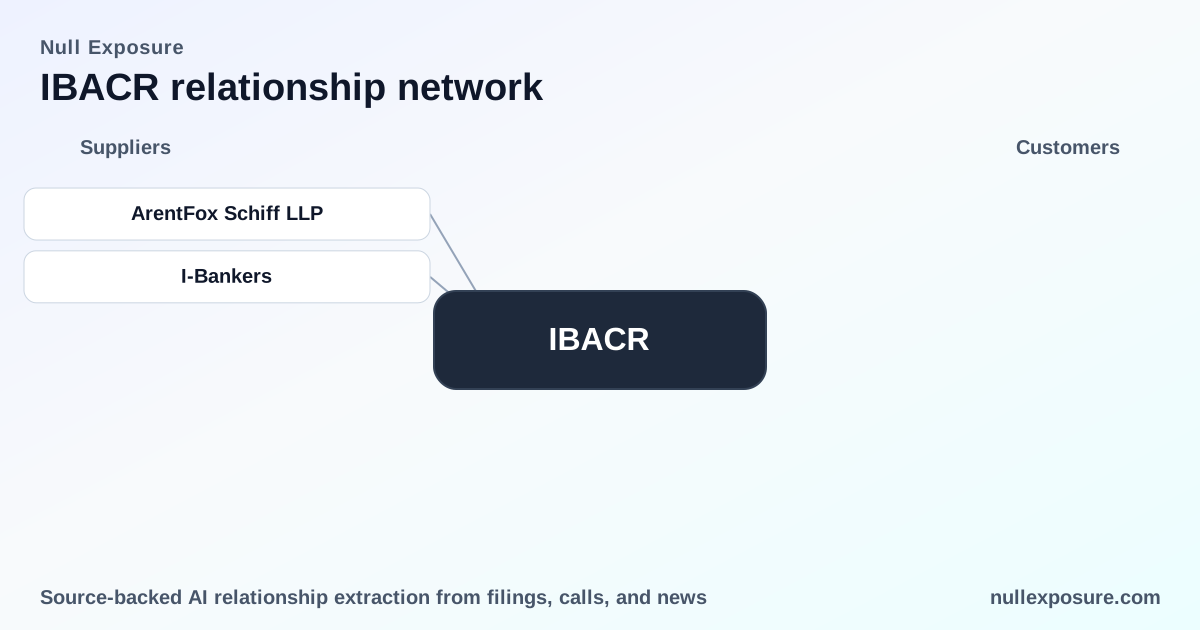
Below are the complete, disclosed supplier relationships in public filings and press: ArentFox Schiff LLP and I-Bankers.
-
ArentFox Schiff LLP — ArentFox Schiff acted as counsel representing IB Acquisition Corp. in its initial public offering that raised $115 million; that engagement is recorded in a press release dated March 10, 2026. According to the ArentFox press release, the firm represented the sponsor and underwriters in IPO documentation and closing activities (ArentFox Schiff press release, March 10, 2026: https://www.afslaw.com/perspectives/press-releases/arentfox-schiff-represents-ib-acquisition-corp-115-million-ipo).
-
I-Bankers — The company engaged I-Bankers under a business combination marketing agreement to provide marketing and transaction-related services; IBACR will pay I-Bankers a success-based M&A fee equal to 3.5% of IPO gross proceeds (aggregate $4,025,000) on consummation, plus a finder fee of 1.0% of consideration issued to a target if I-Bankers introduced that target (IBACR Form 10-K disclosures summarized in a Marketscreener article covering FY2025 filings).
How these relationships affect IBACR’s operating model and investor outcomes
IBACR’s supplier profile reveals a classic SPAC operating posture: lean fixed costs, outsized contingent fees and concentrated cash safeguards.
-
Contracting posture — short-term and contingent. Administrative services are structured as monthly, cancellable arrangements that cease at combination or liquidation, and material advisor compensation (I-Bankers) is payable only upon consummation. This structure preserves cash but concentrates economic consequences on a successful combination window.
-
Concentration and counterparty type. The trust account, central to the SPAC model, is invested primarily in U.S. Treasury or Treasury-backed money market instruments; that places the company’s liquidity under low-credit-risk, government-backed custody but also centralizes payment timing and legal exposure tied to the trust account.
-
Criticality and incentives. I-Bankers’ success fee equates to a meaningful percentage of proceeds (3.5% of IPO gross proceeds), which creates aligned but potent incentives to close deals quickly — an outcome that benefits completion economics but can also raise governance questions when balancing deal quality versus deal timing.
-
Maturity and lifecycle constraints. IBACR operates with a finite combination period (typical 24 months), making supplier terms short-lived but operationally critical in the near term; administrative fees are small but non-trivial if the combination timeline runs to full term.
-
Spend profile and capital allocation. Outside the trust account, available working capital is limited; non-trust spend bands show a mix of sub-$100k recurring administrative items and one-off underwriting and professional fees in the hundreds of thousands to low millions. This makes fee predictability and contingency management central to preserving shareholder value.
Risk factors that come through the supply map
-
Success-fee concentration: Paying I-Bankers a multi-million dollar M&A fee on closing increases the cost of any transaction and cannot be reclaimed if redemptions reduce deal size. (Marketscreener summary of FY2025 filings.)
-
Vendor claims and trust-account exposure: IBACR seeks waivers to prevent vendors from accessing trust funds, but waivers are not guaranteed or legally foolproof; vendor or creditor claims could erode trust-account balances. This is a structural risk inherent in blank-check vehicles.
-
Limited operating cushion: With most proceeds intended for target capital, the small working capital pool increases reliance on sponsor loans, contingent financing, or tighter cost management to fund transaction expenses.
-
Governance and conflicts: Underwriter and advisor economic ties to the SPAC create potential conflicts of interest when sourcing and structuring business combinations; disclosures indicate such conflicts exist and are managed through customary governance steps.
What investors and counterparties should watch next
-
Monitor any amendment or extension of the combination period and whether discrete working-capital loan terms are documented; both materially change counterparty risk and sponsor skin-in-the-game.
-
Track public filings or press releases for fee adjustments or additional advisors; any new service provider that attracts mid-to-high spend should be added to the supplier map immediately.
-
Review redemption rates and trust-account balances at each quarter; the effective fee burden per remaining public share rises with higher redemptions.
Learn how to automate supplier monitoring and risk scoring for SPACs like IBACR at https://nullexposure.com/ — it’s the fastest route from disclosure to decision.
Final view and recommended actions
IBACR’s supplier footprint is concentrated and transaction-centric: law and underwriting counsel for IPO execution, and a marketing/finder advisor whose fee structure materially affects the economics of any deal. For investors evaluating IBACR exposure, the key diligence items are the timing of the business combination, redemption dynamics, whether additional advisors are retained, and any new agreements that change fee or funding profiles.
If you want continuous supplier intelligence and tailored alerts for counterparty changes or fee-risk shifts across SPACs and blank-check companies, start a trial or request a briefing at https://nullexposure.com/.
Bottom line: IBACR runs a low-fixed-cost model with outsized contingent pay-outs; the supplier landscape is small but strategically consequential to investor outcomes.