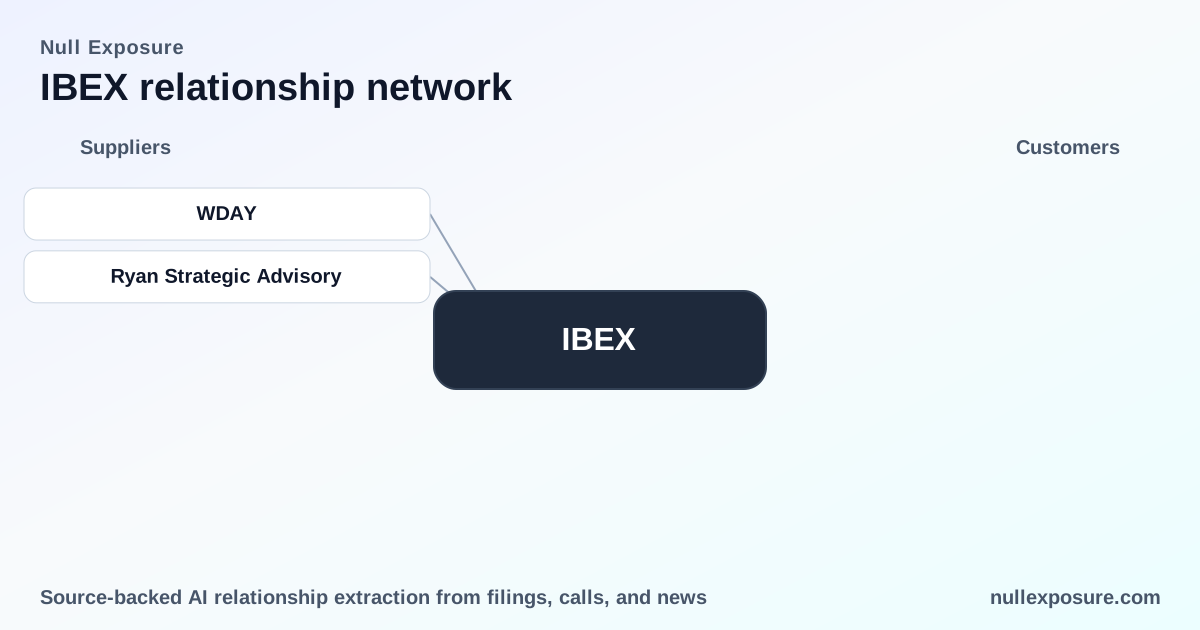
IBEX Ltd: Supplier Relationships, Contracts and Operational Constraints Investors Should Price In
IBEX Ltd operates as a global, technology-enabled customer lifecycle and BPO provider that monetizes through outsourcing services, digital sales and marketing, reseller relationships, and software/cloud implementation fees. The company generates recurring revenue from multi-year delivery center contracts and variable revenue from digital lead generation and higher-margin software-enabled services, while funding expansion through bank credit facilities and targeted capex for offshore capacity. For investors, the essential thesis is: IBEX is a service-led technology business with meaningful operating leverage driven by offshore labor arbitrage, third‑party software, and long-term property/telecom commitments.
Explore supplier intelligence and comparative exposure at https://nullexposure.com/.
How IBEX gets paid and where costs come from
IBEX’s revenue profile is primarily service-based: pay-for-performance BPO contracts and sales/marketing channels plus growing AI-enabled engagement offerings. Key monetization and cost drivers include:
- Service contracts and delivery centers: The company operates 30 delivery centers and therefore bills clients for ongoing agent labor, technology and managed services.
- Reseller/digital channels: Reseller commissions and lead expenses are material to customer acquisition and have increased materially year-over-year.
- Software and cloud: IBEX capitalizes certain cloud implementation costs and incurs software license fees that rose in FY2025.
- Financing and facilities: The business uses committed revolving credit facilities (U.S. and UAE) to fund working capital and bonds for performance guarantees.
These drivers produce a mixed contracting posture: meaningful long‑term leases and purchase obligations (2–15 year leases for delivery centers), together with short-term hedging and vendor contracts (currency hedges and option-style arrangements up to 18 months). This mix creates both stability in capacity and exposure to renewal and FX risk.
What the public relationships say about supplier exposure
Below I cover every supplier relationship surfaced by the research results and what each implies for procurement and operational risk.
Workday — implementation costs feeding SG&A
IBEX referenced higher selling, general and administrative expenses related to investments in teams, technology and the Workday implementation, reported during an earnings call transcript for FY2025 (InsiderMonkey, March 10, 2026; https://www.insidermonkey.com/blog/ibex-limited-nasdaqibex-q4-2025-earnings-call-transcript-1608508/). This confirms Workday as a vendor driving near-term operating cost increases tied to ERP/HCM transformation.
Ryan Strategic Advisory — research partner on AI adoption
In June 2025 IBEX published a press release noting a global survey conducted by Ryan Strategic Advisory that highlights enterprise CX leaders’ AI deployment plans, positioning IBEX as a market commentator and beneficiary of accelerating AI demand in CX services (GlobeNewswire / Sahm Capital, June 10, 2025; https://www.sahmcapital.com/news/content/global-survey-reveals-81-of-enterprise-cx-leaders-plan-to-deploy-ai-in-2025-2025-06-10). This relationship reinforces IBEX’s commercial angle on AI-enabled offerings and demand-generation activities.
Constraints and what they tell investors about the operating model
The company-level constraints extracted from filings and disclosures give a clear vendor profile:
- Contracting posture — mixed tenure: IBEX runs a portfolio of long-term leases (2–15 years) for delivery centers and short-term financial instruments and hedges (1–18 months) for FX exposure, indicating a business that balances capacity permanence against financial flexibility.
- Concentration and geography: The operational footprint is global but heavily concentrated in APAC and LatAm offshore centers: the Philippines, Pakistan, Jamaica, Nicaragua and the U.S. (30 centers, ~20,456 workstations). Payroll and local-currency costs are material (significant percentages of salary expenses in PHP, JMD, PKR), which creates natural FX exposure that IBEX actively hedges via collars.
- Criticality and vendor reliance: Technology, telecom and third‑party cloud/security vendors are mission-critical. IBEX states it relies on third-party providers for most systems, hardware and software and uses third‑party incident response and threat detection services — making supplier resilience and cybersecurity practices central to operational continuity.
- Maturity and stage: Vendor relationships are largely active with ongoing purchase obligations and bank facilities in place; there are isolated terminations (e.g., prior PNC credit facility) consistent with refinancing activity rather than vendor failure.
- Spend profile: Spend is multi-band: large payroll and cost of services >$100M, discrete investments and leases in the $1M–$100M band, and numerous smaller commitments under $100k. This suggests both systemic vendor spend and many tactical supplier relationships to manage.
What that means for risk and return
- Cost inflation and lease renewal risk are real—long-term lease exposure and recent significant lease additions create operating leverage that will reward revenue growth but penalize growth shortfalls. (Company annual lease activity and non‑cancelable obligations are disclosed in the FY2025 filings.)
- FX volatility affects margins—with a high share of payroll in PHP, JMD and PKR, a 10% move in PHP materially changes operating expenses; IBEX hedges a portion of exposure but not all.
- Third‑party tech/AI integration is a double-edged sword—outsourcing AI capabilities accelerates productization and margins but raises vendor integration and governance risk; IBEX points to both adoption of third‑party AI and the need for controls.
- Liquidity and bank facilities reduce short-term financing risk—the company has committed facilities (U.S. $25M revolver; UAE $50M facility) and reported unused availability, which supports operations while offshore expansion continues.
Explore a deeper supplier risk profile and prioritized remediation actions at https://nullexposure.com/.
Practical diligence checklist for investors and operators
- Verify lease expiry ladder and renewal clauses for delivery centers and material cost impacts.
- Review FX hedging policy and the percentage of PHP/PKR/JMD costs hedged over the next 12 months.
- Audit third‑party AI and cloud providers for SLAs, remediation/penalty clauses and cybersecurity certifications.
- Confirm bank facility covenants and bond guarantees (UAE bid/performance guarantees) that could constrain liquidity.
- Assess reseller and digital channel margin sustainability, given the rapid increase in commission spend.
Bottom line and next steps
IBEX combines a service-centric revenue engine with increasing software and AI enablement; supplier exposure is concentrated in long-term property and telecom commitments, offshore labor markets and third-party technology vendors. Investors should weight upside from higher-margin digital/AI offerings against lease renewal, FX and third-party integration risks.
For a practical supplier exposure briefing or to benchmark IBEX against peers, visit https://nullexposure.com/ for tailored intelligence and vendor risk scoring.