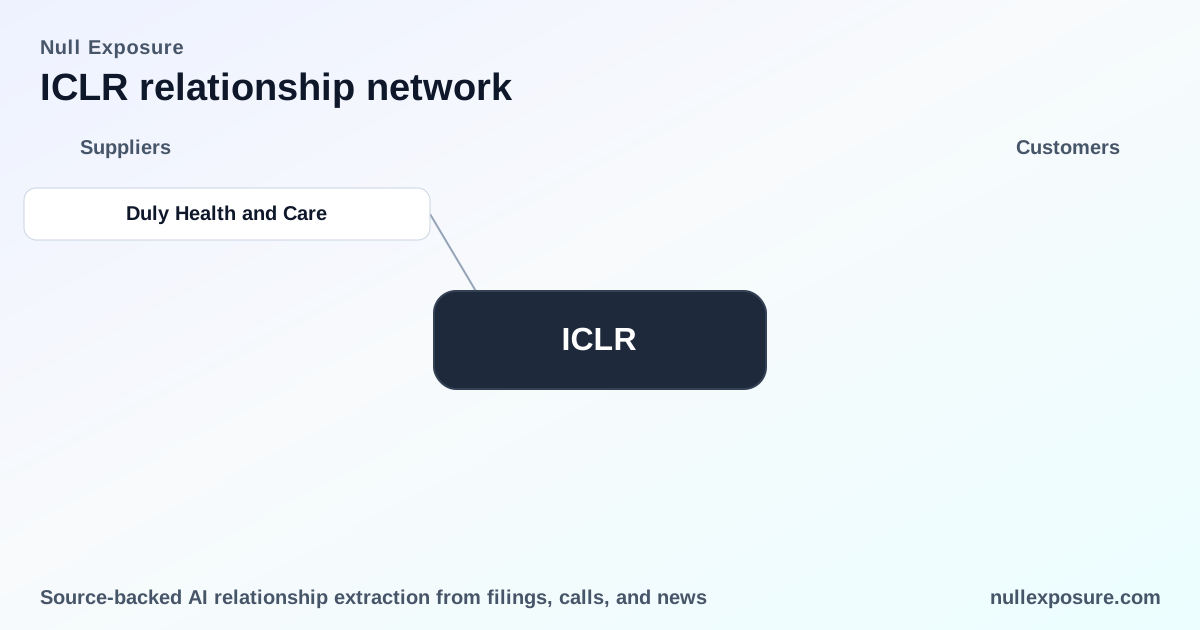
ICON PLC (ICLR) — supplier relationships and what they mean for investors
ICON PLC is a global clinical research organization that sells outsourced clinical development, site management, and related services to pharmaceutical and biotech companies, hospitals, and clinical networks. The company monetizes by contracting multi-phase clinical trials and associated services (site management, patient recruitment, data services and trial execution) on fee-for-service and milestone bases, converting scale and geographic reach into recurring clinical revenue. ICON’s balance of profitable scale (Revenue TTM $8.10bn; EBITDA $1.52bn) and a diversified client base gives it negotiating leverage with site and hospital partners while keeping operational execution close to customers.
For a practical view of supplier exposure and contractual posture, visit https://nullexposure.com/ for detailed supplier intelligence.
What the single-site relationship in the record tells us
ICON’s supplier footprint in the supplied results is narrow but strategically chosen. The data shows a targeted expansion into oncology site networks through a partnership with a regional health system.
Duly Health and Care — expansion into local oncology capacity
ICON expanded its oncology research footprint by opening the Brian Moran Cancer Institute at Duly Health and Care in Illinois and integrating that center into its Accellacare Site Network in January 2026. This development adds medical, radiation and surgical oncology specialists to ICON’s site capabilities and strengthens local patient access for oncology trials, according to reporting in March 2026. (Source: Simply Wall St coverage, first reported March 2026.)
- The move reflects ICON’s strategy to deepen site-level relationships that accelerate recruitment for oncology studies. According to the Simply Wall St article, ICON staffed a comprehensive oncology team at the center as part of the Accellacare network operation (March 2026).
Why this matters to investors and operators
This single documented relationship illustrates several relevant operating model characteristics for ICON as a supplier partner and buyer of clinical capacity:
- Concentration profile — low single-site concentration but strategic aggregation. ICON’s global revenue base ($8.10bn TTM) and network approach mean any one regional site is unlikely to drive material top-line volatility, yet aggregated site-level partnerships create a competitive moat in high-demand therapeutic areas such as oncology.
- Contracting posture — centralized contracting with local delivery. ICON’s business model uses centralized commercial frameworks with local site execution, allowing it to standardize master service agreements while sourcing clinical capacity locally through partnerships like Duly Health and Care.
- Criticality — sites are operationally critical but substitutable over time. Clinical site access is a critical execution asset for trial timelines and enrollment, yet ICON’s scale and diversified site network reduce dependency on any single partner.
- Maturity and credit profile — established, profitable CRO. ICON’s EV/EBITDA of 8.92 and positive operating margin (12.7% TTM) reflect mature operations and the ability to absorb supplier cost changes or invest in site expansion without immediate balance-sheet stress.
Note: The supplied constraints set contained no supplier-specific contractual limitations, penalties, or exclusivity flags; therefore, no constraint is attributed to the Duly Health and Care relationship specifically. This absence itself is a company-level signal: no documented supplier constraints were provided in the dataset used to prepare this review.
For a deeper dive into supplier exposures across ICON’s operating footprint, see the portal at https://nullexposure.com/.
Operational implications for risk and upside
ICON’s site network expansion strategy supports faster enrollment and higher-value therapeutic trials, particularly in oncology where trial complexity and per-patient economics are elevated. Investors and operators should weigh the following:
- Upside: Strengthening local oncology capacity improves time-to-enroll and supports higher-margin, complex trials. The Duly Health and Care integration is consistent with ICON’s strategy to convert clinical site relationships into repeatable revenue streams.
- Execution risk: Site activation, regulatory approvals, and local investigator relationships drive execution; these are operational rather than balance-sheet risks. ICON’s scale mitigates supplier concentration but does not eliminate site-specific delays.
- Contract leverage: ICON’s global scale and diversified revenue (Revenue per Share TTM $101.61; Market Cap ~$7.59bn) create negotiating power on fees and terms, lowering procurement risk for clinical capacity compared with smaller sponsors.
Practical checklist for due diligence on ICON supplier exposure
Investors and operators evaluating ICON supplier relationships should prioritize these checks:
- Confirm the type of site agreement (master service agreement, exclusive site network participation, revenue-share) and whether it includes enrollment guarantees or penalties.
- Verify geographic and therapeutic concentration across ICON’s site network to understand enrollment risk in key programs (oncology, CNS, rare diseases).
- Assess timeline sensitivity: how much trial value depends on the new site’s activation and first-patient-in timing.
- Reconcile public reporting with third-party coverage: cross-check press reports like the March 2026 Simply Wall St piece against ICON’s own clinical site disclosures and trial registries.
Final assessment and next steps
ICON’s partnership with Duly Health and Care is a targeted, strategically consistent expansion of its Accellacare site network that strengthens oncology enrollment capability without creating single-site concentration risk at the enterprise level. The company’s financial profile (positive operating margins and an EV/EBITDA under 9) supports continued investment in site relationships while maintaining operating discipline.
If you are evaluating supplier risk or operational exposure at ICON, begin with a targeted supplier mapping exercise and master agreement review—resources and supplier intelligence are available at https://nullexposure.com/ to accelerate that work. For portfolio teams assessing clinical execution risk across CRO suppliers, consider subscribing to consolidated supplier relationship reports at https://nullexposure.com/ to reduce discovery time and improve decision quality.
Bold conclusion: ICON’s supplier strategy combines centralized contracting power with localized clinical execution; site partnerships like Duly Health and Care improve trial economics and pace without materially increasing single-point supplier risk at the corporate level.