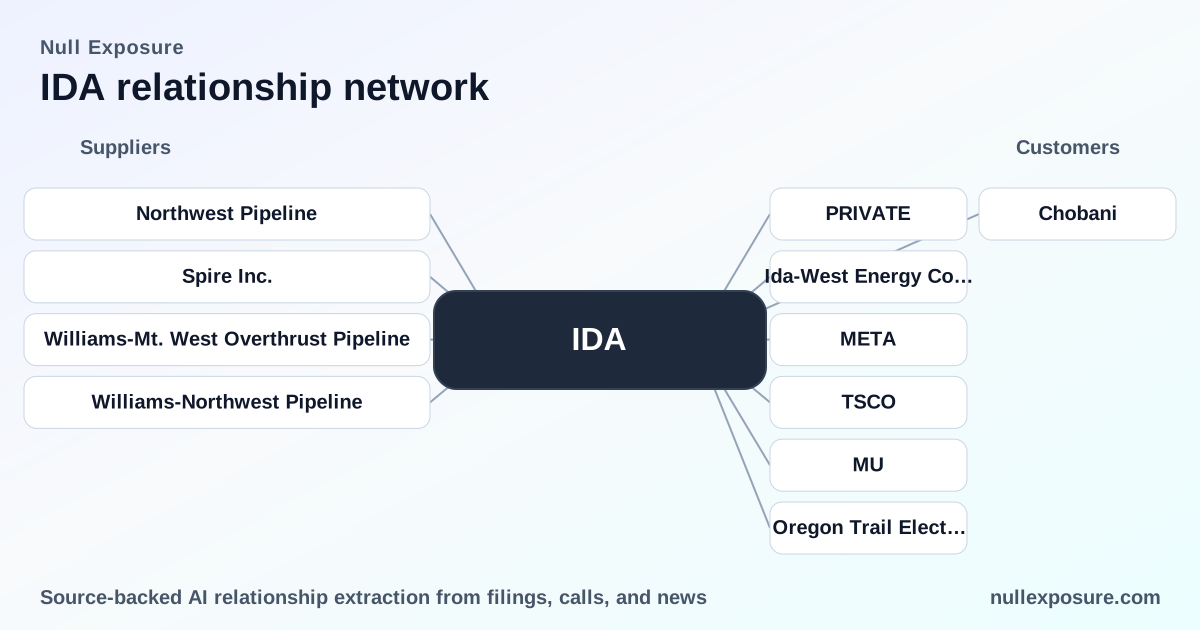
IDACORP’s supplier map: pipelines, storage and what investors should price in
IDACORP (IDA) is a vertically integrated utility that monetizes through regulated retail distribution and merchant wholesale energy sales, supported by a mix of company-owned generation, long‑term power purchase agreements, and contracted fuel and transmission services. For investors, the supplier picture is dominated by long-term gas transportation and storage contracts that underpin dispatchable generation and reliability; those contracts are a structural driver of Idaho Power’s cost profile and capital planning. Learn more about supplier relationships and risk exposure at https://nullexposure.com/.
How Idaho Power’s commercial model connects to suppliers
Ida‑Power’s operating model is capital‑intensive and contract‑heavy. The company locks in multi‑decade power purchase agreements and long‑term fuel transportation and storage to ensure reliability for ratepayers while managing commodity exposure through hedges and market purchases. That posture produces two investor‑relevant characteristics: concentration of counterparty risk in essential pipeline and storage partners, and high absolute spend on purchased power and infrastructure that flows through regulated cost recovery mechanisms.
- Contracting posture: Predominantly long‑term commitments across generation PPAs, pipeline transport, and storage. The 10‑K documents contract terms ranging from one year up to 35 years, including multi‑decade transmission capacity entitlements.
- Spend profile and scale: Idaho Power reports purchased power expense in the hundreds of millions annually and capital commitments in the billions over the next five years, indicating supplier engagements that exceed $100m in aggregate for key categories.
- Criticality and materiality: Hydropower and contracted gas/coal remain core to supply; supplier disruptions would be material to operations and rates, and some facilities and contracts are designated or treated as critical infrastructure in regulatory filings.
The pipeline and storage relationships you need to know
The 2024 Form 10‑K identifies four named pipeline and storage counterparties that support Idaho Power’s fuel and storage needs. Each relationship is active and tied to operations.
Northwest Pipeline
Idaho Power has a long‑term storage service agreement with Northwest Pipeline for 131,453 MMBtu of storage capacity, supporting seasonal and peak gas requirements for Idaho Power’s plants. According to the company’s FY2024 Form 10‑K, this storage commitment is part of the firm arrangements Idaho Power relies on for reliable gas supply.
Spire Inc.
Idaho Power has a long‑term storage service agreement with Spire Inc. for 1 billion cubic feet of storage capacity, providing another anchored source of inventory for peaking and system needs, per the FY2024 Form 10‑K.
Williams‑Mt. West Overthrust Pipeline
Idaho Power holds a long‑term gas transportation agreement with the Williams‑Mt. West Overthrust Pipeline for 89,000 MMBtu per day, which carries the natural gas that fuels Idaho Power’s gas‑fired units, as disclosed in the FY2024 Form 10‑K.
Williams‑Northwest Pipeline
Idaho Power holds a long‑term gas transportation agreement with Williams‑Northwest Pipeline for 95,584 MMBtu per day, forming a second high‑capacity transport route that feeds the company’s thermal generation fleet, according to the FY2024 Form 10‑K.
What contract signals imply for investors
The public filing and extracted constraints establish a clear set of operating signals that shape valuation and downside scenarios.
- Predominance of long‑term contracts: The filing repeatedly documents long‑term PPAs, transmission capacity entitlements (including a 40‑year SWIP‑N capacity agreement), and multiple decades of fuel and transport commitments. This shifts Idaho Power’s revenue and cost predictability toward regulated recovery dynamics and reduces short‑term margin volatility while increasing long‑term contractual exposure.
- Mix of short and spot activity: Despite the long‑term backbone, Idaho Power actively purchases on the short‑term and spot markets and uses commercial paper and credit facilities for liquidity, indicating operational flexibility but exposure to market price spikes during hydrological or supply stress.
- Concentration and criticality: Supplier roles—especially pipelines and storage—are material and operationally critical. The 10‑K treats supplier failures, transport constraints, and permitting conditions as potential drivers of material adverse effects on results and rate cases.
- Maturity and ramping investments: The company is simultaneously executing long‑lived projects (e.g., 35‑year PPAs, battery storage contracts with 20‑year terms) while ramping new renewables and transmission; this creates overlapping maturity schedules that require continued capital access and contractor performance.
If you want a concise view of how these supplier relationships feed the balance sheet and operational flexibility, see the company overview and filings at https://nullexposure.com/ for a structured supplier lens.
Risk translation into valuation and monitoring checklist
Treat supplier exposures as first‑order enterprise risks when modeling IDA:
- Stress test purchased power and fuel expense under scenarios of reduced hydropower output or pipeline curtailment; Idaho Power’s power cost adjustment mechanisms mitigate some recovery risk, but rate timing and regulatory outcomes create earnings lag.
- Monitor credit and operational health of pipeline and storage counterparties, plus regulatory milestones for major transmission projects (SWIP‑N) and relicensing (e.g., HCC), because permitting outcomes drive potential capital outlays and generation availability.
- Track liquidity and capital markets access given the company’s reliance on commercial paper and credit facilities to fund short‑term needs and large capital programs.
Bottom line and next steps
IDACORP’s supplier relationships are concentrated, long‑term, and material to system reliability and cost recovery. For investors, the critical questions are counterparty reliability, regulatory recovery of contract costs, and the company’s ability to execute a multi‑billion dollar capital plan without adverse credit effects.
For an investor‑grade briefing on supplier exposures and how they translate into earnings scenarios, visit https://nullexposure.com/ to explore the supplier intelligence behind the filing analysis.
If you are evaluating IDA for position sizing or credit exposure, focus on pipeline transport capacity continuity, storage inventory sufficiency ahead of peak seasons, and regulatory rulings on cost recovery — then revisit assumptions around purchased power expense and capital funding. For additional research tools and supplier relationship maps, start at https://nullexposure.com/.