IDEXX (IDXX): Supplier posture and what the Ortho-Clinical tie-up means for operators and investors
IDEXX Laboratories operates a multi-product, vertically oriented diagnostics business: it sells diagnostic instruments, recurring consumables and diagnostics chemistry (the high-margin annuity), plus software and service contracts across companion animal, livestock, water and dairy markets. The company monetizes through a mix of upfront instrument sales and high-margin recurring consumable and service revenue—a profile that creates predictable revenue streams and meaningful supplier commitments. For investors evaluating counterparty risk and operational continuity, the supplier footprint and contract terms in the 2024 Form 10‑K are primary inputs to understanding concentration, maturity, and procurement risk. For a quick access point to this supplier intelligence, visit the NullExposure homepage: https://nullexposure.com/.
How IDEXX contracts with critical suppliers — a concise view
IDEXX discloses a mixture of long-dated supply agreements, external manufacturing relationships and targeted intellectual property licensing. The commercial model is contract-forward: long-term supply deals secure inputs for consumables (which underpin recurring revenue), while licensing and third‑party manufacturing expand product breadth without full internal capital investment. That contracting posture creates both stability and single-supplier sensitivity where specialized inputs are concerned.
The explicit supplier relationship: Ortho‑Clinical Diagnostics, Inc.
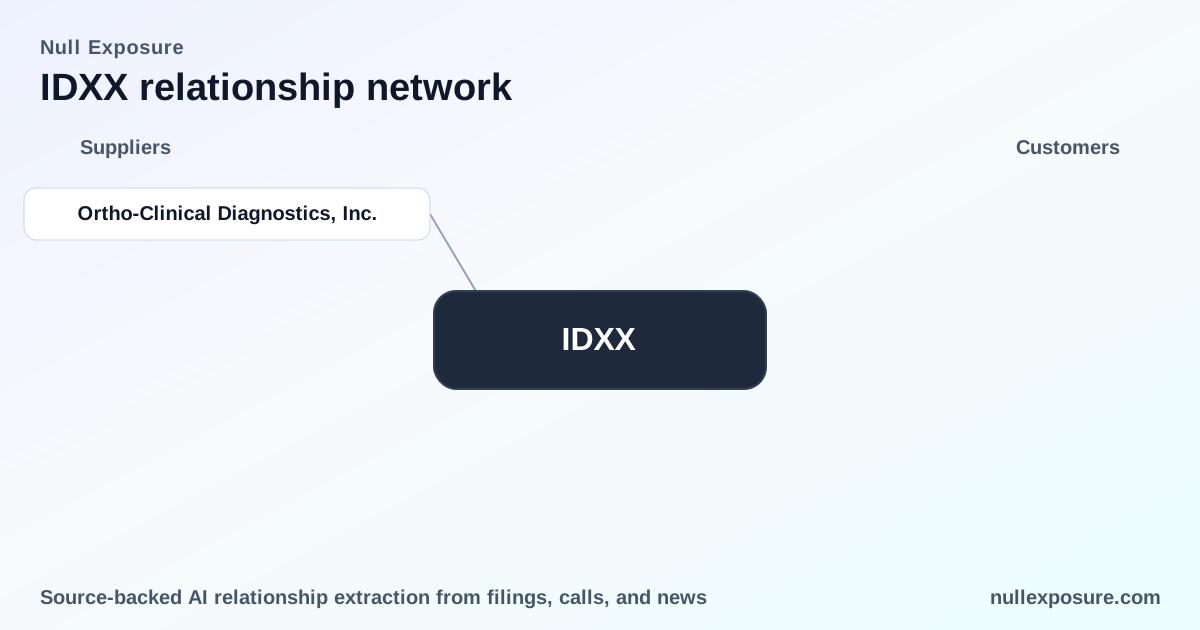
Ortho‑Clinical Diagnostics appears in IDEXX’s public filing as a named supply counterparty. According to IDEXX’s 2024 Form 10‑K, the company and Ortho‑Clinical are parties to a U.S. Supply Agreement originally effective October 16, 2003, and Ortho supplies specific Catalyst chemistry slides used in IDEXX instruments. The 10‑K also notes those supply agreements are currently set to expire in December 2044, signaling a very long contractual duration with an identified supplier. (Source: IDEXX 2024 Form 10‑K, U.S. Supply Agreement disclosure.)
All supplier relationships disclosed in the filing (what we captured)
Ortho‑Clinical Diagnostics, Inc.
IDEXX discloses a U.S. Supply Agreement with Ortho‑Clinical that supplies Catalyst chemistry slides and has an effective date in 2003; the agreement is documented in the 2024 Form 10‑K and the supply arrangements are currently set to expire in December 2044. This is the single named supplier relationship captured in the filing results reviewed here. (Source: IDEXX 2024 Form 10‑K.)
Contract and balance-sheet constraints investors should treat as company-level signals
Not every operational constraint names a counterparty, but several disclosures collectively characterize IDEXX’s supplier posture:
- Long-term contract maturity where named: The filing explicitly states certain Catalyst chemistry slides are supplied by Ortho under agreements expiring in December 2044—this is a multi-decade commitment that locks-in supply lines for a core consumable product. (Named in the 10‑K.)
- Material committed spend: IDEXX reports approximately $211.0 million in purchase obligations due in 2025, which signals substantial near-term supplier cash commitments and a high spend band relative to typical supplier arrangements. Treat this as an indicator of procurement concentration and cash flow scheduling pressure. (Company-level disclosure in the 10‑K.)
- Global operating footprint and FX hedging: IDEXX states it hedges intercompany purchases denominated in euro, pound, Canadian dollar, yen and Australian dollar, indicating NA, EMEA and APAC exposures in procurement and sales flows and an active FX risk-management posture. This is a company-level signal of geographic diversification and currency sensitivity. (Company-level disclosure in the 10‑K.)
- Licensing as a strategic lever: A $10.0 million payment in 2024 for a perpetual intellectual property license—amortized over 10 years and included in IDEXX’s CAG segment—shows IDEXX uses licensing transactions to secure technology or product features without full internal development cost. This is a company-level capital allocation signal. (Company-level disclosure in the 10‑K.)
- Third‑party manufacturing reliance: IDEXX discloses that certain instruments it sells are manufactured by third parties, which reduces capital intensity but introduces supplier quality and capacity dependence. This is a company-level signal affecting supply chain resilience. (Company-level disclosure in the 10‑K.)
- Supplier financing program: IDEXX has an agreement enabling a supplier financing program that helps participating suppliers finance payment obligations with a designated financial institution, which can improve supplier liquidity and stabilize supply but also reflects negotiated payment terms that influence working capital. (Company-level disclosure in the 10‑K.)
For investors, these constraints are not isolated statistics; they define the company’s contracting posture (long-term contracts where critical), concentration (material purchase obligations), criticality (specialized consumables supplied under single agreements) and maturity (multi-decade contracts and amortized IP payments).
For more granular supplier intelligence that ties these signals to counterparty financials and contract expiries, see https://nullexposure.com/.
Risk and resilience — what to monitor going forward
- Dependency risk: Long-dated agreements for specialized chemistry slides reduce short-term supply volatility but create dependency on a named vendor for core consumables—this elevates counterparty risk if Ortho faces capacity, quality or strategic shifts.
- Committed spend velocity: The $211M of purchase obligations due in 2025 is material; investors should monitor cash conversion and working capital trends to see how supplier payments affect liquidity and free cash flow.
- Geographic & FX exposure: Active hedging across multiple currencies indicates global procurement and sales, which adds complexity but also demonstrates risk management capability.
- Manufacturing and IP strategy: Outsourcing instrument manufacture and leveraging licensing deals let IDEXX scale product breadth quickly, but they introduce operational vectors for disruption and margin pressure if supplier costs escalate.
Practical takeaways for investors and operators
- Track expirations and amendment activity for the Ortho supply agreement given its 2044 expiration; any renegotiation would be material to consumable continuity.
- Monitor IDEXX’s quarterly updates to purchase obligations and working capital—near‑term obligated spend directly affects free cash flow and capital allocation choices.
- Assess the supplier financing program terms to understand if IDEXX is shifting working capital risk to financial institutions or compressing supplier margins as a trade-off.
- Include vendor concentration metrics and hedging policy changes in both equity models and operational stress tests.
If you want structured, transaction-level supplier intelligence and refreshed contract‑expiry timelines, visit https://nullexposure.com/ for direct access to our coverage.
In summary, IDEXX operates a business where recurring consumables and specialized chemistry drive the economics—but those economics depend on a small set of committed supplier relationships and meaningful purchase obligations. The Ortho‑Clinical agreement is the clearest named dependency in the 2024 filing and deserves active monitoring as part of any investment or operational diligence. For ongoing supplier monitoring and contract analytics, go to https://nullexposure.com/.