IG Acquisition Corp (IGAC): Supplier relationships, sponsor funding, and why they matter to investors
IG Acquisition Corp operates as a special-purpose acquisition vehicle headquartered in New York that monetizes exclusively through capital markets activity: public unit issuance and sponsor seed funding that are deployed to complete a business combination. The company currently generates no operating revenue and derives its value from the proceeds raised, the strength of sponsor support, and the successful listing and conversion of public units into equity following a target deal. For investors evaluating supplier and partner exposure, the relevant relationships are concentrated, transactional, and directly tied to the SPAC lifecycle—underwriting, listing infrastructure, and sponsor capital provision. Learn more about supplier risk profiling at https://nullexposure.com/.
How IGAC's partners define its operating model
IGAC’s business model is simple and binary: raise capital through a units offering; secure a public market listing; and deploy sponsor and IPO proceeds to effect a merger that converts capital into an operating company’s equity value. That chain converts financial-engineering inputs into investor returns, which makes underwriting, exchange access, and sponsor capital critical suppliers rather than peripheral service providers. The supplier roster in the public record is short and tightly focused on those three functions, which increases operational concentration risk but also simplifies counterparty diligence.
- Contracting posture: Transactional, short-term engagements for a specific offering and listing, with sponsor seed capital structured as subordinated or convertible support.
- Concentration: Low supplier breadth—lead manager, exchange venue, and sponsor provide the majority of critical services.
- Criticality: High—without underwriting, exchange listing, or sponsor funding, the SPAC cannot complete the IPO or sustain the runway to a deal.
- Maturity: Early-stage; operating metrics from filings show no revenue and a pre-combination balance-sheet orientation.
Explore deeper partner intelligence at https://nullexposure.com/.
The complete supplier list and what each relationship means
IGAC’s public record identifies a narrow set of counterparties tied to its initial public offering and sponsor funding. Each relationship below is material to the SPAC lifecycle and is documented in contemporaneous reporting.
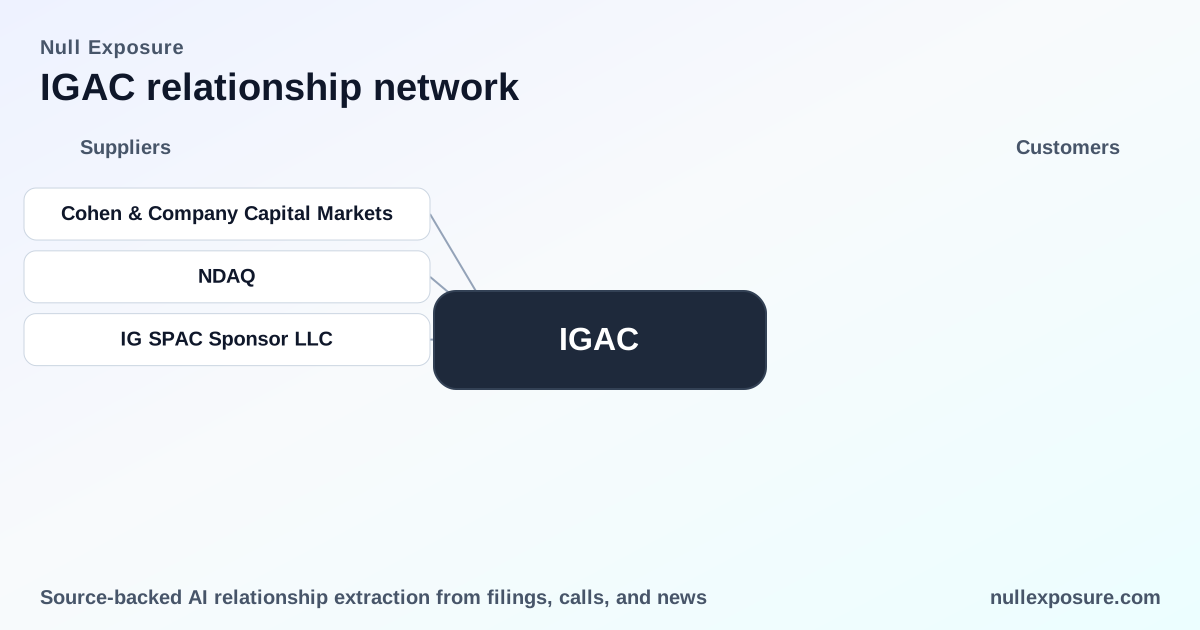
Cohen & Company Capital Markets
Cohen & Company Capital Markets acted as the lead manager for IGAC’s public offering of 15 million units, providing underwriting and placement services that drove the initial capital raise. According to a QuiverQuant report covering the offering, Cohen & Company led the transaction (reported March 10, 2026). Source: QuiverQuant (news report on the IGAC offering, March 10, 2026).
Nasdaq Global Market
IGAC’s units were registered and expected to trade on the Nasdaq Global Market under the ticker IGACU beginning November 25, 2025, establishing Nasdaq as the exchange venue that provides price discovery and liquidity for the securities. The listing detail is recorded in the same offering coverage that announced the units’ listing plan. Source: QuiverQuant (coverage of the units listing, March 10, 2026).
IG SPAC Sponsor LLC
IG SPAC Sponsor LLC supplied $3.5 million in sponsorship funding to IGAC, providing the seed capital and financial runway necessary to underwrite organizational expenses and support the SPAC’s early operations. MarketScreener reported the $3.5 million sponsor contribution in its coverage of the transaction (reported March 10, 2026). Source: MarketScreener (report on sponsor funding, March 10, 2026).
What the absence of formal constraints tells investors
The public supplier relationship payload includes no separately reported constraints tied to procurement or contractual limits. At the company level, this is itself a signal: IGAC is a capital-formation vehicle with a single-purpose contracting posture and no embedded multi-year procurement commitments that would create vendor lock-in beyond the IPO process. That reduces long-term operating liabilities but concentrates execution risk into a small number of counterparties.
Company-level financial signals reinforce that profile: IGAC reports zero revenue, negative book value (-1.549 per share), and a market capitalization of roughly $101.6 million, reflecting a pre-combination SPAC balance sheet. Institutional ownership metrics in public reporting are unusually high (reported as 174.446%), and insider ownership shows zero, underscoring that the capitalization and governance profile are dominated by outside investors and sponsor capital. These facts point to execution and redemption risk as the primary supplier-related vulnerabilities rather than legacy contractual obligations.
Investment implications — what to watch and risk factors
Investors and operators should focus on three axes of counterparty risk:
- Underwriter performance and distribution: Cohen & Company’s role as lead manager determines the depth of the investor base and the quality of pricing on the units offering. Underwriting execution directly affects available cash for future dealmaking.
- Exchange liquidity and compliance: Nasdaq listing under IGACU provides the visible market for redemptions and post-combination trading. Listing continuity, reporting compliance, and market-making depth influence investor exit options and realized valuation.
- Sponsor capital and willingness to support: The $3.5 million contribution from IG SPAC Sponsor LLC establishes initial runway, but the SPAC’s ability to fund diligence, break fees, and closing costs depends on the sponsor’s follow-on support and the terms of that funding.
Additional balance-sheet risks are explicit in public data: no operating revenue, negative book value, and limited free float (shares outstanding and float are low), which amplify the impact of any sponsor pullback or underwriting shortfall. For an investor, the most actionable indicators are successful unit conversion and post-transaction equity performance, sponsor liquidity, and the timing of a business combination.
Final assessment and next steps for due diligence
IGAC runs a concentrated supplier model appropriate for a SPAC: a single lead underwriter, a single exchange listing, and a defined sponsor backstop. That structure produces clear, easily scannable counterparty exposures but concentrates execution risk where those relationships live. Monitor future SEC filings for underwriting agreements, sponsor commitment letters, and the definitive proxy or S-4 associated with any proposed merger to assess whether counterparties expand or whether new commercial drag emerges.
For a deeper vendor-risk profile and ongoing monitoring of IGAC’s counterparties, visit https://nullexposure.com/—the hub for supplier-aware investment diligence. If you want tailored alerts on IGAC partner developments or integration risk as a SPAC target emerges, sign up at https://nullexposure.com/.
Bottom line: IGAC’s supplier footprint is tight and purpose-built—underwriter, exchange, and sponsor—and those three relationships will determine whether the SPAC converts capital into sustainable equity value.