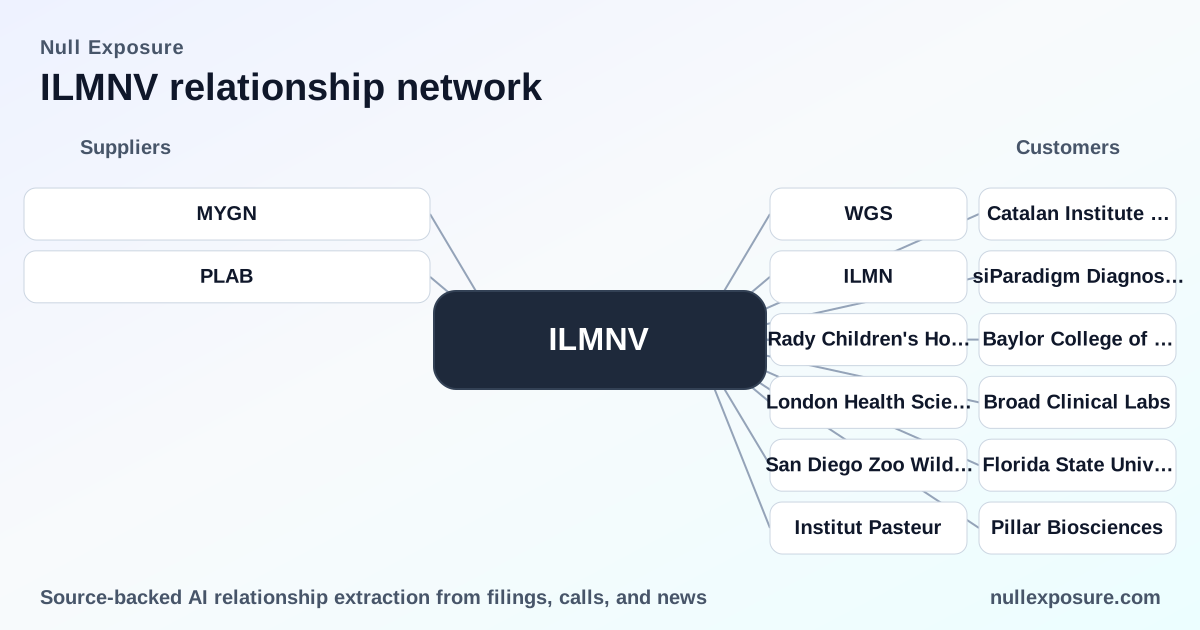
Illumina (ILMNV) supplier relationships — what investors need to know
Illumina operates as a platform company for genetic and genomic analysis, monetizing through the sale of sequencing instruments, consumables, software-enabled services, and licensed intellectual property and partnerships that extend product functionality. The company integrates third-party algorithms and targeted-test partners to broaden clinical and research use cases, converting platform installs into recurring revenue from tests, reagents, and analytics. For investors evaluating supplier risk and upside, the current public record highlights technology licensing and clinical partnerships as deliberate levers in Illumina’s commercial model. Learn more at https://nullexposure.com/.
How third‑party relationships translate into commercial value
Illumina’s economics rely on a two-tiered model: hardware and consumable sales provide near-term revenue while analytics, licensure, and clinical partnerships improve long‑term stickiness and margin capture. By embedding licensed analytics and co‑branded tests into its workflows, Illumina converts sequencer installations into ongoing demand for reagents and platform subscriptions. Partnering with specialized diagnostics and algorithm vendors increases clinical addressability and accelerates adoption in regulated workflows, which in turn supports recurring consumable consumption.
This approach also creates a set of operational characteristics investors should track: contracting posture is frequently license‑and‑partner based rather than full vertical acquisition, supplier concentration is measurable but not extreme in the current record, and the criticality of a partner is assessed by the degree to which their IP or tests are embedded within Illumina’s product workflows. For a deeper vendor exposure analysis, visit https://nullexposure.com/.
Supplier relationships disclosed in the reviewed record
The dataset for ILMNV lists two supplier relationships disclosed in an Illumina press release (FY2025). Each relationship is summarized below with a concise source reference.
Myriad Genetics (MYGN)
Illumina’s HRD (homologous recombination deficiency) analysis is powered by a Genomic Instability Scoring (GIS) algorithm licensed from Myriad Genetics, indicating Illumina licenses a core analytic capability rather than developing the algorithm entirely in‑house. According to Illumina’s FY2025 press release, this licensed GIS algorithm is a foundation for HRD clinical reporting and integration into Illumina’s oncology workflows (Illumina press release, FY2025 — https://www.illumina.com/company/news-center/press-releases/2025/249e5ce3-32b2-4e97-98fb-4a40323b92fa.html).
Pillar BioSciences (PLAB)
Illumina offers customers targeted molecular profiling tests through a partnership with Pillar BioSciences, reflecting a commercial arrangement that expands Illumina’s test menu for clinically focused customers. The same FY2025 Illumina press release outlines this partnership as part of its broader strategy to provide targeted profiling alongside its sequencing platforms (Illumina press release, FY2025 — https://www.illumina.com/company/news-center/press-releases/2025/249e5ce3-32b2-4e97-98fb-4a40323b92fa.html).
What the record (and the absence of other constraints) tells investors
The supplied data contains no documented contractual constraints or restrictive clauses beyond the relationship descriptions themselves. That absence is a company‑level signal worth interpreting:
- Contracting posture: Illumina pursues licensing and partnerships rather than exclusive, full‑vertical acquisitions in the disclosed cases, which points to a flexible, modular commercial approach that preserves capital and accelerates time‑to‑market for new clinical offerings.
- Concentration: The current disclosure set names a small number of partners, implying limited public concentration but not ruling out broader private or undisclosed supplier relationships. Investors should treat the public list as a curated subset rather than a full inventory of supplier exposure.
- Criticality: Where Illumina licenses an algorithm or offers co‑branded tests, those partners are operationally important because their IP directly supports product features that customers pay for — notably clinical HRD analytics and targeted molecular profiling.
- Maturity and governance: The use of licensed algorithms and structured partnerships suggests commercially mature relationships typical of platform companies integrating best‑of‑breed third‑party capabilities rather than experimental pilots.
These signals combine into an operating profile that is partnership‑driven, platform‑oriented, and focused on converting installed base into recurring consumption. For a vendor exposure report or to map contractual risk more granularly, see https://nullexposure.com/.
Investment implications and risk checklist
- Upside: Licensed analytics and test partnerships expand marketable clinical use cases without the capital intensity of building every capability internally, supporting higher equipment attach rates and consumable consumption.
- Dependency risk: Any company that licenses core analytics introduces dependency on third‑party IP and commercial terms; investors should price potential re‑licensing or renegotiation risk into valuation.
- Regulatory and reimbursement sensitivity: Partners that deliver clinical assays or diagnostics elevate regulatory and reimbursement risk; integration into lab workflows can be value‑creating but exposes Illumina to clinical adoption cycles.
- Data governance and IP risk: Using third‑party algorithms implies contractual IP terms and data‑use provisions that can affect long‑term monetization of analytics.
Key takeaway: Illumina’s supplier relationships, as disclosed, reinforce a platform strategy that monetizes through licensed analytics and clinical partnerships while limiting capital intensity — a model that supports recurring revenue but carries concentrated IP and regulatory dependencies.
Practical next steps for investors and operators
- Request contract summaries for licensed analytics and clinical partnerships to assess termination, exclusivity, and revenue‑sharing clauses.
- Monitor incremental product announcements for additional partner integrations that could signal expanded revenue pathways or concentration risks.
- Evaluate regulatory milestones for partner assays (e.g., approvals, guideline endorsements) since these materially influence clinical adoption and consumable pull‑through.
For further supplier intelligence and to commission a tailored exposure analysis, visit https://nullexposure.com/.
Final note: the public record for ILMNV in this review highlights Myriad’s licensed GIS algorithm and a targeted‑test partnership with Pillar BioSciences as active components of Illumina’s commercial strategy; investors should treat these as strategic extensions of the platform that materially affect product positioning and recurring revenue dynamics. For ongoing tracking and deeper vendor contract analysis, go to https://nullexposure.com/.