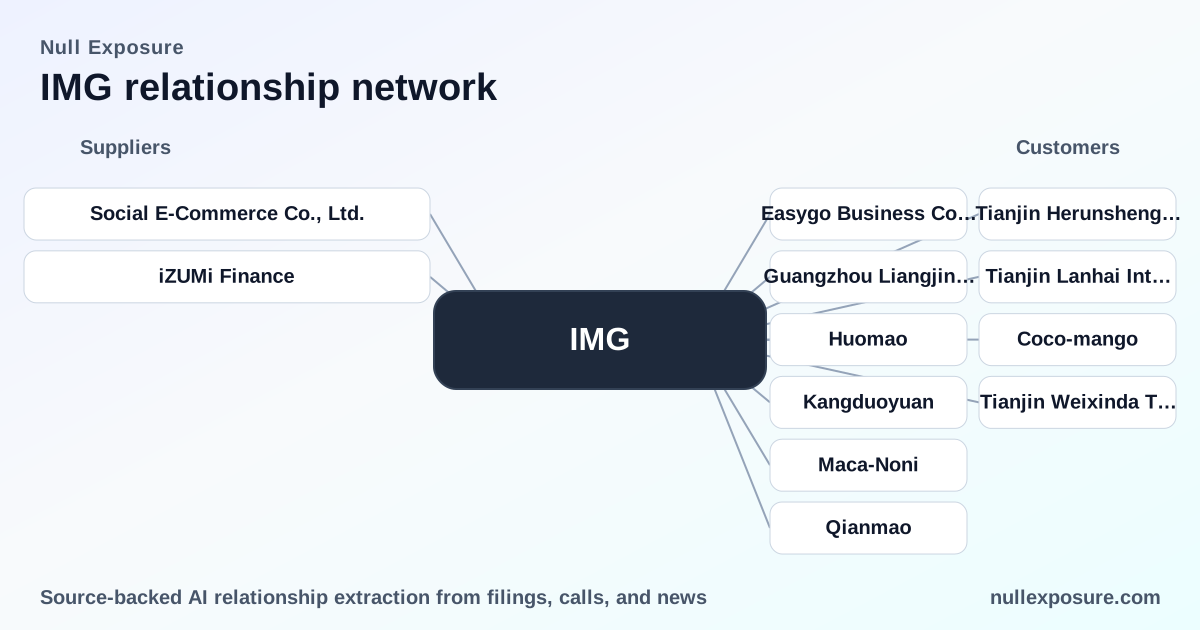
IMG supplier relationships: what investors need to know
IMG operates as a diversified holding with lines of business that include consumer products and digital asset initiatives; the firm monetizes by distributing goods through third-party manufacturers and co-packers while pursuing strategic intellectual‑property and digital‑asset acquisitions to expand higher‑margin services. Investors should view IMG's supplier posture as a mix of legacy commercial obligations and forward-looking technology acquisitions that change the firm’s supplier risk profile. For a deeper supplier-mapping toolset, visit https://nullexposure.com/.
How IMG actually sources and pays: a concise operating thesis
IMG runs a hybrid sourcing model. On the physical‑goods side the company relies on third‑party manufacturers and co‑packers to produce and package consumer items, which keeps fixed capital low but concentrates execution risk in suppliers. On the digital side IMG is pursuing IP and digital‑asset purchases, which convert supplier interactions into acquisitions rather than routine purchase orders—changing the vendor relationship from transactional supplier to strategic counterpart. These two vectors drive revenue composition, working capital needs, and the profile of counterparty risk.
Supplier constraints that shape the business model
Several company‑level signals frame how to evaluate IMG’s supplier relationships:
- Geographic concentration: Evidence points to an APAC operational footprint (confidence 0.90, mention_count 1), indicating supply‑chain exposure to China and nearby markets and the attendant FX, logistics and regulatory considerations.
- Manufacturing dependency: Documentation flags IMG’s regular reliance on third‑party manufacturers and co‑packers (confidence 0.80, mention_count 2). That establishes a contracting posture that is largely vendor‑driven with limited vertical integration.
- Service provider role: IMG also depends on external service providers for key production steps (confidence 0.80, mention_count 1), making continuity of service and supplier performance critical for revenue delivery.
Taken together, these signals imply a contracting posture that is transactional and outsourced, moderate supplier concentration risk, and high operational criticality for a small set of manufacturing/service partners. Maturity of relationships is mixed—some are legacy liabilities while others are strategic and evolving as IMG shifts into IP and digital assets.
The relationships on record — one by one
Social E‑Commerce Co., Ltd. (from FY2025 10‑K)
A FY2025 10‑K lists a legacy loan payable to Social E‑Commerce Co., Ltd. of $103,838, recorded as a legacy liability under previous management, indicating a contractual obligation rather than an active procurement relationship. According to IMG’s FY2025 10‑K filing disclosed in February 2026, this is a small outstanding balance consistent with historical obligations rather than new operating spend.
iZUMi Finance — strategic IP and asset deal (Bitget report, Mar 2026)
A March 2026 market report on Bitget states that CIMG Inc. signed a strategic agreement to acquire iZUMi Finance’s core patents, intellectual property and key assets, signaling a supplier relationship that functions like an acquisition counterparty rather than a traditional vendor. The Bitget post frames the engagement as a structural move into digital‑asset infrastructure and IP ownership (Bitget news, Mar 2026).
iZUMi Finance — memorandum exploring services and token purchase (Futunn, Mar 2026)
A Futunn news post the same month reported that CIMG and iZUMi Finance executed a memorandum of understanding to explore broader cooperation, including potential purchases of services and IZI tokens, which suggests the relationship could include recurring purchases of platform services and token‑based considerations if the partnership progresses (Futunn, Mar 2026).
What these relationships imply for investors
The record combines a small, residual legacy commercial liability (Social E‑Commerce) with high‑impact strategic transactions (iZUMi). That mix shifts the nature of supplier risk:
- Legacy liabilities are immaterial from a pure cash perspective, but they remind investors of prior governance and potential legacy counterparty entanglements.
- IP and token deals transform suppliers into strategic partners or acquisition targets, increasing integration and regulatory complexity, particularly across jurisdictions when the counterpart operates in digital‑asset markets.
- APAC sourcing exposure increases geopolitical and logistics risk. Even if the current record does not show major purchase volumes, the company‑level signal of APAC operations elevates trade, export control and currency considerations.
Key takeaways:
- Low liquidity risk from the Social E‑Commerce balance but elevated operational and integration risk from iZUMi‑related agreements.
- Supplier relationships are evolving from transactional manufacturing contracts toward strategic asset acquisitions and service agreements, which changes needed governance and due diligence disciplines.
- Concentration and criticality warrant active oversight: IMG’s reliance on outsourced manufacturing and service providers means a limited number of counterparties could materially affect operations.
If you want a structured approach to quantify counterparty criticality or to map supplier concentration for IMG, see our investor toolkit at https://nullexposure.com/.
Actionable recommendations for investors and operators
- For investors: demand clarity on the valuation and integration plan for the iZUMi assets and any contingent liabilities tied to token acquisitions; insist on disclosure of counterparties, contract tenors and termination rights.
- For operators: formalize SLA and contingency plans with APAC manufacturers and co‑packers; prioritize dual‑sourcing for any production-critical items.
- For both: monitor regulatory developments in digital‑asset jurisdictions where IMG transacts, since IP and token purchases shift supplier risk into compliance and custodial domains.
Explore a supplier risk framework tailored to IMG at https://nullexposure.com/ — it provides prioritized audit checklists and concentration dashboards for investors evaluating similar supplier portfolios.
Bottom line
IMG’s supplier footprint is a hybrid: small legacy commercial obligations coexist with strategic, acquisition‑style supplier engagements in the digital‑asset and IP arena. That combination demands different oversight regimes—transactional contract enforcement for the manufacturing base and M&A‑style diligence for strategic counterparties. Investors should rate current financial exposure as low from the disclosed loan, but elevate governance and integration risk reviews around iZUMi‑related transactions. For further supplier diligence templates and comparative market context, visit https://nullexposure.com/.