IMMP: A supplier-focused read on the Merck collaboration and what it means for investors
Immutep (NASDAQ: IMMP) is a late-stage immunotherapy developer that monetizes through clinical progress, strategic pharma collaborations, and downstream licensing or commercialization agreements. The company advances its lead asset, eftilagimod alfa (efti), into pivotal trials and captures value via milestone payments, co-development economics and eventual product revenue or royalties when partnered with major pharmaceutical companies. For investors evaluating IMMP as a supplier counterparty or a partner target, the company’s relationships with large oncology players are the primary lever that converts clinical data into cash flows and optionality.
Explore how Immutep’s partner network compresses clinical and commercial risk and where concentration or contracting posture creates both upside and exposure: https://nullexposure.com/
Why the Merck tie-up changes the risk-reward profile
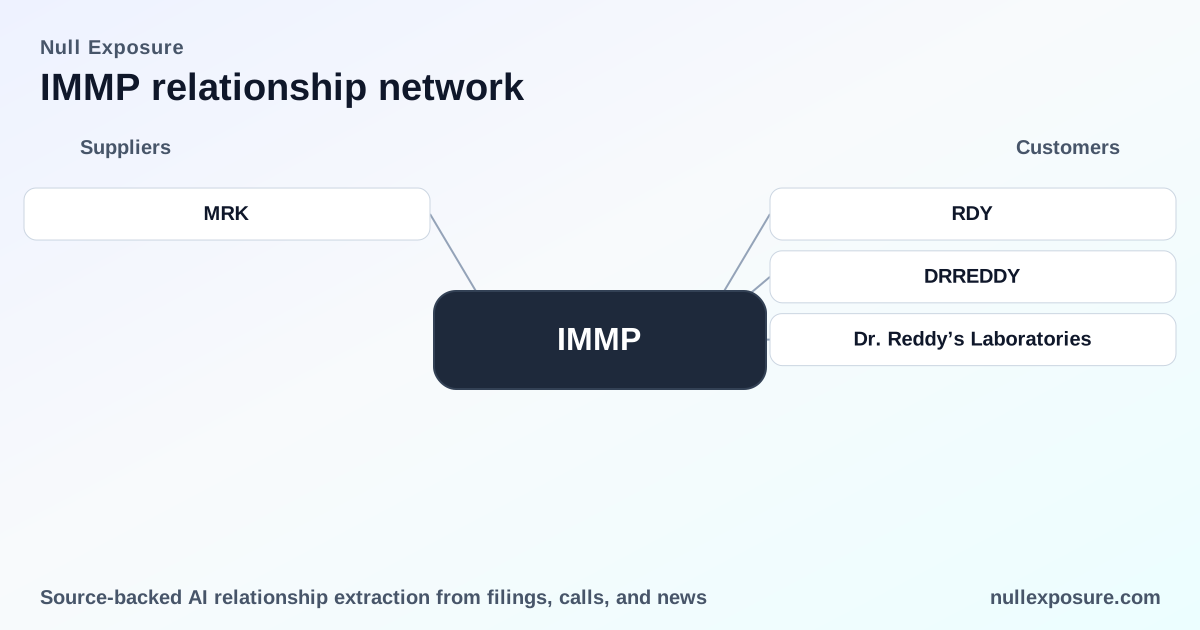
The most material supplier/partner signal in public reporting for IMMP is its collaboration with Merck & Co., Inc. (MRK) on a Phase III program combining efti with pembrolizumab (Keytruda) and chemotherapy in first-line advanced/metastatic non‑small cell lung cancer (1L NSCLC). This is not a minor investigator-led study; it is a late-stage, registration-intent program that links Immutep’s commercial fate directly to the trial’s execution and enrollment cadence.
According to a news release carried by Yahoo Finance on 10 March 2026, Immutep reported that the TACTI-004 (KEYNOTE‑F91) Phase III trial had achieved 50% of targeted patient enrollment, a meaningful operational milestone for a large oncology study. That enrollment update signals trial momentum and shortens the timeline to pivotal readouts that drive licensing milestones and potential future royalties. (Source: Yahoo Finance, 10 March 2026).
If you want ongoing, structured coverage of partner-risk and supplier relationships for life-sciences firms like Immutep, start here: https://nullexposure.com/
The Merck relationship — what investors should read into the filing and press
- Merck & Co., Inc. (MRK) — Immutep is running TACTI-004 (KEYNOTE‑F91), a Phase III trial testing eftilagimod alfa in combination with Merck’s pembrolizumab (Keytruda) and chemotherapy for 1L NSCLC. The company announced 50% enrollment achieved as of March 10, 2026; that operational milestone materially advances the asset toward registrational clarity and commercial optionality. (Source: Immutep announcement reported on Yahoo Finance, FY2026).
Company-level operating model signals and contracting posture
The constraints dataset provided for IMMP contains no explicit supplier constraints. That absence is itself an informative company-level signal: there are no public, feed-level contractual limitations or supplier caveats disclosed in this dataset that would change how Immutep presents or executes its late-stage programs. Translate that into operating characteristics:
- Contracting posture: Immutep operates as a development-stage biopharma that relies on strategic alliances with large pharmas for late-stage execution and commercialization leverage. Partnerships functionally transfer execution risk for combination regimens and create milestone-triggered monetization events.
- Concentration: The company’s revenue optionality is concentrated around a small number of late-stage assets and a handful of large partners; the Merck collaboration is a prime example of concentration to a single, material partner.
- Criticality: For Immutep, supplier/partner relationships are critical — successful collaboration and trial execution directly unlock milestone payments and future royalty-like economics.
- Maturity: The relationships are at a late development stage (Phase III), which increases near-term visibility but raises exposure to single-event clinical and regulatory outcomes.
These are company-level strategic signals derived from the supplied relationships and absence of identified constraints, and they should guide counterparty and portfolio risk assessments.
Risk and upside — short list for the buy-side
- Upside: Achievement of enrollment and timely completion of the Phase III program materially derisks the asset and creates discrete commercialization optionality and milestone revenue; a successful readout accelerates valuation uplift.
- Execution risk: Late-stage trials still carry standard clinical and regulatory risk; enrollment momentum reduces but does not eliminate event risk for the primary endpoint.
- Concentration risk: Dependence on a major partner for combination therapy and potential commercialization creates single-counterparty exposure that affects negotiating leverage and downstream economics.
Key investor takeaway: the Merck collaboration turns Immutep from a pre-commercial story into a de‑risking late‑stage asset with identifiable near-term value inflection points.
Practical implications for operators and counterparties
Operators and procurement teams evaluating IMMP as a supplier or collaboration target should prioritize:
- Contract terms that protect against enrollment or data delays (milestone definitions, payment timing).
- Clarity on commercial rights and territory carve-outs should the program succeed.
- Contingency planning for trial operational challenges given the concentration on a Phase III program with a single major partner.
How to act on this intelligence
- For capital allocators: weight Immutep’s valuation on the timing and probability of Phase III completion and subsequent regulatory milestones tied to the Merck collaboration.
- For potential suppliers and CROs: prioritize operational readiness for late-stage oncology trial demands and negotiate clear scope and milestone-triggered payments.
- For corporate development teams: the Merck tie demonstrates Immutep’s ability to secure high-quality partners, which increases the attractiveness of co-development terms or future asset purchases.
Final recommendation: monitor enrollment cadence and any updates to the KEYNOTE‑F91 trial closely — these operational milestones are the primary value drivers for IMMP today.
If you want structured tracking of partner updates and enrollment milestones for Immutep and comparable companies, visit https://nullexposure.com/
Bottom line
Immutep’s supplier/partner profile is defined by a single, high‑impact collaboration with Merck on a Phase III combination trial; the 50% enrollment update reported on 10 March 2026 materially improves timeline visibility and compresses clinical execution risk. For investors and operators, the sharpest focus should be on trial execution milestones, contractual milestone triggers, and the degree of revenue concentration that a successful readout will both reveal and monetize.
For a deeper supplier-risk dashboard and continuous monitoring of partner relationships for companies like IMMP, see https://nullexposure.com/