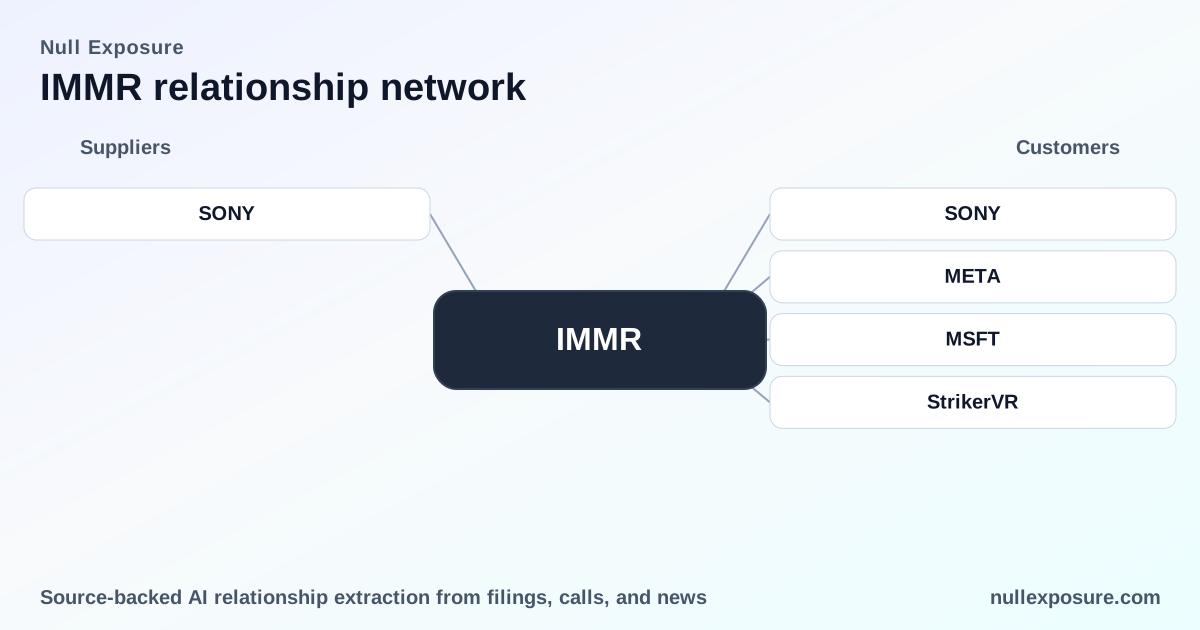
Immersion (IMMR) — supplier relationships and what they mean for investors
Immersion operates as a specialist haptics technology provider that monetizes through IP licensing, royalty streams tied to device shipments, and sales of haptics modules and engineering services to consumer electronics OEMs. For investors evaluating supplier exposure, the commercial model is a hybrid licensing-and-supply play: recurring royalties provide revenue leverage to successful device launches, while direct component and engineering contracts create near-term commercial cadence. Explore further at https://nullexposure.com/.
Why one Sony mention matters for the revenue map
A recent industry article reiterates a longstanding commercial reality: Immersion supplies the haptics technology that powers Sony’s PS5 DualSense controller and its corporate leadership talks publicly about Sony’s continued focus on haptics as consoles evolve. The market relevance of that single supplier link is not in novelty but in durability — console OEM relationships generate outsized downstream royalty runoff when device cycles succeed.
- Commercial implication: royalties tied to console lifecycles create long-duration revenue streams and align Immersion’s upside with high-margin consumer electronics volume.
- Risk implication: concentration risk is inherent when a supplier’s IP is embedded in a flagship product category dominated by a few OEMs.
A focused read of the coverage is here: Wccftech reported on March 10, 2026 about Immersion’s role in PS5 DualSense haptics and comments from Immersion’s CEO (https://wccftech.com/sony-focus-ps5-dualsense-haptics-ps4-maximized/).
The relationship roster — every link in the dataset
Sony — console haptics partner
A Wccftech article dated March 10, 2026 highlights comments from Immersion’s CEO and identifies Immersion as the company behind the PS5 DualSense’s haptics technology, confirming an OEM supplier relationship with Sony for console controller haptics (Wccftech, 2026-03-10; https://wccftech.com/sony-focus-ps5-dualsense-haptics-ps4-maximized/).
This is the only supplier relationship captured in the provided results; it is a high-visibility tie to a marquee consumer-electronics franchise and therefore strategically important.
Interpreting operating constraints and corporate posture
The data payload included no explicit contractual constraints or redacted clauses. As a company-level signal, the absence of disclosed constraints in this set indicates there are no publicly surfaced, dataset-level contractual caveats to report here — not that none exist in Immersion’s full contract book or filings. Use this absence as a neutral observation, not evidence of contractual freedom.
From an operating-model perspective, several characteristics are evident and relevant for investor due diligence:
- Contracting posture: Immersion operates as both an IP licensor and an engineering supplier, which implies a mixed contracting posture—long-term license agreements with royalty mechanics alongside shorter-term engineering and parts contracts.
- Concentration: The nature of haptics IP embedded in flagship devices suggests customer concentration risk is material; a small number of OEMs can dominate downstream volumes and therefore revenue volatility.
- Criticality: Haptics is a product-differentiating technology in gaming and mobile; when integrated at the controller or handset level, Immersion’s IP is functionally critical to the customer value proposition and consequently to royalty persistence.
- Maturity: Haptics technology is technology-mature at the mechanical/firmware level but continues to evolve in system integration and content capture; this creates a steady cadence of renewal opportunities with existing OEMs.
These operating characteristics mean investors should value Immersion not like a commodity parts supplier but as a rights-holder with durable, product-linked revenue streams and concentrated customer exposures.
What investors should watch next
Monitor three vectors that will determine whether the Sony relationship continues to be a tailwind or a vulnerability for IMMR:
- Royalty run-rate disclosure: quarterly or annual disclosure that quantifies royalties derived from console controllers will directly inform revenue durability.
- Renewal cadence and patent coverage: extensions, cross-licenses, or new patents around next-generation haptics will preserve negotiating leverage.
- Client concentration trends: any public wins or losses with other major OEMs will materially change the company’s risk profile.
If you want consolidated, supplier-centric intelligence and relationship mapping for investment decisions, visit https://nullexposure.com/ for more curated reports.
Bottom line: asymmetric upside with concentration risk
Immersion’s business model—IP licensing plus supply—creates asymmetric upside when OEM platforms succeed and concentrated downside if flagship customers shift suppliers. The Sony connection documented in external coverage is strategically important: it ties IMMR’s revenue to a high-profile OEM product line and validates Immersion’s role as a core haptics supplier. Investors must balance the predictability of royalty streams against customer concentration and contract renewal risk.
For a deeper look into IMMR’s supplier relationships and how they translate to investor exposure, review more intelligence at https://nullexposure.com/.