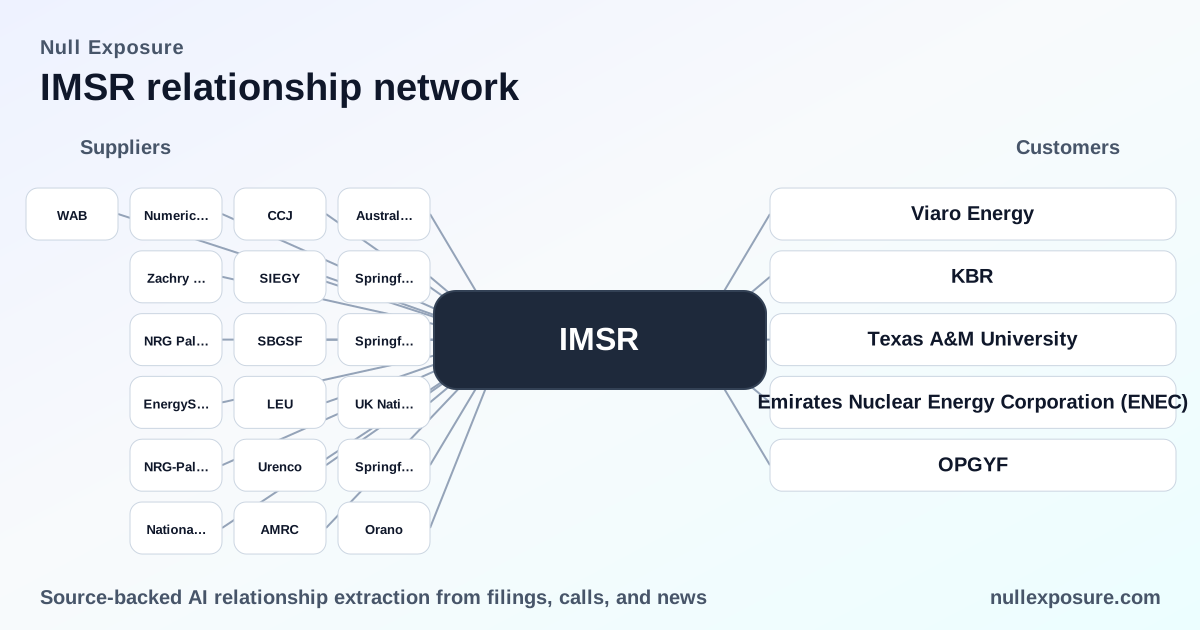
Terrestrial Energy (IMSR): Supplier map and commercial posture for investors
Terrestrial Energy commercializes the IMSR (Integral Molten Salt Reactor) by outsourcing specialized elements of a nascent nuclear supply chain—fuel design and manufacture, materials testing, site services, and large electromechanical components—then monetizing through technology licensing and future reactor sales/long‑term service contracts. The company’s model is to de-risk core reactor technology while delegating capital‑intensive, industrialized supply tasks to established nuclear and energy engineering partners, creating a predictable path to fleet deployment if regulatory and supply milestones hold.
If you evaluate supplier risk or partnership leverage for IMSR, start here and then review primary source coverage on partner scopes and timelines at Null Exposure: https://nullexposure.com/.
Business model drivers and where supplier relationships matter
- Fuel supply and packaging: critical path for licensing and commercial operation; Terrestrial has contracted incumbent fuel manufacturers and fuel cycle firms to industrialize IMSR fuel.
- Materials and in‑core testing: required to validate Generation IV materials and secure regulator confidence.
- Site engineering, grid integration and plant components: turbine, transformer and plant controls procurement shifts construction and long‑term O&M risk to recognized suppliers.
- Commercial path: pilot plant contracts and MOUs point to staged industrialization—pilot fuel plant → materials testing → site evaluation → commercial orders.
Read a concise supplier dossier and relationship archive at Null Exposure: https://nullexposure.com/.
What the contractual posture and constraints signal about IMSR
- Contracting posture: Terrestrial uses a mix of formal contracts (fuel pilot plant with Springfields) and MOUs (site evaluation, equipment integration), indicating a phase of firming industrial partners while preserving commercial flexibility.
- Concentration vs. diversification: The company intentionally spreads fuel and fuel‑cycle relationships across large incumbents (Westinghouse/Springfields, Orano, Cameco, Centrus, Urenco) to avoid single‑source exposure for enriched uranium and fuel services—diversified but supplier‑heavy in nuclear incumbents.
- Criticality: Fuel, in‑core materials testing, and fuel packaging/transport are mission‑critical; delays or disputes here directly block commercial commissioning.
- Maturity: Contracts are predominantly pilot‑ or MOU‑stage and technical service engagements rather than long‑term fleet supply agreements—early commercialization, with milestones keyed to successful pilot deployment.
- Company‑level operating signals: Terrestrial pays recurring administrative fees to a Sponsor affiliate and reports modest audit spend (Withum fees ~$125k, other services ~$62.5k in the initial period), signaling a lean corporate cost base and reliance on external service providers for corporate functions (from the company’s SEC disclosures).
Mid‑report action item: review the primary source coverage for each partner listed below on Null Exposure before underwriting vendor or counterparty risk: https://nullexposure.com/.
Supplier relationships — who does what, in plain English
-
Australian Nuclear Science and Technology Organisation (ANSTO) — ANSTO provides technical consulting on conditioning used IMSR reactor fuel for markets including Canada, the UK and the USA, positioning ANSTO as a specialist in fuel waste treatment for IMSR deployments (World Nuclear News, FY2022).
Source: World Nuclear News coverage of ANSTO consultancy to Terrestrial Energy (FY2022). -
Springfields Fuels Limited / Springfields Fuels (Westinghouse) — Terrestrial signed a manufacturing and supply contract with Westinghouse’s Springfields for the design and construction of a UK IMSR fuel pilot plant in August 2023, creating the first industrial route to IMSR fuel production (World Nuclear News, Power Magazine, FY2023–FY2025).
Source: World Nuclear News; Power Magazine; Yahoo Finance reporting on the Springfields pilot plant (FY2023–FY2025). -
Westinghouse — Westinghouse participates in a partnership dating to 2021 (with the UK National Nuclear Laboratory) to develop and supply enriched uranium fuel for IMSR and is the parent organization behind Springfields’ engagement (World Nuclear News, FY2021–FY2023).
Source: World Nuclear News announcements on the Westinghouse partnership (FY2021–FY2023). -
UK National Nuclear Laboratory / National Nuclear Laboratory — The UK NNL is working with Terrestrial and Westinghouse to advance industrial scale‑up of enriched uranium fuel for the IMSR, contributing lab and industrial R&D capacity to the fuel program (World Nuclear News, FY2023).
Source: World Nuclear News on the partnership to industrialize IMSR fuel (FY2023). -
Orano — Orano is engaged for packaging and transportation of IMSR fuel and participates in fuel testing programs with Terrestrial, placing a major fuel cycle services player on the logistics path for future deployments (NeutronBytes, World Nuclear News, FY2023–FY2024).
Source: NeutronBytes and World Nuclear News reports on Orano’s role in fuel packaging/transport and testing (FY2023–FY2024). -
Cameco (CCJ) — Terrestrial has contracted Cameco for natural uranium supply, anchoring primary fuel commodity sourcing with an established mining and supply firm (NeutronBytes, FY2024).
Source: NeutronBytes report citing Cameco as a supplier of natural uranium (FY2024). -
Siemens (SIEGY) — Siemens is supplying key electrical power components for IMSR plants, including power transformers and steam turbines, integrating established electromechanical OEM capability into plant builds (Yahoo Finance, FY2025).
Source: Company press coverage on Siemens supplying power components (FY2025). -
Schneider Electric (SBGSF) — Terrestrial signed MOUs with Schneider Electric to integrate IMSR plants into industrial power systems, positioning Schneider for controls and energy management roles on industrial deployments (Power Magazine, FY2025).
Source: Power Magazine coverage of Schneider Electric MOUs (FY2025). -
Centrus Energy (LEU) — Centrus is an MOU partner in the fuel supply chain program, providing enrichment or related services as Terrestrial secures commercial fuel pathways (NeutronBytes, FY2024).
Source: NeutronBytes report referencing Centrus MOUs (FY2024). -
Urenco — Urenco is listed in MOUs as part of the fuel supply chain program, broadening the enrichment and supply options available to Terrestrial (NeutronBytes, FY2024).
Source: NeutronBytes coverage of MOUs with Urenco (FY2024). -
Ameresco (AMRC) — Ameresco will collaborate with Terrestrial to advance commercial deployment of IMSR units, supplying site development and energy solutions expertise for grid or industrial integration (NEI Magazine, FY2025).
Source: NEI Magazine (NEImagazine) reporting on the Ameresco collaboration (FY2025). -
Numerical Advisory Solutions (NAS) — NAS signed an MOU with Terrestrial to collaborate on site evaluation, plant development and project deployment services, positioning NAS as a regional project delivery and evaluation partner (NEI Magazine, FY2024).
Source: NEImagazine reporting on the NAS MOU (FY2024). -
Zachry Group — Zachry entered a partnership to expand IMSR deployment capacity, bringing large‑scale engineering and regional market expertise—explicitly targeting industrial markets such as Texas (NEI Magazine, FY2024–FY2025).
Source: NEImagazine coverage quoting Terrestrial’s CEO and announcing Zachry partnership (FY2024–FY2025). -
NRG Pallas / NRG‑Pallas — The Netherlands‑based NRG Pallas is providing technical services for final phase graphite irradiation and in‑core materials testing for the IMSR, supporting Generation IV materials qualification (NucNet/World Nuclear News, FY2025).
Source: NucNet and World Nuclear News coverage of NRG Pallas testing support (FY2025). -
EnergySolutions — EnergySolutions signed an MOU to evaluate siting IMSR plants at decommissioned nuclear sites, giving Terrestrial an option set for brownfield redeployments where site infrastructure already exists (Power Magazine, FY2025).
Source: Power Magazine reporting on EnergySolutions MOU (FY2025).
Risk implications and investor takeaways
- Fuel and materials are the single largest operational risk vector because several partners cover discrete steps (enrichment, fuel fabrication, packaging, transport, waste conditioning). Multiple incumbents reduce single‑supplier risk but keep timeline dependency on pilot outcomes.
- Technical validation is progressing but still pilot‑centric; materials testing vendors and pilot fuel manufacturing are necessary preconditions to regulatory licensing and commercial sales.
- Commercialization requires orchestration across global suppliers—from Siemens for plant hardware to Schneider for controls and Ameresco/Zachry for site and construction—and Terrestrial’s value will scale if it converts MOUs and pilot contracts into firm long‑term supply and service agreements.
Final action: for underwriting or counterparty diligence, pull the underlying press releases and regulator filings cited above and maintain a watch on pilot plant commissioning and materials test results. Our supplier intelligence portal keeps these links consolidated for investor due diligence: https://nullexposure.com/.
Investment conclusion
- Terrestrial Energy has assembled a credible supplier ecosystem led by incumbent fuel cycle firms and major industrial OEMs, reducing technological and industrial execution risk relative to a solo developer, but the company remains dependent on pilot‑stage milestones and regulatory approvals before material revenue realization. Monitor pilot fuel plant delivery, graphite irradiation outcomes and the conversion of MOUs into binding supply or EPC contracts. For a full supplier dossier and ongoing updates, visit https://nullexposure.com/.