Immunovant (IMVT): Supplier relationships that shape commercialization risk and runway
Immunovant develops monoclonal antibodies for autoimmune diseases and monetizes through clinical-stage asset development with the intent to commercialize lead candidates such as batoclimab; the company outsources manufacturing and many operational services while financing growth through equity placements and strategic investors. This operating model creates two core monetization levers for investors: asset value appreciation on successful clinical/commercial milestones, and capital markets activity to fund development and commercialization. For sourcing and vendor risk intelligence, focus on manufacturing commitment size, IP licensing dependencies, and the identity of financing underwriters and strategic investors.
Explore more supplier intelligence at https://nullexposure.com/.
Why suppliers matter to Immunovant’s value chain
Immunovant does not own manufacturing facilities; it relies on third parties for drug substance, drug product, and services tied to development and commercialization. That posture converts supplier contracts into value drivers: long-dated purchase commitments can create capital liabilities but also secure commercial throughput if approvals succeed; strategic investors can supply capital and governance influence that accelerates or constrains commercialization choices.
Key takeaway: Immunovant’s supplier and investor relationships are integral to both execution risk and financing flexibility — monitor manufacturing commitments, IP licenses, and large-holder financing behavior.
Who sits around the table — relationship run‑through
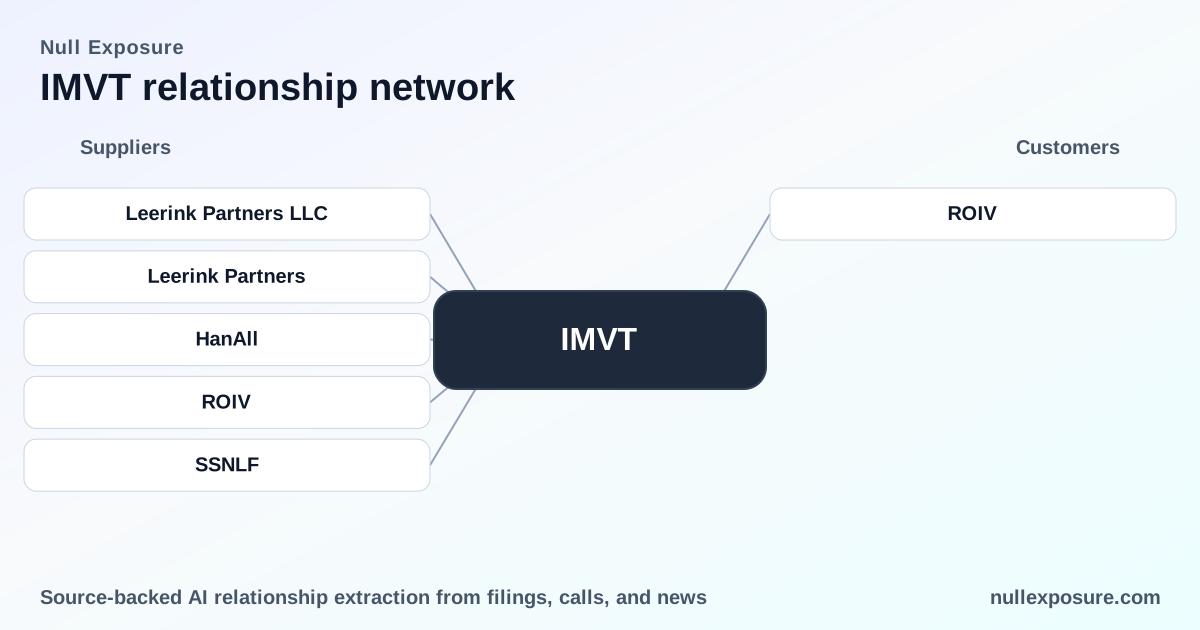
Leerink Partners / Leerink Partners LLC
Leerink Partners acted as the sole underwriter for Immunovant’s $550 million common stock financing announced in December 2025, a capital raise that materially refreshed the company’s cash runway. According to press releases in December 2025, Leerink was named the sole underwriter for the offering. (Manila Times / The Globe and Mail, December 2025.)
HanAll
Immunovant discloses reliance on a license agreement with HanAll for core intellectual property covering IMVT‑1402 and batoclimab, and loss of significant rights under that license would negatively affect development and commercialization. This licensing dependency is called out in the company’s offering risk disclosures. (TS2.tech summary of December 2025 financing filings.)
Roivant (ROIV)
Roivant is both a strategic investor and a potential capital provider; reporting around the December 2025 financing indicates Roivant purchased $350 million and disclosed it could provide additional equity, debt, or loans in the future, signaling an ongoing financing relationship and influence as a major holder. (TS2.tech / December 2025 reporting.)
Samsung Biologics (SSNLF)
Immunovant entered a Product Service Agreement (PSA) with Samsung Biologics to manufacture batoclimab drug substance for potential commercial sale, and the PSA runs until at least December 31, 2029 with a remaining minimum purchase commitment of approximately $43.6 million as of March 31, 2025. The PSA establishes Samsung as the primary contract manufacturer for batoclimab. (Immunovant 10‑K filed for fiscal year ending March 31, 2025.)
What the contracts and constraints tell investors
Immunovant’s contractual posture is unambiguous: outsourced execution with a mix of long-term manufacturing commitment and shorter-term services agreements. The filings and disclosures reveal several actionable signals for underwriters, operators, and investors:
- Contract duration and predictability: The Samsung PSA is long-term, running through late 2029 or completion of services, and includes multi-year minimum purchase obligations; this creates a predictable supply channel but also a material purchase commitment on the balance sheet. (Company 10‑K, FY2025.)
- Service flexibility: Other services are governed by agreements that are terminable on 90 days’ notice, reflecting a shorter-term, more flexible operating relationship for administrative and development services. This structure reduces long-run fixed cost but increases operational continuity risk if providers change. (Company disclosures on Services Agreements.)
- Spend profile: Historical spend under the Services Agreements is modest (about $0.8 million in FY2025), while the Samsung commitment sits squarely in the $10–100 million band, matching the company’s classification of these obligations. These two spend bands imply small ongoing operating costs for certain services but a materially larger commitment tied to potential commercialization of batoclimab. (Company financial statements and contract disclosures.)
- Role concentration and criticality: Immunovant relies on third-party CMOs for drug substance and drug product and does not own manufacturing capacity, which makes a handful of manufacturing and licensing relationships critically important to any commercial launch. (Company 10‑K and contract disclosures.)
- Relationship maturity and stage: The PSA with Samsung is active and mature with explicit duration and purchase schedules; service-provider agreements for admin/development support are active but structured for higher turnover potential. (Company 10‑K, FY2025.)
Practical implication: The Samsung commitment both secures supply and creates material downside if product demand or approval timelines slip; similarly, HanAll’s IP license represents a gating factor for key programs and should be monitored closely.
Strategic risk and concentration — governance and financing angle
Immunovant’s shareholder and capital structure also inform supplier-related risk. Insider ownership is elevated (over 57% insiders per public metrics) while institutional ownership exceeds 54%, concentrating influence among active stakeholders. Large-holder behavior was evident during the December 2025 financing where Roivant’s material purchase and Leerink’s sole‑underwriter role shaped capital access and price discovery. These dynamics translate into governance influence over strategic supplier decisions and future financing terms. (Public company ownership disclosures and December 2025 financing announcements.)
Explore how supplier relationships interact with investor control at https://nullexposure.com/.
How to monitor these relationships going forward
- Track PSA milestone and purchase-commitment amortization in quarterly reports to see how the $43.6 million schedule unfolds; deviations will signal operational pacing changes.
- Watch HanAll license amendments, transferability clauses, and IP termination triggers in any SEC filings or investor disclosures; license stability is binary for certain programs.
- Follow large-holder activity: subsequent financings, secondary sales, or Roivant board influence will change the company’s capital and supplier strategy.
Final judgement and investor action items
Immunovant’s model is clear: clinical assets supported by third-party manufacturing and financing partnerships. The company is structurally dependent on a small set of suppliers and strategic investors; that dependency amplifies both upside on clinical success and downside if contracts or licenses are disrupted. For investors and operators assessing supplier risk, prioritize surveillance of the Samsung PSA performance, HanAll licensing terms, and future capital actions led by major holders and underwriting banks.
For enhanced supplier mapping and to receive ongoing alerts on contract developments, visit https://nullexposure.com/.