Intermex (IMXI): How the remittance operator monetizes and why counterparties matter
International Money Express (Intermex, NASDAQ: IMXI) operates an omnichannel remittance and financial services network focused on Latin America, the Caribbean and other corridors; the company monetizes by charging transaction and service fees on money transfers, by distributing FX spreads and by embedding digital remittance rails into partner channels (bank partners, retail agents, messaging platforms). Intermex’s economics are fee-driven, scale-sensitive and partner-dependent — revenue scales with transaction volume and distribution reach, while margins depend on the cost of rails and the economics of distribution partners.
Explore supplier intelligence and relationship mapping for fee-sensitive operators at https://nullexposure.com/.
How Intermex contracts and what that means for buyers and operators
Intermex’s operating model is built on three commercial pillars: retail agent networks, bank and enterprise payer relationships, and third‑party rails/technology partnerships. This mix creates a contracting posture that is industry‑typical: counterparties are often large, creditworthy institutions on the payer side and numerous smaller agents on the distribution side. The data signal available for IMXI shows an explicit company-level indication that Intermex’s payers in Latin America and the Caribbean “generally consist of large banks and financial institutions or large retail chains.” That is a direct signal of large-enterprise counterparty exposure, which translates into:
- High counterparty maturity: Intermex negotiates with sophisticated financial institutions and established retail chains rather than only mom‑and‑pop outlets.
- Concentration and criticality: Reliance on a smaller number of large payers increases concentration risk but also elevates partner criticality — losing a major payer would have an outsized impact on flow volumes.
- Commercial leverage and contractual friction: Large payers and banks command stronger negotiation positions on fees, settlement terms and compliance requirements.
These characteristics inform diligence priorities for investors and operators: review partner concentration, contractual termination provisions, settlement timing and compliance responsibility before underwriting supplier exposure.
The advisors steering strategic outcomes
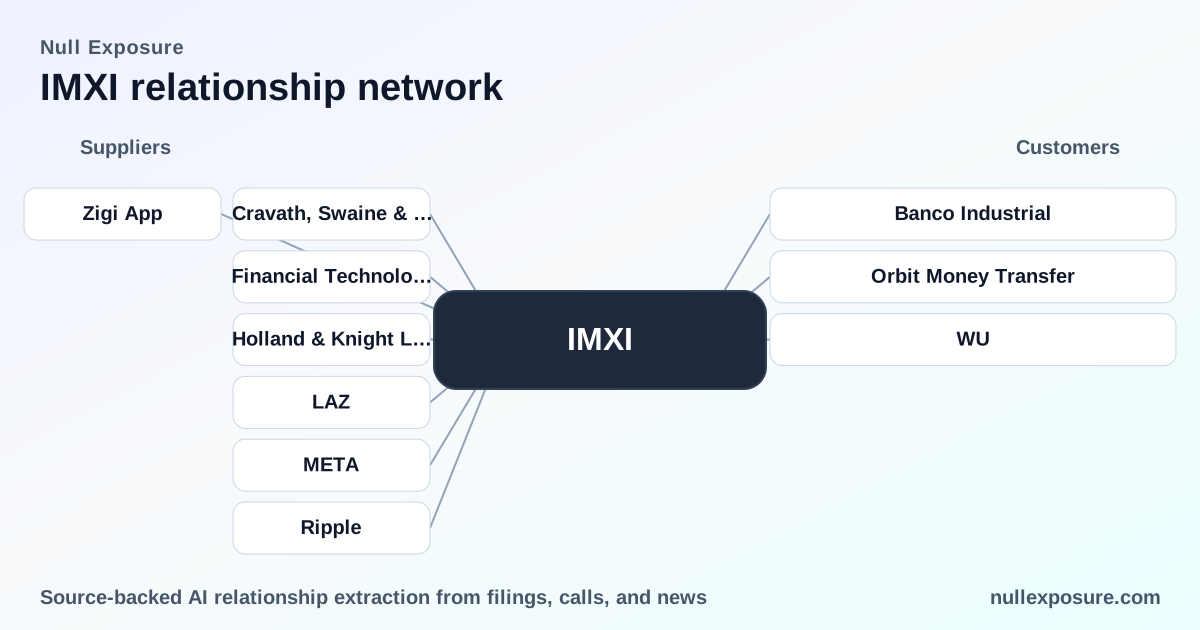
- Cravath, Swaine & Moore LLP is acting as legal advisor to Intermex’s Strategic Alternatives Committee, signaling formal transaction-level legal oversight around strategic review processes, including M&A or sale options. CityBiz reported this involvement in March 2026.
- Financial Technology Partners LP is serving as a financial advisor to Intermex, a role consistent with transaction preparation and buyer outreach in a sale process; CityBiz noted this appointment in March 2026.
- Holland & Knight LLP is named as legal advisor alongside Financial Technology Partners in the same CityBiz report, indicating dual legal advisory capacity for corporate and regulatory matters during strategic discussions (CityBiz, March 2026).
- Lazard Frères & Co. LLC is serving as a financial advisor to Intermex’s Strategic Alternatives Committee, an indicator of engagement by a global investment bank to run a potential auction or negotiated sale; this was identified by CityBiz on March 10, 2026.
Each advisor listing is a material commercial signal: Intermex is in a formal strategic process with top-tier advisors, increasing the probability of near-term corporate action and creating transactional counterparties that will influence contract novations and integration risk.
Where Intermex sources technology and rails
- WhatsApp: Intermex launched wire transfers via WhatsApp, expanding customer touchpoints into a dominant messaging channel for Latino users and embedding remittance initiation inside a high‑frequency consumer app; this product launch was announced in a GlobeNewswire release on February 20, 2025.
- Ripple (TradingView analyst note): An analyst note published on TradingView in March 2026 highlighted Intermex’s use of Ripple’s XRP ODL (On‑Demand Liquidity) services, positioning the company as an active user of digital‑asset rails for cross‑border liquidity optimization.
- Ripple (Cryptoninjas, 2020): Intermex publicly announced a partnership to join Ripple’s enterprise payment network in February 2020, establishing a legacy relationship with digital‑asset payment rails that predates later corporate developments.
Those tech rails indicate a hybrid settlement strategy: Intermex uses traditional correspondent/bank rails while selectively deploying digital rails to reduce float and hedging costs across Latin American corridors.
Channel partnerships and market reach
- Zigi App / Banco Industrial: Intermex announced a partnership with Banco Industrial to launch a digital remittance service via the Zigi App (reported in an InsiderMonkey feature for FY2026 referencing a December 2 announcement). That partnership demonstrates Intermex’s strategy to embed remittance flow into bank‑branded digital wallets and third‑party apps, accelerating customer acquisition in key corridors.
Risk and opportunity takeaways for investors and supplier managers
- Transaction-driven revenue and high partner dependence create upside when volumes recover and downside when large payers slow flows; Intermex’s FY2025–FY2026 activity (advisor appointments and product launches) indicates active repositioning for scale or sale.
- Large-enterprise counterparties reduce counterparty credit risk but increase concentration exposure; underwrite scenarios where one or two payer relationships drive material percentages of flow.
- Use of alternative rails (Ripple, WhatsApp integrations) reduces working capital friction and can compress settlement times, improving margins — but operational and regulatory integration risk rises as payment rails proliferate across jurisdictions.
- Advisor engagement (Lazard, Financial Technology Partners, Cravath, Holland & Knight) signals a near-term strategic liquidity event risk/reward profile that changes counterparty dynamics and could accelerate contract renegotiations or novations.
Explore how supplier relationships change counterparty risk profiles at https://nullexposure.com/ for deeper supplier-level reporting and transaction monitoring.
Practical diligence checklist for operators and counterparties
- Validate the split of flows by payer and corridor and stress-test concentration on the top three payers.
- Review termination, assignment and change‑of‑control clauses ahead of any announced strategic transaction.
- Map rail usage (correspondent banking vs digital ODL) per corridor to quantify settlement and FX exposure.
- Confirm regulatory licensing and KYC responsibility for WhatsApp and app‑based channels versus bank partners.
Closing recommendation
Intermex is a fee-centric remittance operator with increasing strategic activity and deliberate investment in digital rails and channel embeds. For investors and counterparties, the immediate priorities are to quantify counterparty concentration, assess the operational maturity of digital rails, and prepare for changing contractual counterparties given the announced advisor engagements. For ongoing supplier risk monitoring and transactional intelligence, consult Null Exposure’s supplier profiles and transaction trackers at https://nullexposure.com/.