Inhibrx (INBX): How supplier relationships shape a clinical-stage biotech’s risk and runway
Inhibrx is a clinical-stage biotechnology company that develops biologic therapeutic candidates and monetizes through future product sales, partnerships or licensing upon regulatory approval. Today the company operates with minimal internal manufacturing, outsources clinical development and production, and carries a balance sheet and spend profile that force supplier relationships to be strategic drivers of both cost and timing. Investors should value Inhibrx not on current revenue—Revenue TTM $1.4M and a market capitalization near $1.007B—but on how reliably its third-party suppliers can deliver clinical materials and services required to preserve trial timelines and control cash burn. For a succinct supplier intelligence brief, visit https://nullexposure.com/.
The operating reality: outsources core functions, houses staff under a long lease
Inhibrx does not own manufacturing facilities and relies on a limited set of third-party contract manufacturers (CDMOs) and contract research organizations (CROs) for raw materials, biologics and clinical trial execution. Company disclosures note that external R&D expense is primarily contract manufacturing and clinical trial spend, and that Inhibrx manages those third parties rather than building in-house capacity. The firm’s headquarters lease in La Jolla runs through 2028 with an option to extend, signaling a stable, long-term real estate commitment while operational functions remain outsourced.
- Contract posture: The company uses cancellable short-term contracts with CROs and CDMOs (contracts generally cancellable with notice), giving procurement flexibility but limited supply-side assurance. This is balanced by a long-term lease for facilities through 2028.
- Concentration and criticality: Reliance on a limited number of third-party manufacturers makes those relationships operationally critical; enrollment delays or manufacturing shortfalls are identified as materially harmful to the business.
- Spend and maturity: External spend is meaningful—Inhibrx categorizes contract manufacturing and clinical trials as primary external expenses, consistent with a spend band in the $10M–$100M range for these supplier categories as disclosed in financial notes.
These company-level signals come from Inhibrx’s public filings and fiscal disclosures as of December 31, 2024. For ongoing supplier tracking and competitive context, see https://nullexposure.com/.
Suppliers cited in the public record: counsel on a trade-secret suit
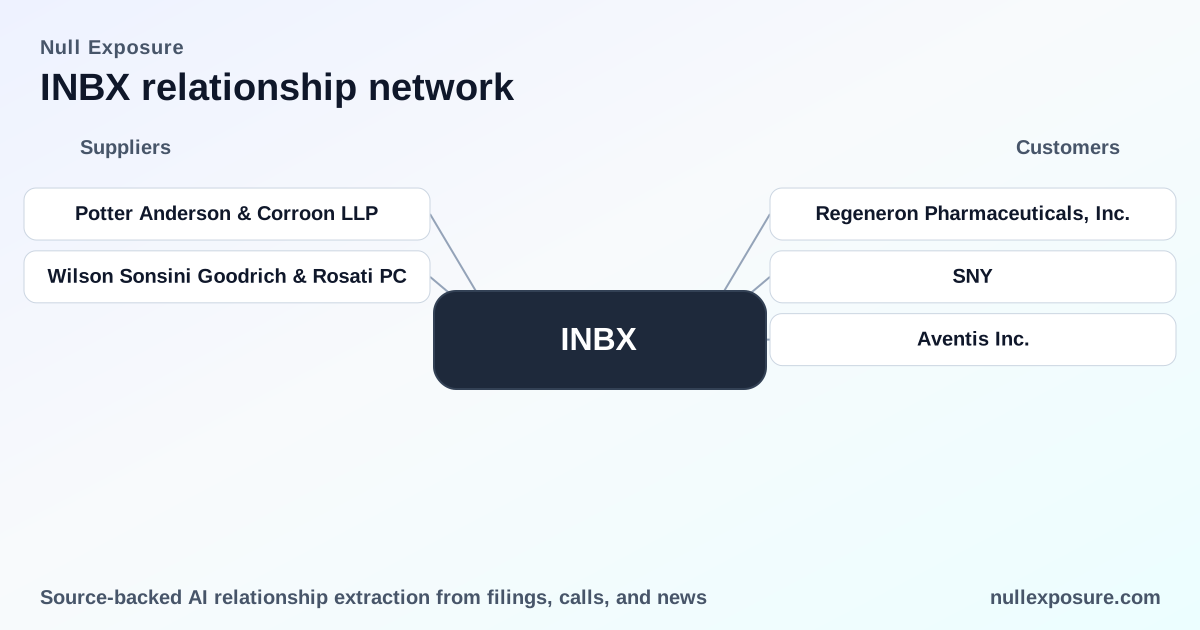
Potter Anderson & Corroon LLP represented Inhibrx in a recent trade-secret litigation victory. The public release lists Potter Anderson as counsel in the matter that Inhibrx prevailed on; the filing highlights the firm’s role in litigation strategy and courtroom representation. According to a PR Newswire release dated March 10, 2026, Potter Anderson & Corroon LLP served as one of Inhibrx’s outside law firms in that case.
Wilson Sonsini Goodrich & Rosati PC also served as outside counsel for Inhibrx in the same trade-secret action. The PR Newswire release notes Wilson Sonsini alongside Potter Anderson as part of the legal team that defended Inhibrx’s intellectual property and trade-secret claims on March 10, 2026.
Both counsel relationships are discrete professional services engagements tied to litigation defense rather than ongoing operational supply; they matter because legal outcomes have direct implications for IP protection, competitive position, and the company’s ability to monetize future therapies.
What the constraints tell investors about the supplier model
Company disclosures provide structured signals that clarify how supplier risk translates into financial exposure and execution risk.
- Long-term lease commitment: Inhibrx leases approximately 43,000 square feet of lab and office space in La Jolla through 2028 with an option to extend three years—this is a fixed overhead commitment that anchors headcount and central operations.
- Short-term, cancellable CRO/CDMO contracts: Clinical and manufacturing contracts are generally cancellable with notice, which enables cash flexibility but reduces guaranteed supply continuity for trial materials.
- Materiality of supplier spend: The company identifies clinical trial enrollment delays and third-party manufacturing costs as materially harmful, and lists lease and CRO/CDMO obligations among its primary contractual cash requirements as of December 31, 2024.
- Role profile: Inhibrx acts as a buyer and manager of services and manufacturing, relying on third parties to supply and produce its therapeutic candidates rather than owning those capabilities internally.
- Segments in use: Suppliers fall into the manufacturing and services buckets—contract manufacturing for biologics and clinical services via CROs and data-management organizations.
- Spend scale: External expenses show meaningful line-item spend in clinical trials and contract manufacturing consistent with a $10M–$100M spend band.
These constraints together form a coherent operating model: lean internal footprint, outsized dependency on external manufacturers and clinical vendors, and fixed corporate overhead from a long-term lease. That combination creates a high operational leverage to supplier performance.
Operational and investment implications
For operators: procurement teams must prioritize manufacturing continuity, qualification redundancy, and clear cancellation/notice terms to avoid trial interruptions. Given cancellable contracts, negotiating supply guarantees, buffer inventory, or secondary suppliers is essential to protect timelines.
For investors: the primary risk vectors are (1) manufacturing concentration—a supply disruption can directly delay trials and increase cash burn; (2) timing risk from cancellable contracts—flexibility for cash control trades off against guaranteed supply; and (3) legal/IP defense costs—external counsel engagements are episodic but can influence the company’s competitive moat. Inhibrx’s market capitalization implicit valuation assumes successful advancement of clinical programs; supplier failures would materially affect that thesis.
A mid-cycle review of supplier relationships and contract terms is a high-conviction due diligence item. For expert supplier intelligence and monitoring to support investment decisions, visit https://nullexposure.com/.
Actionable takeaways for investors and operators
- Supplier dependency is strategic risk: Inhibrx outsources manufacturing and clinical operations, making CDMO/CRO performance a direct driver of clinical timelines and cash consumption.
- Contract flexibility does not equal supply security: Cancellable contracts preserve cash control but require alternative mitigation like secondary suppliers or inventory buffers.
- Legal counsel relationships matter for IP defense: Recent litigation was staffed by Potter Anderson & Corroon LLP and Wilson Sonsini Goodrich & Rosati PC, showing Inhibrx will engage high-caliber external counsel to defend intellectual property.
- Monitor near-term milestones relative to supplier commitments: Delays in enrollment or manufacturing are disclosed as materially harmful—track vendor qualifications, lot releases, and enrollment rates as leading indicators.
Closing and next steps
Inhibrx’s supplier footprint is a central element of its operating model: outsourced manufacturing and clinical services, a long-term corporate lease, and material external spend. Investors should prioritize visibility into CDMO/CRO counterparty health, contractual terms, and redundancy plans as part of fundamental analysis. For a comprehensive supplier risk profile and ongoing monitoring tailored to institutional due diligence, explore full coverage at https://nullexposure.com/.