INCR (INC Research Holdings): supplier relationships, operating model, and investor implications
INC Research Holdings (ticker INCR) operates as a global contract research organization (CRO) that monetizes by delivering clinical development services to biopharmaceutical and medical device sponsors through fee-for-service engagements, milestone-linked contracts, and bundled program offerings. The business generates revenue from multi-phase clinical trials, regulatory support and integrated commercialization services delivered across geographies; investor focus should be on contract book durability, client concentration, and the degree to which advisory and agency relationships reduce execution risk. For a concise supplier-risk dashboard and ongoing relationship monitoring, visit the NullExposure homepage: https://nullexposure.com/.
How the company makes money and what the numbers tell investors
INC Research is a classic CRO: it sells project-based clinical development and commercialization services to sponsors and invoices on milestones, time-and-materials, or fixed-fee schedules. Revenue for the trailing twelve months stands at $243.1M and gross profit is $40.6M, while the company shows a negative profit margin (-29.2%) and negative EBITDA, signaling ongoing cost or integration pressures as it scales. Public metrics show a low price-to-sales ratio (0.499) and an EV/EBITDA of 5.29, positioning the equity as a value-sensitive play for investors who can underwrite operational turnaround or successful contract wins. These figures reflect the company’s latest reported quarter ending June 30, 2025.
Supplier, adviser and agency relationships to map
Investor diligence on INCR should treat supplier and adviser relationships as indicators of corporate strategy and execution risk. The known, documented relationships below map to major corporate events—M&A advisory and legal counsel for a sale, and a branding engagement tied to a rebrand—and each has implications for governance, strategic direction, and public positioning.
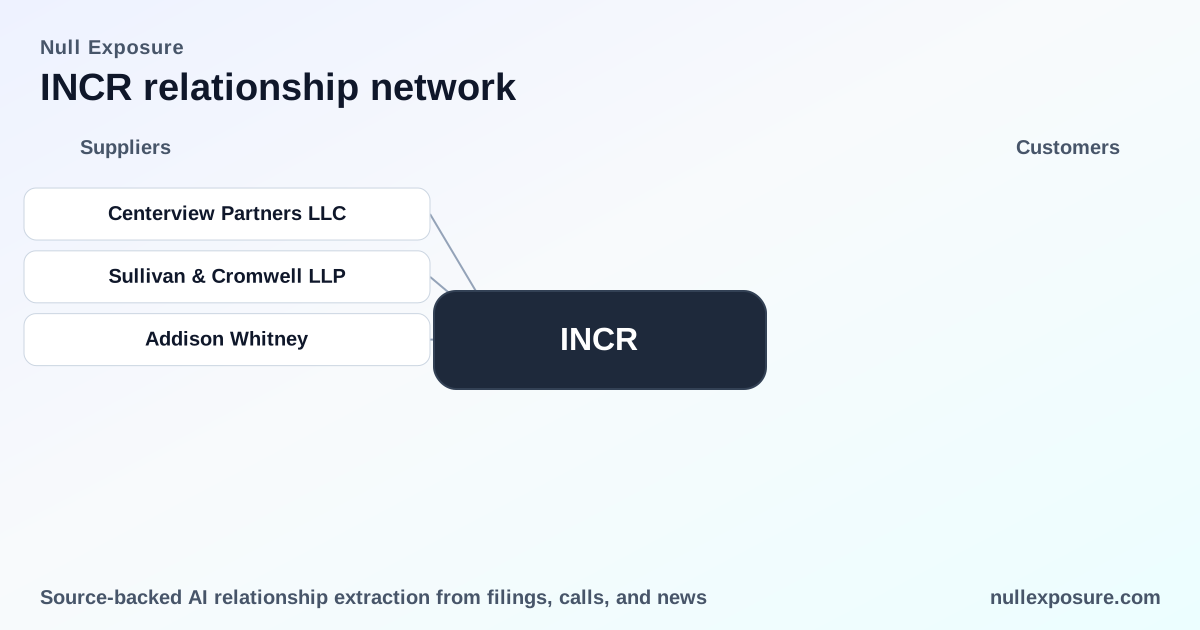
Centerview Partners LLC — M&A financial adviser in FY2017
Centerview acted as INCR’s financial adviser in connection with the transaction reported in FY2017, giving the company senior boutique advisory support for sale and strategic options. This relationship signals that INCR engaged top-tier M&A advice during a pivotal corporate event. (Source: Financier Worldwide coverage of the FY2017 transaction: https://www.financierworldwide.com/advent-backed-inventiv-health-sold-in-46bn-deal)
Sullivan & Cromwell LLP — legal counsel for the FY2017 transaction
Sullivan & Cromwell served as INCR’s legal counsel during the same FY2017 sale process, providing heavyweight transactional legal support typically used in complex cross-border M&A. The presence of elite legal counsel reduces execution and regulatory risk in high-value transactions. (Source: Financier Worldwide coverage of the FY2017 transaction: https://www.financierworldwide.com/advent-backed-inventiv-health-sold-in-46bn-deal)
Addison Whitney — brand and identity agency in FY2018
Addison Whitney was engaged to develop the company’s new corporate identity as part of the FY2018 rebranding that produced the Syneos Health name. A strategic brand engagement indicates management’s intent to reposition and consolidate market-facing assets following corporate restructuring or M&A activity. (Source: GlobeNewswire press release, January 2018: https://www.globenewswire.com/news-release/2018/01/04/1283447/0/en/INC-Research-inVentiv-Health-Becomes-Syneos-Health.html)
Operational posture, concentration and supplier criticality — company-level signals
With no explicit constraints reported in the supplier relationship data set, investors should read the available signals at the corporate level:
- Contracting posture: Project- and program-based contracting is the dominant modality for CROs; expect a mix of short-duration trial work and multi-year strategic programs that create lumpy revenue but recurring cash flow potential when client relationships are deep.
- Concentration and ownership signals: Institutional ownership is very low (1.34%) while insiders hold a meaningful 26.05%, which suggests concentrated insider alignment and a thin institutional investor base; customer concentration is not disclosed in this record and requires direct diligence.
- Criticality and maturity: Clinical development services are mission-critical to sponsors; losing or mis-executing a large program would materially affect revenue. The company’s use of top-tier advisers and a major rebrand in 2017–2018 signals institutional maturity and an ability to access premium external providers when executing strategic change.
- Supplier maturity and sourcing: Relationships with marquee advisers and a specialist branding agency indicate management’s preference for established, high-quality service providers for strategic work rather than boutique or unproven partners.
For ongoing monitoring of these relationship signals and to incorporate supplier exposures into investment models, consult our homepage: https://nullexposure.com/.
Investment implications and principal risk factors
The documented supplier relationships are concentrated around strategic corporate events—M&A advisory, transaction law, and brand creation—rather than day-to-day operational suppliers. That pattern has three direct implications for investors:
- Execution risk in strategic transactions is mitigated by the use of high-caliber advisers and counsel, but successful integration and post-transaction performance remain the main drivers of ultimate value realization.
- Public repositioning via branding indicates management is pursuing scale or market redefinition, which can expand addressable markets but introduces short-term integration and marketing expense pressure.
- Operational risk stems from core trial delivery and client retention; given negative margins and negative EBITDA, the key investment thesis element is whether INCR converts advisory-driven strategy into sustainable contract wins and margin recovery.
Key risks to monitor include client concentration (undisclosed here), contract backlog composition, margin trajectory, and the company’s ability to retain or upsell major sponsors. Financials show revenue of $243.1M but negative profitability metrics, so supplier and adviser relationships must be judged in light of execution capability, not only pedigree.
Bottom line and recommended next steps for investors
INCR is a CRO with strategic-level supplier relationships that reflect serious capacity to execute M&A and public repositioning, but the current financial profile demands close scrutiny of operational performance and client contracts before allocating capital. For investors evaluating supplier exposure or building a counterparty risk model, prioritize obtaining direct client-concentration data, contract backlog detail, and a post-restructuring margin plan.
To review supplier-level intelligence and track these relationships over time, visit the NullExposure homepage: https://nullexposure.com/.
If you want a tailored supplier-risk brief for INCR with scenario-level impact on revenue and cashflow, NullExposure can help—start at https://nullexposure.com/.