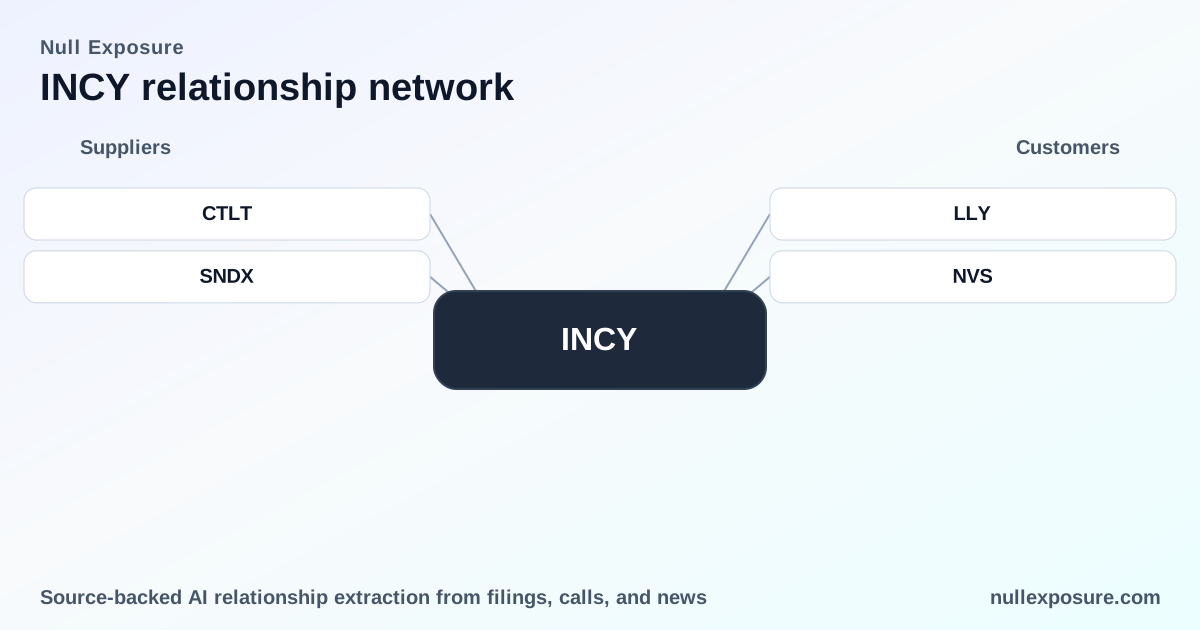
Incyte’s supplier footprint: where fourth‑party risk meets regulatory leverage
Incyte monetizes by discovering and commercializing oncology and specialty immunology therapies while outsourcing most manufacturing and development services to contract partners. Revenue comes from product sales (commercial medicines like JAKAFI and PEMAZYRE), milestone and collaboration economics, and licensing flows; operating leverage therefore depends on third‑party manufacturing, fill/finish and CRO relationships. For investors, the key valuation and operational sensitivities are regulatory inspections at partner sites, supplier concentration and the maturity of outsourced supply chains.
Explore supplier intelligence and counterparty risk screening at https://nullexposure.com/.
Outsourcing is strategy and vulnerability — what the firm filing language tells investors
Incyte’s public disclosures are explicit: the company does not operate manufacturing facilities for most clinical or commercial products and contracts third parties for API, finished dosage form, packaging and clinical services. That contracting posture yields benefits — variable cost structure, partner expertise, and faster scale-up — while introducing clear vulnerabilities:
- Concentration: Incyte states it typically uses single or a limited number of qualified suppliers for APIs, raw materials and finished product, which creates a direct single‑point failure risk for clinical timelines and commercial supply.
- Criticality: Third‑party facility compliance is a gating item for regulatory approvals; inspection failures at a partner site can directly block a submission or force remedial action that delays launches and revenues.
- Maturity and stage: The company’s relationships are active and embedded across late‑stage clinical and commercial products, so supplier disruption affects both near‑term product flows and pipeline progression.
According to Incyte’s regulatory risk disclosures, “We generally have a single source or a limited number of suppliers … If any of these suppliers were to become unable or unwilling to supply us … we could incur significant delays … or interruption of commercial supply that could have a material adverse effect on our business.” This language frames supplier events as operationally and financially consequential.
Public signals: two relationships investors should weigh
Market and news signals in early 2026 highlight two supplier/collaboration touchpoints that illustrate both regulatory exposure and collaborative R&D strategy.
Catalent Indiana — regulatory inspection drove a submission setback
A TradingView news item dated March 10, 2026 reports that the FDA’s complete response letter (CRL) for Incyte’s sBLA for Zynyz in non‑small cell lung cancer cited inspection findings at Catalent Indiana’s fill‑finish facility as the sole approvability issue, directly tying regulatory clearance to a third‑party manufacturing site inspection. (TradingView, March 10, 2026).
Implication: Catalent’s facility inspection failure is a clear example of how outsourced fill/finish criticality can delay approval and revenue recognition.
Syndax Pharmaceuticals — development collaboration on axatilimab in chronic GVHD
An earnings‑call transcript for Syndax (Q4 2025) relayed on InsiderMonkey notes that Syndax and Incyte are partnering to expand axatilimab’s role in chronic graft‑versus‑host disease with two ongoing trials in newly diagnosed patients, indicating an active clinical collaboration where Incyte is a development/commercial partner (InsiderMonkey, Q4 2025 earnings call transcript).
Implication: This relationship demonstrates Incyte’s approach to sharing development risk via collaboration and using external clinical programs to extend product opportunity.
What these relationships reveal about Incyte’s operating model
Taken together, the signals above align with the company’s disclosed supplier constraints and shape investor priorities:
- Contracting posture: Incyte outsources manufacturing and clinical work by design; the firm relies on vendors for API, fill/finish, packaging and CRO services, which drives operational flexibility but transfers regulatory execution risk to partners.
- Concentration: The company-level disclosure about single or limited suppliers is a material company‑level signal; a single facility inspection — as with Catalent Indiana — can halt or delay approvals.
- Criticality: Supplier compliance is directly tied to approvability and commercial continuity; third‑party inspection failures are not theoretical but have immediate commercial consequences.
- Maturity and stage: Relationships are active across clinical and commercial programs, so supplier events affect both topline forecasts and pipeline timing.
Investors should treat supplier events as first‑order risks for near‑term revenue and product launch timing rather than background operational noise.
Practical takeaways for investors and operators
- Regulatory events at contract manufacturers can shift valuation more than routine operational noise. The Catalent CRL is a template for how a single third‑party inspection drives timeline risk for a revenue‑bearing submission.
- Collaboration-led R&D (e.g., Syndax) reduces development capital needs but requires active program oversight. Partnerships expand optionality while adding complexity to development governance and milestone realization.
- Monitor supplier diversity and qualification progress as part of due diligence. Where Incyte relies on single or limited suppliers, covenant‑style indicators — dual sourcing, remediation timelines, and inspection outcomes — should be tracked.
If you evaluate counterparties or need a deeper supplier risk profile for portfolio companies, see how we structure third‑party intelligence at https://nullexposure.com/.
How to translate supplier signals into investment actions
- Stress‑test revenue and launch scenarios for regulatory inspection delays and map which products are exposed to single‑site suppliers.
- For partnerships, quantify the contribution of collaborative programs to medium‑term pipeline value and identify milestone timing that depends on external trial execution.
- Engage with management questions on supplier remediation plans, parallel sourcing options and inventory build strategies when a partner’s inspection is cited in regulatory correspondence.
Closing recommendation
Treat Incyte as a biotech with strong commercial products but meaningful supply‑chain and partner concentration risk. Catalent’s inspection‑driven CRL demonstrates the tangible vote of confidence regulators place on contract manufacturers, while the Syndax collaboration illustrates Incyte’s continued reliance on external R&D partners to expand indications. For active investors and operators, incorporate supplier inspection outcomes and collaboration milestones into modeling and scenario planning.
Learn more about supplier risk intelligence and scenario analysis at https://nullexposure.com/.