InfuSystem Holdings (INFU): Supplier and distribution relationships that shape its home-infusion strategy
InfuSystem operates a dual model: it rents and services infusion pumps and supplies to hospitals and home-care providers across the U.S. and Canada while also acting as a distributor for complementary wound-therapy and infusion products. The company monetizes through recurring rental revenue, consumables and ancillary services, and selective acquisitions and distribution agreements that widen product breadth and customer access. For an integrated supplier-risk snapshot and relationship map, visit https://nullexposure.com/.
What the relationship map tells you about InfuSystem’s commercial posture
InfuSystem combines direct procurement of pump assets with third‑party distribution agreements and bolt-on acquisitions to widen its addressable market. Distribution agreements expand product lines into negative pressure wound therapy (NPWT) and advanced wound care, while acquisitions bring ready-made customer relationships and incremental fleet. This hybrid approach creates predictable service revenue from rentals and consumable sales while using M&A and partnerships to accelerate share gains.
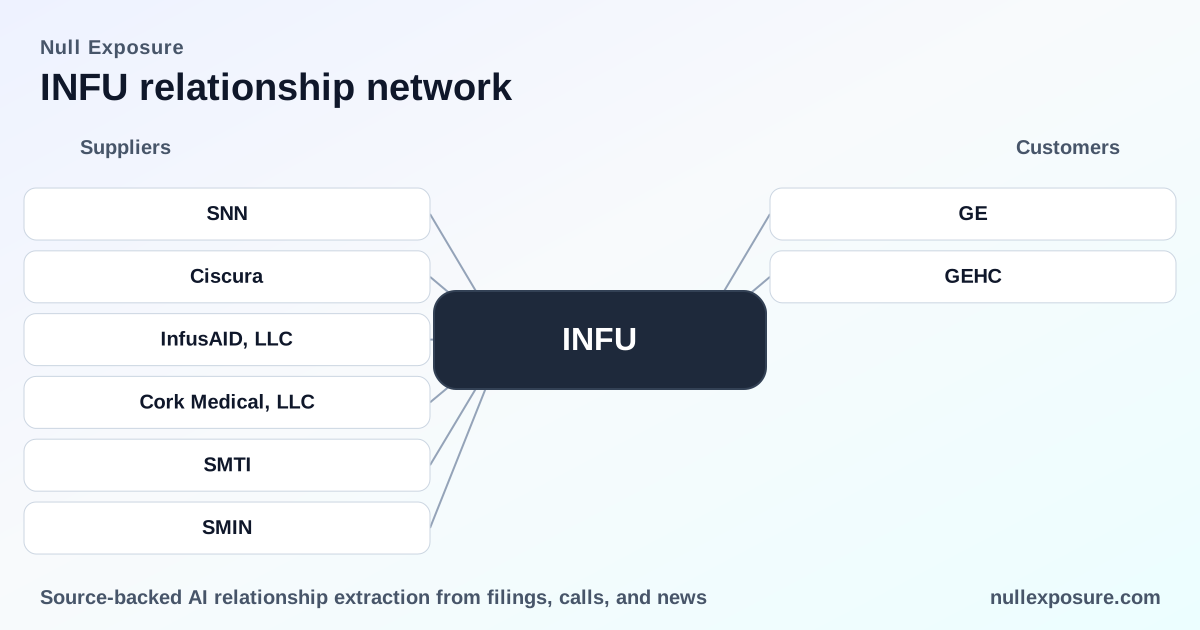
Supplier and distribution relationships — the full list
Smith & Nephew plc (SNN)
InfuSystem signed a three‑year distribution agreement to deliver Smith & Nephew’s RENASYS EDGE NPWT system into home-based chronic wound care channels, positioning InfuSystem as a go‑to distributor for that product in the home-care segment. This was reported in a March 2026 Yahoo Finance item referencing the FY2024 initiative. (Source: Yahoo Finance / March 2026)
Ciscura
InfuSystem referenced prior consolidation activity tied to its acquisition of Ciscura in 2015 and framed acquisitions as a source of medical facility relationships that accelerate market share growth. The company cited the Ciscura transaction in a press release about later asset acquisitions. (Source: PR Newswire press materials tied to the InfusAID asset acquisition discussion, FY2016 press coverage)
InfusAID, LLC
InfuSystem’s subsidiary completed an acquisition of infusion pump assets from InfusAID, adding pumps and the attendant facility relationships to its rental and service fleet; the acquisition was announced in a 2016 PR Newswire release. (Source: PR Newswire / FY2016)
Cork Medical, LLC
InfuSystem acts as a distributor for Cork Medical’s NPWT devices and supplies in the United States and Canada, which extends InfuSystem’s offering into negative pressure wound therapy consumables and devices. This partnership was disclosed in a GlobeNewswire release tied to broader wound‑therapy cooperation. (Source: GlobeNewswire / FY2022)
Sanara MedTech Inc. (SMTI)
InfuSystem partnered with Sanara MedTech to offer Sanara’s advanced wound‑care product line and services alongside Cork Medical products, broadening the company’s wound‑care portfolio offered to new customers. The collaboration was announced in a GlobeNewswire release in 2022. (Source: GlobeNewswire / FY2022)
Smiths Medical (CADD® infusion therapy)
Smiths Medical selected InfuSystem as an official distributor of its CADD® infusion therapy products, giving InfuSystem formal distribution rights for a well‑established infusion product family and reinforcing its role in medication-delivery channels. This selection was announced via PR Newswire in 2018. (Source: PR Newswire / FY2018)
Operational constraints and what they imply for procurement resilience
InfuSystem’s sourcing behavior and supplier exposure produce a set of company‑level signals that directly inform procurement strategy:
- Contracting posture: The company makes certain spot purchases on the open market, negotiated on an individual basis, which injects pricing and availability variability into the supply chain. Evidence for spot procurement was disclosed in public materials describing open‑market purchases.
- Supplier concentration: Public filings indicate ICU Medical supplied approximately 60% of ambulatory pumps purchased by InfuSystem in 2024, and the company maintains a supply agreement with that supplier; this represents a material concentration risk at the company level that procurement teams must monitor.
- Buyer role and sourcing mix: InfuSystem functions primarily as a buyer of new and pre‑owned ambulatory and pole‑mounted infusion pumps on a non‑exclusive basis, combining contract purchases with opportunistic buying and acquisitions to grow fleet size.
These characteristics create a hybrid procurement profile: contracted supply for baseline volume and spot/transactional purchasing to meet immediate demand or execute tuck‑ins.
How relationships translate into competitive advantage and exposure
InfuSystem’s distribution relationships and asset acquisitions are strategic levers that produce both upside and exposure:
- Upside: Distribution deals with Smith & Nephew, Sanara and Cork directly expand product offerings into wound therapy, enabling cross‑sell of NPWT devices and supplies to InfuSystem’s home‑care customers and strengthening recurring consumables revenue.
- Growth-through-acquisition: The InfusAID and Ciscura asset deals illustrate a pattern of buying installed relationships and pump fleets rather than building them organically, accelerating market share with low incremental customer acquisition costs.
- Exposure: Heavy reliance on a limited number of pump suppliers (notably the disclosed ICU Medical concentration) and the use of spot purchases for some volumes create pricing and continuity risk, particularly if device availability tightens or contract terms change.
Key operating signals: strong institutional ownership (81% institutional holders), modest profitability (EBITDA visible in filings), and a revenue base around $143m TTM indicate InfuSystem is a specialized, capital‑intensive operator focused on service margins and fleet utilization.
For more detailed supplier exposure analysis and scenario modeling, review the company profile at https://nullexposure.com/.
Risk and valuation context investors should weigh
From a financial perspective, InfuSystem’s profile combines steady recurring revenue with concentrated inputs:
- Valuation and margins: The company reports positive operating margins and EBITDA while trading at a forward P/E that reflects growth expectations; investors must reconcile the revenue model’s stickiness with supplier concentration.
- Volatility and liquidity: Institutional ownership is high and float is relatively constrained, which compresses liquidity and can amplify price moves (beta above 1.6 supports a view of elevated sensitivity to market swings).
- Operational risk: Dependence on third‑party manufacturers and spot purchases introduces procurement risk that has a direct impact on fleet availability and cost of goods sold, and therefore on margins.
Model scenarios should stress-test pump availability, negotiated supplier pricing, and the pace of converting distribution partnerships into consumables revenue.
Bottom line and recommended next steps for investors and operators
InfuSystem’s operating model is deliberate: rent and service a core fleet while using distribution partnerships and selective acquisitions to broaden product lines and customer reach. That model produces recurring revenue and margin upside from consumables but also concentrates supplier exposure that requires active procurement oversight.
Actionable steps:
- Operators should audit supplier concentration and establish contingency plans for the ambulatory pump supply chain.
- Investors should monitor announced distribution agreements (NPWT deals and CADD® distribution) as leading indicators for consumables revenue expansion.
- For ongoing supplier-risk tracking and relationship mapping, visit https://nullexposure.com/ to access structured supplier intelligence and event monitoring.
This assessment synthesizes public disclosures and press releases to map the relationships that materially influence InfuSystem’s procurement footprint and go‑to‑market strategy.