ING Group NV (ING) — supplier relationships and operating signals for investors
ING is a global diversified bank that monetizes through deposit-taking and lending spreads, fee income from payments and advisory, and asset-management and trading activities. The company’s balance-sheet economics are driven by net interest income and recurring fees, while capital return (dividends and buybacks) and ESG positioning are material components of investor valuation. For buyers and operators evaluating ING as a supplier or counterparty, the critical signals are its scale, regulatory maturity, and integrated asset-management capabilities, which shape contracting behavior and operational risk. For a deeper supplier-screen and relationship map, visit https://nullexposure.com/.
How ING operates as a supplier and counterparty — the commercial thesis
ING operates as a mature, regulated financial institution offering retail and wholesale banking, payments, and asset-management services. Revenue of roughly $24.5 billion TTM and a Return on Equity near 15.8% (TTM) show an established earnings base that supports client-facing products and partnerships. ING’s public markets presence (NYSE listing, ADR structure) and cross-border footprint mean contracts are standardized, compliance-oriented, and likely backed by robust operational controls and high counterparty criticality to downstream clients.
- Contracting posture: Standardized master-agreements and regulatory compliance are embedded into supplier relationships, reflecting bank-grade procurement and vendor governance.
- Concentration: ING is diversified across retail, SME and wholesale banking; supplier concentration risk is moderate given multiple business lines, but key vendor relationships in asset management and ESG services are strategically important.
- Criticality: Supplier and partner services that influence payments, custody, asset management and ESG ratings are highly critical to ING’s operating continuity and market reputation.
- Maturity: As a long-established bank, supplier arrangements trend toward long-duration, performance-measured contracts and formal SLAs.
Explore a full relationship scan and supplier risk scoring at https://nullexposure.com/ to align counterparties with your operational due diligence.
What the relationship signals show — direct mentions in media and filings
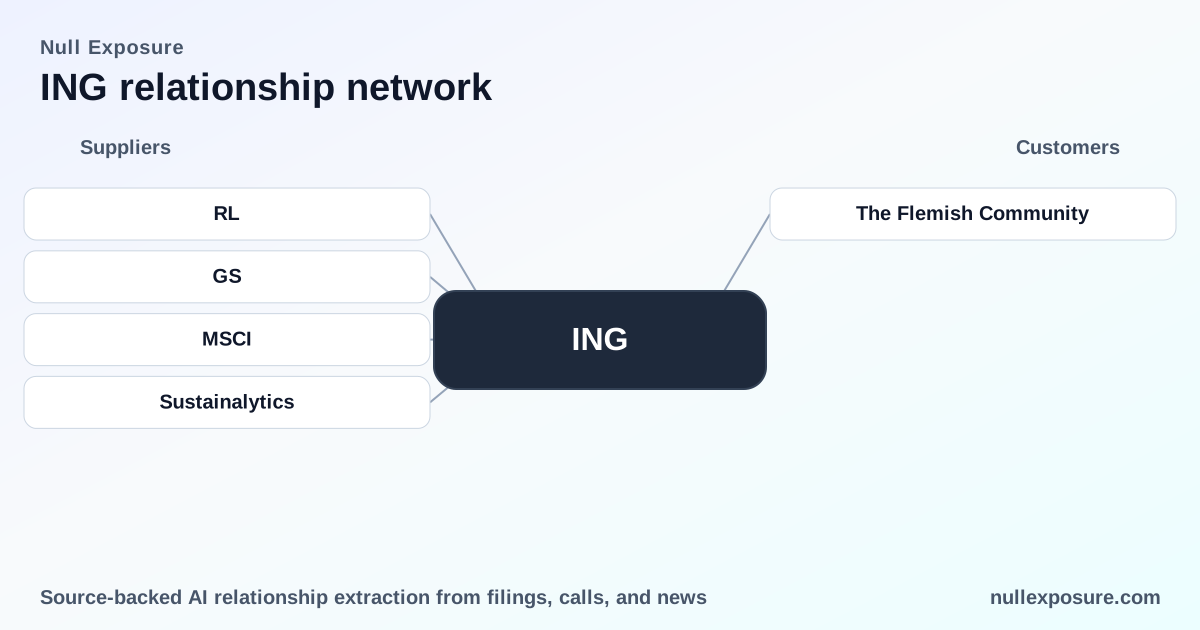
Below are every supplier or partner referenced in public reporting within the provided period, with plain-English takeaways and source context.
Ralph Lauren Corporation (RL)
ING increased its stake in Ralph Lauren, boosting its position by 33.1% during the third quarter, reflecting portfolio reallocations within ING’s investment holdings rather than a vendor-supplier contract; this is reported in ING’s Form 13F filing coverage. Source: MarketBeat coverage of ING’s 13F filing (FY2026): https://www.marketbeat.com/instant-alerts/filing-ing-groep-nv-boosts-stock-holdings-in-ralph-lauren-corporation-rl-2026-02-12/
Goldman Sachs (GS)
ING completed the purchase of the remaining ownership of a Polish asset manager, acquiring the seller’s stake that had been held by Goldman Sachs (the referenced transaction transferred a 55% interest). This indicates ING’s active consolidation of asset-management capability through strategic M&A, reducing reliance on external JV partners in that market. Source: Q4 2025 earnings call transcript reported by InsiderMonkey (FY2026): https://www.insidermonkey.com/blog/ing-groep-n-v-nyseing-q4-2025-earnings-call-transcript-1685252/
MSCI
ING is included in major ESG indices and benefits from top-tier ESG indexing coverage provided by MSCI, which supports the bank’s sustainability positioning and index-based investor demand. This is cited in press coverage tied to ING’s capital-return and sustainability messaging. Source: The Globe and Mail press release coverage (FY2026): https://www.theglobeandmail.com/investing/markets/stocks/ING-N/pressreleases/554986/ing-groep-advances-eur1-1-billion-share-buyback-completes-over-73-by-late-february/
Sustainalytics
Sustainalytics is named alongside other ESG-rating providers as supporting ING’s sustainability credentials, indicating third-party ESG assessments are material to ING’s investor relations and index inclusion. Source: The Globe and Mail press release coverage referencing ESG ratings (FY2026): https://www.theglobeandmail.com/investing/markets/stocks/ING-N/pressreleases/554986/ing-groep-advances-eur1-1-billion-share-buyback-completes-over-73-by-late-february/
What these relationships imply for counterparties and investors
The media and filings highlight three operational themes for suppliers and investors evaluating ING:
- ING controls strategic capability through selective acquisition and portfolio management. The Poland asset-manager buyout from Goldman Sachs signals ING’s preference for internalizing strategic service lines rather than depending on external minority partners.
- Index and rating vendor relationships are economically significant. Inclusion in MSCI and Sustainalytics products supports market liquidity and investor demand, which in turn impacts capital return policies such as buybacks and dividends.
- Investment holdings are actively managed. Public U.S. equity positions such as the Ralph Lauren stake reflect treasury or asset-management portfolio activity that can influence liquidity deployment.
These are company-level operating signals rather than discrete supplier contract excerpts. No supplier-specific contractual constraints were present in the records provided; the absence of explicit constraint language is itself a signal that public reporting focused on strategic transactions and investor-facing ratings rather than granular vendor contract limits.
Risks and concentration to monitor
- Regulatory and compliance exposure: As a bank, ING’s supplier relationships are subject to strict vendor oversight and regulatory review that can materially affect contract flexibility.
- Strategic consolidation of services: ING’s tendency to acquire minority partners (e.g., the Poland asset manager purchase) increases the bank’s internal concentration of critical services, which shifts risk from third-party dependency to integration risk.
- Reputational dependence on ESG providers: Inclusion in ESG indices (MSCI, Sustainalytics) is an important reputational lever; adverse changes in ratings could hit valuation and capital deployment.
Actionable next steps for investors and operators
- For investors: Monitor ING’s published vendor and M&A activity for signs of strategic verticalization in asset management and payments, given the bank’s direct acquisitions and active portfolio moves.
- For vendors/operators: Prepare for bank-grade procurement standards and robust compliance demands when contracting with ING; prioritize controls, auditability and ESG alignment.
Learn how these supplier signals translate into operational risk scores and procurement playbooks at https://nullexposure.com/.
Closing take
ING’s public relationships and filings in FY2026 underline a bank that balances active portfolio management, targeted acquisitions, and ESG-index-driven investor positioning. For market participants assessing ING as a supplier counterparty, the dominant themes are maturity, regulatory constraint, and strategic consolidation — all of which define contractual posture and operational criticality. For a full supplier relationship map and bespoke risk briefing, visit https://nullexposure.com/.