InMed Pharmaceuticals (INM): Supplier relationships and what they tell investors
InMed Pharmaceuticals is a clinical-stage developer of cannabinoid-based therapeutics that runs an asset-light operating model: the company outsources manufacturing and leverages licensing and external advisory relationships to advance programs while it remains pre-commercial. InMed currently reports modest revenue ($4.5M TTM) and negative operating margins; its path to monetization depends on successful clinical development, out-licensing or commercialization deals, and continued access to third‑party manufacturing and capital markets. For a focused view on supplier exposures and partner concentration, see https://nullexposure.com/.
How InMed runs the business: outsourcing, licensing and advisory hooks
InMed does not operate large internal manufacturing facilities. R&D, final purification and clinical supply are handled by contract manufacturers and CDMOs, while corporate finance and capital-raising activities are supported by boutique investment banks and investor forums. This posture keeps fixed costs low and allows the company to scale program work through external partners, but it creates concentration and operational criticality around a small set of third‑party suppliers and service providers.
- Contracting posture: Asset-light with reliance on external licensors, CDMOs and advisory firms. Company disclosures indicate the firm “currently has no manufacturing capabilities and rely on CDMOs” for preclinical and clinical production.
- Concentration risk: When a single CDMO provides specialized purification or a narrow licensing window governs core IP, disruptions to that party would materially affect program timelines.
- Criticality: Manufacturing partners and IP licensors are mission-critical because product development, regulatory filings and future royalties all depend on their outputs.
- Maturity: Clinical-stage; revenue is limited relative to development needs, so supplier relationships are leveraged to conserve capital while the company advances studies.
If you want a concise supplier-risk audit and supplier-enterprise mapping for INM, visit https://nullexposure.com/ for tools and reports.
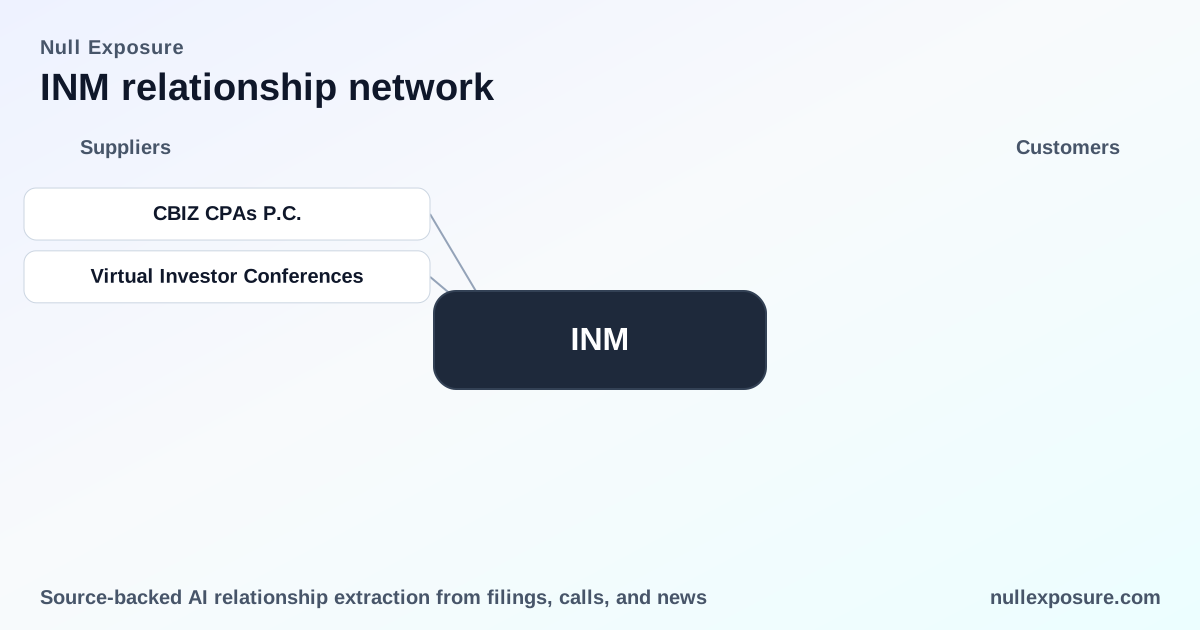
What the disclosed supplier relationships are (two items)
Below I cover each relationship identified in the supplier search results — plain-English summaries and source context follow.
CBIZ CPAs P.C.
- InMed shareholders approved CBIZ CPAs P.C. as the company’s auditors for the following year, signaling a standard auditor engagement for fiscal oversight and annual reporting. According to the AGM report posted on InvestingNews (AGM results, March 2026), the vote confirmed CBIZ as auditor for FY2026 work. (InvestingNews, March 2026 — https://investingnews.com/inmed-announces-results-of-2025-annual-general-and-special-meeting/)
Virtual Investor Conferences
- InMed’s CEO presented at the Life Sciences Virtual Investor Forum on September 18, 2025, reflecting an active outreach program to buy‑side and retail investors and the use of hosted investor conferences to support capital markets visibility. This was announced in a GlobeNewswire press release in September 2025. (GlobeNewswire press release, Sept 16, 2025 — https://www.globenewswire.com/news-release/2025/09/16/3151152/0/en/InMed-to-Present-at-the-Life-Sciences-Virtual-Investor-Forum-September-18th-2025.html)
How those relationships matter to investors
- Auditor relationship (CBIZ): The auditor is a governance touchpoint. A routine auditor engagement with CBIZ supports transparency in financial reporting and is a normal supplier for a listed clinical-stage company; changes in auditor or adverse audit findings would be a red flag for investor confidence.
- Investor conference and sell-side engagement: Presentations at forums such as VirtualInvestorConferences.com are not operational suppliers in the traditional sense, but they perform a critical capital markets function—maintaining investor access and supporting liquidity. For a company with limited revenues and ongoing cash needs, this supplier category is strategically important.
In the middle of the development cycle, supplier choice influences timelines and cash consumption; manufacturing disruptions or weaker-than-expected advisor support for capital raises will have direct valuation impacts. If you want systematic monitoring of supplier changes and their financial implications, check our platform at https://nullexposure.com/.
Company-level contract signals and constraints you should factor into underwriting
The supplier-related evidence extracted from company disclosures and filings yields several company-level signals:
- Licensing posture (confidence 0.80): Disclosures reference exclusive technology license agreements (for example, BayMedica’s February 15, 2021 agreement) that involve royalty contingencies tied to net sales. This signals an active licensing strategy—InMed assumes both inbound and outbound IP arrangements will be part of monetization (company disclosure excerpts, 2021).
- Licensor role (confidence 0.80): The filings include language consistent with licensing where an identified party acted as a licensor; investors should treat IP licenses as material commercial levers that will govern future royalty and revenue rights.
- Manufacturer reliance (confidence 0.80): The company explicitly states it has no internal manufacturing and relies on CDMOs for purification and clinical supplies; the business is therefore exposed to supplier capacity and quality risk (company filings and program descriptions).
- Service providers and advisors (confidence 0.80): Disclosures document engagement letters with financial advisors and underwriters (for example, H.C. Wainwright & Co., LLC — engagement dated June 24, 2025) and third‑party IT/cybersecurity vendors, indicating externalized capital markets and infrastructure support.
These constraints collectively indicate an operating model where IP licenses, contract manufacturing relationships, and advisory engagements are not peripheral — they are central to execution and value realization.
Investment implications and risk checklist
- Upside drivers: Licensing deals, successful clinical milestones that de-risk programs and enable partnerships, and effective capital markets engagement that secures funding on acceptable terms.
- Key risks: Concentration in critical CDMO suppliers, IP/license terms that erode margin through royalties, and the company's dependence on external advisors to finance continued development.
- Governance cue: Monitor auditor continuity and any material audit comments from CBIZ; changes here affect financial transparency and cost of capital.
For a structured supplier exposure analysis that connects these relationship signals to valuation and funding scenarios, visit https://nullexposure.com/ to get supplier‑focused reports and monitoring.
Bottom line
InMed operates an outsourced, licensing-friendly development model that keeps fixed capital requirements low but elevates supplier and IP counterparty risk. The two disclosed supplier relationships — CBIZ (auditor) and Virtual Investor Conferences (investor outreach) — are consistent with a clinical-stage company managing governance and capital‑markets visibility externally. Investors should prioritize monitoring CDMO agreements, licensing terms and advisor engagements as leading indicators of execution risk and funding runway.
If you want ongoing alerts when supplier relationships change or when new licensing/manufacturing partners are disclosed, Null Exposure provides tailored monitoring — start at https://nullexposure.com/.