International Seaways (INSW): Owning the Tanker Lane and Monetizing Scale
International Seaways operates and monetizes a fleet-based shipping business that transports crude oil and petroleum products on transoceanic routes; it generates cash through vessel voyage revenues, charter income from pool arrangements and time charters, and asset rotations (sales and purchases) that optimize fleet mix. Revenue is driven by freight rates and utilization, while earnings are structurally supported by a mix of long-term financing, derivatives hedges and outsourced technical/commercial management. For investors evaluating supplier and partner exposure, INSW combines fleet control with a platform approach to pooling and third-party service relationships that amplify both revenue levers and operational dependency.
Explore supplier intelligence and relationship maps at https://nullexposure.com/.
Operational model and financial posture
International Seaways is a publicly traded NYSE company (INSW) with a fleet focused historically on VLCCs but now expanding into Suezmax via a newly consolidated pool. The company reported strong margins (operating margin ~48%) and solid profitability metrics (ROE ~16%, profit margin ~36.7%) in its latest filings, reflecting a high-margin cash generation profile in favorable freight markets. INSW monetizes through spot and time-charter markets, pool revenue sharing and disciplined asset sales — the combination produces operating leverage to freight cycles while leaving the firm exposed to spot-rate volatility when charter coverage is limited.
The corporate disclosures show a deliberate contracting posture: INSW uses a mix of short-term vessel charters for operational flexibility and longer-term financial contracts and leases for balance-sheet stability, including interest-rate swaps and office leases that extend into the early 2030s. These choices reflect a management trade-off: maintain commercial agility in volatile freight markets while locking funding costs and retaining key administrative capacity. For a deeper supplier and counterparty view, see https://nullexposure.com/.
Key business constraints and what they signal to investors
- Contracting mix is hybrid: public filings document short-term vessel charters (charter-ins one year or less) alongside longer-duration agreements such as operating leases and derivative contracts. This signals an operational model that uses short-term charters to match market cycles while using financial hedges and leases to stabilize costs.
- Financial hedging reduces interest-rate volatility: interest-rate swap agreements convert floating SOFR exposure to fixed rates through February 22, 2027, indicating active balance-sheet risk management and reliance on major banks for derivative transactions.
- Dependence on third-party service providers is material: management outsources technical and commercial fleet management; this is a structural supplier relationship that is critical for safe, compliant and revenue-effective vessel operations.
- Counterparty profile tilts to large institutions: derivative counterparties are described as “major financial institutions,” implying low-cost access to liquidity but also concentration of operational and credit exposure to large banks.
Together these constraints describe a mature shipping operator that trades commercial flexibility for financial and operational stability. Risk is concentrated in freight-rate cycles and in the performance of major service providers and derivative counterparties.
What the Tankers International acquisition changes
International Seaways recently acquired sole ownership of Tankers International and has expanded the platform beyond its traditional VLCC focus to include Suezmax vessels. This is a strategic move to broaden revenue pools and capture higher utilization through integrated pooling. Owning Tankers International converts a previously shared-pool revenue stream into a consolidated, company-controlled commercial platform, increasing both revenue upside and operational responsibility. According to gCaptain (March 10, 2026), International Seaways completed the acquisition and announced Suezmax expansion as part of this integration.
Relationships that matter to INSW — what investors need to know
-
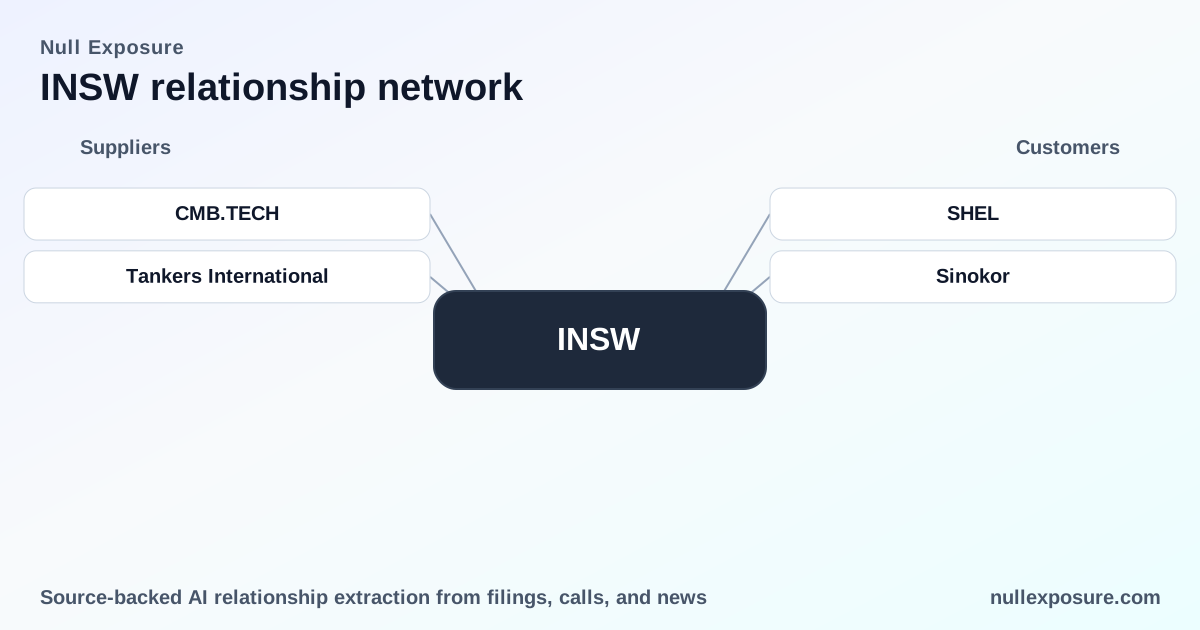
CMB.TECH
International Seaways bought out CMB.TECH’s stake as part of the consolidation of Tankers International, effectively ending CMB.TECH’s ownership interest and turning pool governance fully to INSW. This transaction clarifies pool control and reduces partner complexity for the consolidated pool. A report in Splash247 (March 10, 2026) covered the stake buyout as part of INSW’s strategic pruning and fleet reorientation. -
Tankers International
INSW now holds sole ownership of Tankers International and has expanded the pool to include Suezmax vessels in addition to its VLCC base, creating a larger, diversified commercial platform for crude tanker employment. gCaptain reported the acquisition and platform expansion on March 10, 2026, emphasizing the strategic intent to scale the pooling model under single ownership.
Operational and counterparty implications of relationships and constraints
Ownership of Tankers International escalates INSW from fleet operator to platform owner for pooled commercial arrangements, which increases operational criticality of third-party management and demands tighter integration with commercial teams. Company disclosures affirm reliance on third-party technical and commercial service providers for fleet management; with Tankers International under full ownership, INSW assumes greater commercial margin responsibility and counterparty credit exposure within pool contracts.
Financially, the firm mitigates rate and funding volatility with interest-rate swaps and other derivatives entered with major financial institutions, which reduces earnings variability from funding costs but concentrates credit exposure with large banks. Operating leases extending to 2033 for office space create predictable overhead commitments that support a permanent commercial and administrative presence.
Risk profile and what to watch next
- Commercial cycle sensitivity remains the primary earnings driver; faster pool utilization or stronger spot markets directly lift revenue.
- Supplier concentration risk: outsourced technical/commercial management and major-bank derivative counterparties are single points of failure for operations and hedging execution.
- Execution risk on pool integration: integrating Suezmax operations and converting Tankers International governance into a single owner-run platform requires commercial discipline; failure would depress utilization and pool returns.
- Balance-sheet management: fixed-rate swaps through early 2027 lock funding cost advantage in the near term but require monitoring as maturities roll.
If you are mapping supplier exposure for portfolio or operational risk, these signals — pool ownership, short-term commercial charters, long-term leases and key financial hedges with major banks — define where counterparty diligence should be most intense. Learn how to translate these supplier relationships into investment signals at https://nullexposure.com/.
Bottom line for operators and investors
International Seaways is executing a strategic consolidation that converts shared-pool economics into a company-owned commercial platform while balancing market flexibility through short-term charters and balance-sheet certainty through hedges and leases. The acquisition of Tankers International and the buyout of CMB.TECH’s stake are material—raising both potential upside from pooled scale and operational dependencies on large service providers. Active monitoring of pool integration, service-provider performance and derivative counterparty exposure is essential for investors and operators assessing INSW supplier relationships. For ongoing supplier intelligence and relationship tracking, visit https://nullexposure.com/.