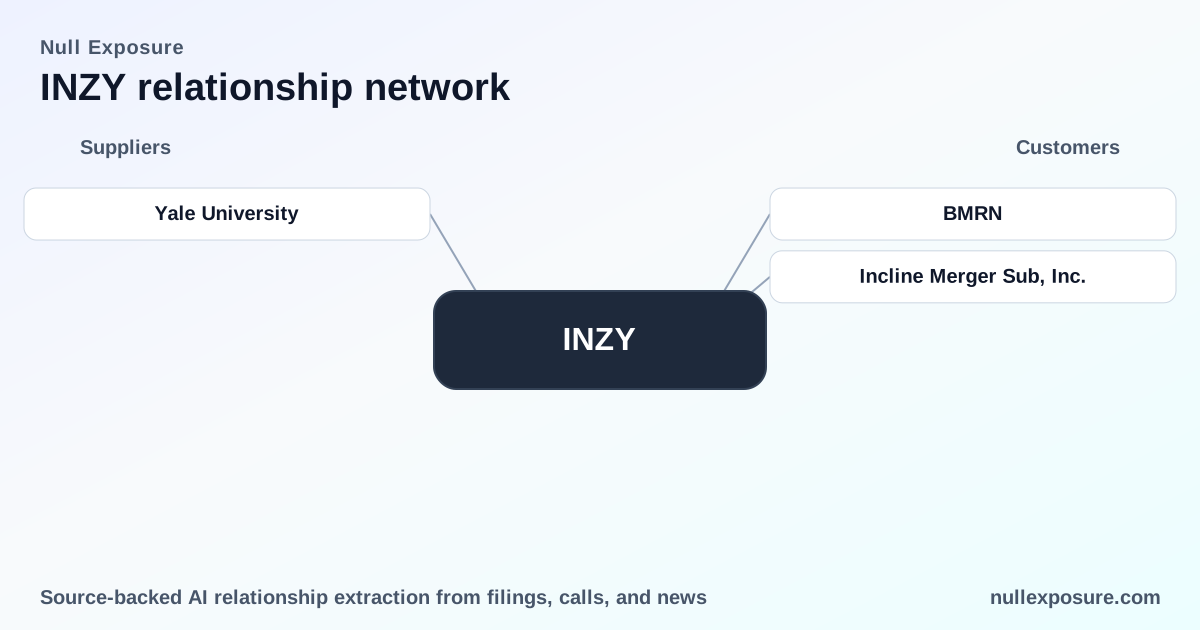
INZY Supplier Profile: Yale University and what it means for investors
Inozyme Pharma (INZY) operates as a clinical-stage biopharmaceutical developer that acquires academic intellectual property, advances therapeutic candidates through development, and monetizes value via partnerships, licensing milestones and eventual product commercialization. The company’s supplier footprint is compact and focused around IP licensors and research collaborators rather than commodity vendors; that structure concentrates strategic risk in a small set of technology relationships and license agreements. For investors evaluating INZY’s supplier posture, the critical question is how durable and exclusive those academic licenses are and whether they create bottlenecks or optionality for downstream commercial deals. Learn more about how we analyze supplier exposure at https://nullexposure.com/.
How the Yale connection defines INZY’s technology base
The single supplier relationship surfaced in the public records is with Yale University, specifically a licensed technology developed by Dr. Braddock. This is not a peripheral materials vendor — it is a source of core intellectual property that underpins drug candidates in INZY’s pipeline. According to a CityBiz news article published March 10, 2026 (referencing FY2022), INZY licensed technology from Yale University developed by Dr. Braddock.
That fact changes the risk calculus: academic licenses are often the genesis of biopharma value, but they also carry negotiation terms (field-of-use, royalty rates, milestone obligations, diligence deadlines) that materially affect economics and strategic flexibility. Investors should treat the Yale license as a strategic supplier contract rather than a standard vendor agreement.
What this relationship implies about contracting posture and concentration
- Contracting posture — strategic, negotiated IP license: INZY’s relationship with Yale is an IP license, not a purchase order. Expect negotiated exclusivity, know-how transfers, and milestone/royalty structures that drive long-term cash flow obligations once commercial milestones are reached.
- Concentration — concentrated and high-impact: With the public record showing a licensed technology from Yale as a core input, supplier concentration is high at the strategic level even if the vendor count is low. A single academic licensor can represent disproportionate development risk.
- Criticality — core to product development: The licensed technology is a critical input that underpins R&D programs; loss of rights or restrictive scope would materially impair program value.
- Maturity — early-stage academic origin: The source is academic research, which typically requires extensive translational work and triggers milestone-based commercialization timelines.
Every relationship in the record (concise, investor-ready)
Yale University — The company licensed technology developed by Dr. Braddock from Yale University; this license is cited in reporting tied to FY2022 and referenced in a CityBiz article dated March 10, 2026. The relationship is an IP license rather than a supply-of-goods arrangement, making it a strategic contract that drives INZY’s development pipeline. (CityBiz, March 10, 2026; fiscal reference FY2022)
What the public constraints tell us about INZY’s supplier transparency
The reviewed record contains no disclosed supplier constraints in the constraints feed. As a company-level signal, the absence of explicit constraint entries indicates either limited public disclosure about supplier contract terms or that public reporting has not flagged supplier-level compliance or operational constraints. Investors should not equate absence of constraint listings with absence of supplier risk; instead, treat this as a transparency gap that requires direct document-level diligence (license agreements, SEC filings, and material contracts).
Key risk themes investors must monitor
- License exclusivity and scope: Confirm whether INZY holds exclusive rights in the therapeutic field and whether any retained university rights or third-party encumbrances could restrict commercialization.
- Financial obligations: Royalty rates, milestone payments, and sublicensing revenue splits materially influence net economics of any future product. Upfront and downstream payment obligations reduce free cash flow from commercialization.
- Diligence and reversion clauses: Academic licenses can include diligence milestones and termination rights; failure to meet R&D timelines can trigger reversion of rights.
- Transferability and sublicensing: The ability to enter strategic partnerships or out-license programs depends on sublicensing permissions and profit-sharing clauses.
- Operational dependency on know-how: Beyond patents, translational know-how and material transfers from Yale are operationally critical; secure access to that know-how reduces execution risk.
How to prioritize diligence steps
- Request and review the Yale license agreement, focusing on exclusivity, field-of-use, royalty structure and termination clauses.
- Map contractual milestone schedules to the company’s clinical development timeline and cash runway.
- Confirm whether INZY holds freedom-to-operate or if third-party IP risks exist.
- Validate any material transfer agreements or collaborative research arrangements that tie Yale scientists or facilities to the programs.
At this stage, a targeted document review provides more signal than public mentions; for hands-on investors, capture the license terms before modeling long-term economics. For support in prioritizing contract review and supplier risk scoring, visit https://nullexposure.com/ to see how we structure supplier diligence.
Final read: what investors should take away
- The Yale license is a strategic supplier relationship, not a commodity supplier, and it underpins INZY’s core pipeline assets.
- Supplier concentration is high by design, since INZY’s value depends on a small number of intellectual property relationships rather than broad vendor networks.
- Public records do not disclose supplier constraints, which presents a transparency gap investors should address through direct contract review and diligence.
- Material commercial outcomes will hinge on the license economics and sublicensing flexibility — these contract features determine how much of the program value accrues to INZY versus licensors.
For deeper supplier-oriented diligence frameworks and to commission a tailored supplier risk memo on INZY, start at our homepage: https://nullexposure.com/.