IPOD — Supplier map and short-form investment thesis for operators
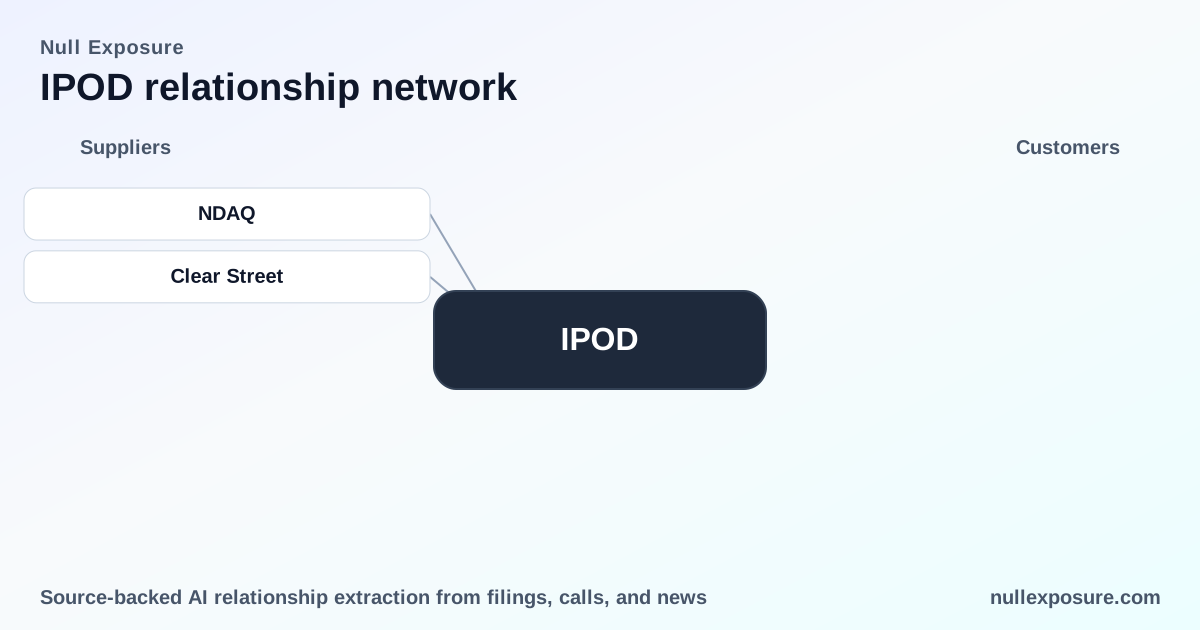
Dune Acquisition Corporation II (ticker IPOD) is a special-purpose acquisition company that monetizes by raising capital through a units IPO and then using those proceeds to negotiate a business combination; revenue is currently zero and the economic return to public investors depends on deal execution and trust-account dynamics. For investors and counterparties, the immediate supplier exposure is concentrated and operationally critical: exchange services for listing and a single book-runner for distribution. Learn more about supplier risk and secondary research at https://nullexposure.com/.
How IPOD operates and where the money comes from
IPOD is a NASDAQ-listed blank-check vehicle: it sells units (equity + warrants) to investors, holds proceeds in a trust, and seeks a merger target within a defined timeframe. The company’s public economics are driven by (1) the proceeds raised at IPO, (2) the sponsor promote and post-SPAC economics on any completed business combination, and (3) redemption dynamics that determine how much capital remains for a combination. IPOD reports no operating revenue and negative book value per share, consistent with a shell company that monetizes via transaction activity rather than operating cash flow. The market capitalization reported in the company profile is roughly $210 million as of the latest update. Learn more about contextual supplier risk and transaction-readiness at https://nullexposure.com/.
Who supplies the market access and distribution — and what that means
IPOD’s relevant supplier relationships in public disclosures are few but material. These providers deliver critical market infrastructure (listing) and capital-markets distribution (book-running). Below I cover each relationship documented in public press-materials and what an operator or investor should take from them.
Nasdaq — listing and market infrastructure
According to a GlobeNewswire press release dated May 6, 2025, IPOD’s units were listed on The Nasdaq Global Market and began trading under the symbol IPODU on May 7, 2025. This relationship is foundational: Nasdaq provides market access, post-listing surveillance, and the regulatory framework under which units and shares trade. (Source: GlobeNewswire press release, May 6, 2025.)
Clear Street — sole book-runner and distribution partner
The same May 6, 2025 GlobeNewswire release notes that Clear Street acted as the sole book-runner for IPOD’s initial offering. That places primary distribution and underwriting exposure with a single capital markets counterparty. A single book-runner creates execution concentration: underwriting capacity, stabilization decisions, and retail/institutional allocations are steered by Clear Street’s capabilities and risk appetite. (Source: GlobeNewswire press release, May 6, 2025.)
Company-level signals and disclosure posture
There are no supplier-specific constraints disclosed in the available relationship data. As a company-level signal, the absence of broader supplier constraints in public material indicates limited disclosure about contingency providers (custodians, transfer agents beyond the exchange, legal/advisory teams) in the suppliers snapshot used here. That absence increases the importance of first-party diligence: review prospectus/legal filings, transfer-agent arrangements, and trust-account custodians before underwriting or operational commitments.
What the supplier mix implies for investors and operators
- Concentration risk is high. With the exchange and a single book-runner documented, operational resilience and execution hinge on two counterparties. That is typical for an IPO-stage SPAC but important for counterparties assessing counterparty exposure.
- Criticality is immediate. Market access (Nasdaq) is non-substitutable for public trading; underwriting (Clear Street) determines distribution and initial float stability.
- Maturity is shallow. As a newly listed shell entity, IPOD lacks operating history and independent revenue streams; supplier relationships reflect financing-stage engagements rather than long-term procurement contracts.
- Contracting posture is transactional. SPACs commonly engage capital markets suppliers on short-term, deal-oriented contracts; expect standard underwriter agreements, listing compliance covenants, and sponsor-promote economics rather than long-running service-level commitments.
Practical monitoring checklist for investors and corporate operators
- Confirm exchange compliance milestones and any delisting warnings from Nasdaq filings; exchange relationships are the gating item for public liquidity.
- Review underwriting documents and stabilization clauses with Clear Street to understand allocation policies and liability exposure around the IPO and any follow-on financings.
- Validate trust-account custodian and transfer-agent arrangements in formal SEC filings (the relationship snapshot here does not list custodians).
- Track institutional ownership metrics: reported institutional ownership is high in the company profile, a signal of concentrated investor base that influences secondary liquidity and redemption behavior.
- Watch for sponsor-related engagements and any announced deal targets — supplier risk rises materially during a business combination negotiation.
Key takeaways for decision-makers
- Primary supplier exposure for IPOD is concentrated and critical: Nasdaq for market access and Clear Street for underwriting. Both relationships are essential for the SPAC’s immediate operational purpose.
- Disclosure on broader supplier constraints is limited in the summary available; follow-on diligence should prioritize custody, transfer-agent, and sponsor contractual terms documented in offering materials.
- Operational risk for counterparties is manageable but concentrated; institutions and service providers negotiating with IPOD should price in the short-term, transaction-focused contracting posture.
If you are evaluating counterparty risk or structuring a financing tied to an IPOD deal, start with direct review of the IPO prospectus and recent exchange filings — and consult additional supplier verification at https://nullexposure.com/. For operators seeking deeper supplier mapping and continuous monitoring, visit https://nullexposure.com/ for resources and service options.
Bottom line
IPOD’s supplier footprint is simple and purposeful: an exchange link for liquidity and a single book-runner for distribution. That simplicity reduces complexity but increases concentration risk; investors and operators should prioritize transparency on custody and sponsor arrangements before engaging materially.