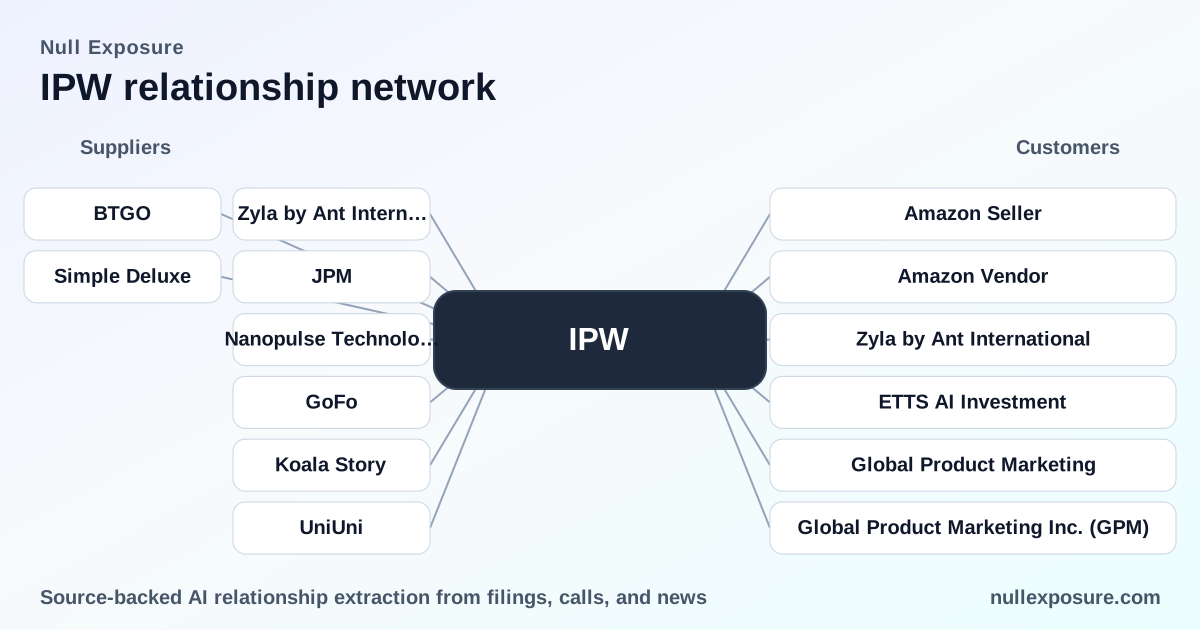
iPower Inc (IPW): Supplier relationships, logistics evolution, and a pivot into crypto hardware distribution
iPower is an e-commerce supply-chain operator that sources primarily manufactured goods (notably hydroponic equipment) and monetizes through direct online retail sales and ancillary fulfillment services; the company also pursues incremental revenue streams by packaging distribution and last-mile logistics for third-party brands and by negotiating distribution economics on hardware sales. Revenue comes from product margins on retail sales and service fees tied to fulfillment and logistics; new agreements (crypto hardware distribution and digital asset custody activity) are being positioned as potential recurring or annuity-like revenue streams. Learn more at https://nullexposure.com/
How iPower operates and why supplier relationships matter
iPower buys finished goods from manufacturers and distributors, imports at scale, warehouses inventory in U.S. fulfillment centers, and sells through its direct-to-consumer channels while offering logistics and fulfillment to external brands. This buyer-centric contracting posture creates working-capital dynamics: iPower typically pays suppliers on credit where established, but often prepays new suppliers, which increases cash strain during rapid onboarding. The company’s economic model therefore combines low-margin retail exposure with higher-margin, recurring logistics/service opportunities — a hybrid that compresses operating leverage when retail sales slow but can lift gross margins if fulfillment services scale.
Publicly disclosed partners and what each relationship means for investors
Zyla by Ant International
iPower was introduced as a U.S. retail channel partner to support Zyla’s clients and to expand Zyla’s online sales presence in the United States, indicating iPower’s role as an onshore retail/distribution channel for third‑party brands. This was reported in a Quiver Quant news release in March 2026.
JPMorgan Chase Bank, N.A.
iPower fully repaid its asset-based lending facility with JPMorgan on December 7, 2025, removing that secured borrowing and related UCC liens—an important leverage and liquidity inflection for suppliers and counterparties. MarketScreener covered the repayment in a company notice for FY2025.
Nanopulse Technology Ltd.
iPower signed a non‑binding Memorandum of Understanding to distribute specialized crypto infrastructure hardware, leveraging iPower’s U.S. supply chain and fulfillment capabilities with the expectation of incremental, recurring economics tied to hardware distribution. Press outlets including Bitget and Sahm Capital reported the MOU in early 2026 (FY2026).
GoFo
GoFo is named among new logistics partners engaged to reduce last‑mile costs and improve delivery efficiency, a direct operational move to lower unit delivery expense and control customer fulfillment margins. Quiver Quant referenced GoFo in a March 2026 logistics update (FY2026).
Koala Story
Koala Story, a healthy pet‑snack brand, joined iPower’s SuperSuite ecosystem as a supply‑chain partner, demonstrating iPower’s strategy of bundling complementary consumer brands into its fulfillment and distribution platform. The relationship was announced via Quiver Quant in March 2026 (FY2026).
UniUni
UniUni is listed as an active logistics partner live within iPower’s network, another tactical partner to address last‑mile cost and capacity; this points to iPower using multiple third‑party carriers rather than owning end‑to‑end delivery. Quiver Quant detailed UniUni’s inclusion in March 2026 (FY2026).
BitGo
iPower executed initial purchases of Bitcoin and Ethereum through a subsidiary account maintained with BitGo and funded a secured Digital Asset Treasury account, signaling active use of institutional crypto custody for corporate treasury operations. The Globe and Mail and Quiver Quant published company updates on the BitGo relationship in December 2025 and early 2026 (FY2025–FY2026).
Simple Deluxe
Simple Deluxe is cited as one of the supply‑chain partners whose products are sold through iPower’s channels, underscoring iPower’s role as a platform for multi-category consumer goods beyond hydroponics. MarketScreener referenced Simple Deluxe in the company’s FY2025 notice.
(Each relationship summary above is derived from public company statements and contemporary press coverage cited in the linked releases.)
What the filing‑level constraints reveal about risk and operating posture
The public evidence produces consistent company‑level signals about how iPower runs its supplier base and operations:
- Contracting posture mixes long‑ and short‑term commitments. Lease evidence shows a long‑term fulfillment lease extending through May 31, 2028, while other short‑term subleases exist (for example, a one‑year Shenzhen sublease through September 30, 2025). These indicate simultaneous longer-term U.S. warehousing commitments and tactical, short-term leases in APAC markets.
- High supplier concentration at material levels. Two suppliers represented roughly 14% and 11% of purchases for FY2025, and a single supplier accounted for up to 36% of accounts payable in a prior year—supplier concentration is a tangible single‑vendor risk to cost and availability.
- Heavy APAC manufacturing reliance balanced with global logistics reach. About 96% of inventory purchased in FY2025 was manufactured in China, while the company uses trucking/freight partners servicing the U.S., Canada and global routes—this is an import-heavy, global fulfillment model exposed to trade, tariff, and transit shocks.
- Buyer and service‑provider roles coexist. The company is primarily a buyer of finished goods but also pays/receives significant service fees: a named entity, Pacelor Inc., manages a warehouse and received roughly $200,000 monthly for fulfillment services in filings—iPower operates both as purchaser and as a third‑party logistics provider.
- Lifecycle signals are mixed. Most supplier relationships are active, but the company has terminated at least one fulfillment lease as of June 30, 2025, indicating ongoing network re‑optimization.
For deeper operational diligence, visit https://nullexposure.com/
Strategic implications, immediate risks, and catalysts
- Operational leverage through logistics: If iPower scales third‑party logistics and secures distribution margins on hardware (Nanopulse) while lowering last‑mile costs with new carriers, gross margins can expand meaningfully. GoFo, UniUni and Koala Story deployments are direct levers to realize that improvement.
- Concentration and China exposure are primary downside risks. Supply disruption, tariffs, or supplier solvency would have outsized impact given the 96% China sourcing and material supplier concentrations.
- Balance sheet flexibility improved but treasury pivot is a new vector of volatility. Repayment of the JPMorgan ABL reduces secured leverage, yet the company’s funded Digital Asset Treasury with BitGo introduces a new risk/return profile for corporate liquidity that investors must monitor for mark‑to‑market volatility and custody counterparty terms.
- Commercialization vs commercial risk on crypto hardware. The Nanopulse MOU positions iPower as a distributor for crypto infrastructure hardware, which generates potential recurring economics but depends on commercialization execution and the regulatory/market appetite for crypto hardware.
Investment checklist — what to monitor next
- Weekly or quarterly updates on revenue mix between retail sales and fulfillment/service fees.
- Supplier concentration metrics and any changes in top‑supplier share of purchases and accounts payable.
- Progress on Nanopulse commercialization milestones, any binding distribution agreements, and margins tied to hardware sales.
- Treasury disclosures on digital asset holdings, custody arrangements and mark‑to‑market accounting practices.
- Realized last‑mile cost reductions after GoFo/UniUni rollouts.
Learn more and track these relationship signals at https://nullexposure.com/
iPower’s model is operationally intensive and network‑dependent: its upside scales with logistics and distribution economics but its downside is concentrated in supplier sourcing and inventory financing. For investors evaluating counterparty risk or supplier exposure, prioritize supplier concentration, geography of manufacture, and the pace at which fulfillment services transition from cost center to margin driver. Explore additional relationship intelligence at https://nullexposure.com/