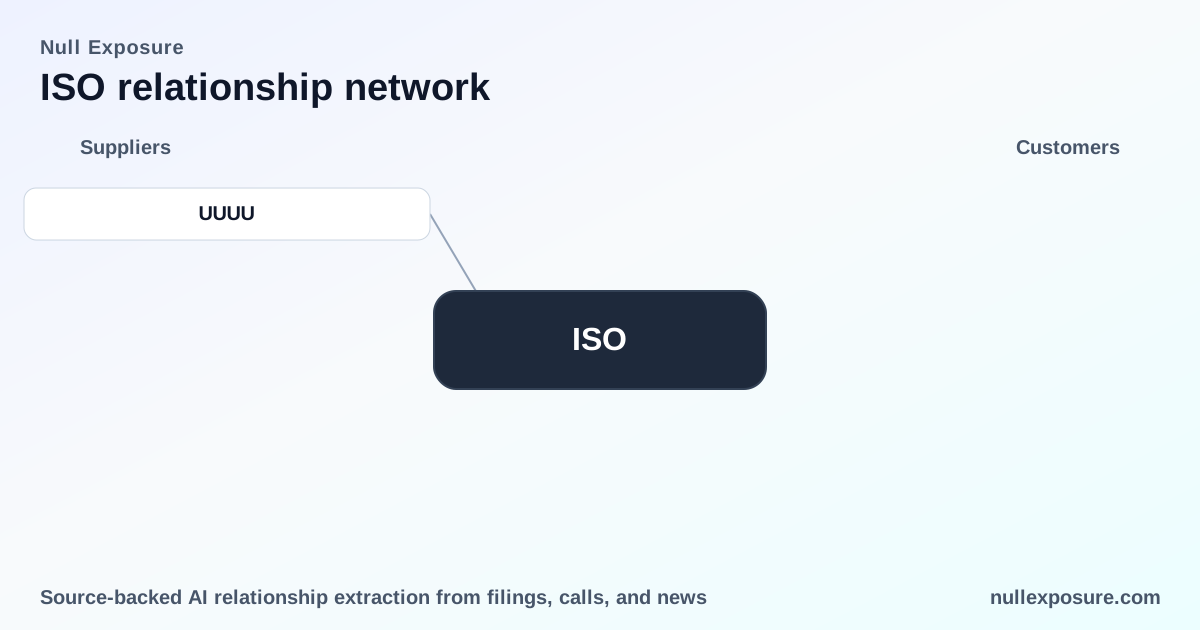
IsoEnergy (ISO) — Supplier Relationships and Strategic Processing Links
IsoEnergy operates as an exploration and development company focused on bringing high‑grade uranium projects to production and realizing value through asset advancement and commercial processing arrangements. The company monetizes its resource positions principally by advancing deposits toward production and by outsourcing processing through toll‑milling and similar commercial contracts, which convert mined material into marketable product while minimizing IsoEnergy’s capital intensity. For investors, the critical signal is counterparty exposure to processing partners and the degree to which revenue realization depends on those external operators.
Explore supplier intelligence on NullExposure
What a single supplier relationship reveals about the business model
IsoEnergy’s publicly recorded supplier footprint in the reviewed record is narrow but strategically important: the company relies on third‑party milling services rather than owning full processing capacity. That posture implies a low‑capex, high‑operational‑leverage model: development risk sits with resource definition and permitting, while near‑term throughput and revenue realization depend on processing partners’ availability and contractual terms.
Key operating model characteristics implicit in this supplier profile:
- Contracting posture: IsoEnergy favors commercial processing arrangements (toll milling) over integrated processing ownership, indicating a partner‑centric outsourcing approach that reduces upfront capital commitments.
- Concentration: A small number of processing counterparts creates concentration risk—if one partner is unavailable, IsoEnergy’s ability to convert ore to saleable product is constrained.
- Criticality: Processing partnerships are operationally critical; without milling access, mined concentrate or ore cannot be monetized.
- Maturity: The existence of an explicit toll‑milling arrangement signals a transactional maturity—IsoEnergy has negotiated processing terms rather than relying solely on spot market interactions.
No supplier constraints (such as explicit long‑term supply covenants, force majeure clauses, or exclusivity excerpts) were reported in the extracted record; this absence is itself a company‑level signal that IsoEnergy’s public disclosures do not document encumbering, long‑dated contractual constraints in the reviewed data set.
Relationship snapshot: Energy Fuels (UUUU)
Energy Fuels is referenced in IsoEnergy’s public mentions as the counterparty to a toll‑milling arrangement for conventional uranium and vanadium mines in Utah. According to a SahmCapital news release covering IsoEnergy’s 2026 winter program, IsoEnergy holds a portfolio of permitted past‑producing Utah mines with a toll‑milling arrangement in place with Energy Fuels, providing processing access for IsoEnergy’s conventional material (SahmCapital, news post dated 2026‑01‑20). https://www.sahmcapital.com/news/content/isoenergy-commences-2026-winter-drilling-program-at-the-larocque-east-project-athabasca-basin-2026-01-20
This relationship is straightforward in commercial terms: Energy Fuels supplies processing capacity under toll‑milling terms that allow IsoEnergy to avoid immediate investment in milling infrastructure while retaining the ability to process ore and generate product. The fiscal context for this mention is FY2026 in the referenced item.
Why the Energy Fuels link matters to investors
The Energy Fuels toll‑milling arrangement is the single documented supplier relationship in the reviewed record and therefore commands outsized strategic importance for near‑term value realization. From an investor perspective, the implications are clear:
- Revenue path dependent on partner capacity and pricing. Toll milling shifts operating leverage to the processor—IsoEnergy’s per‑unit margins will depend on milling fees, throughput availability, and the counterparty’s operating schedule.
- Liquidity and timing risk. If Energy Fuels experiences unplanned downtime or reprioritizes capacity, IsoEnergy’s commercialization timeline could slip; conversely, the arrangement provides a rapid route to processing without capex.
- Counterparty credit and operational hygiene. Energy Fuels’ balance sheet strength and mill performance are material to IsoEnergy’s ability to realize value from the Utah portfolio; investors should gauge the processor’s health as part of project risk assessment.
Practical risk checklist for operators and investors
When evaluating IsoEnergy’s supplier exposure and commercial resilience, prioritize these questions:
- Are toll‑milling fees and capacity commitments formalized with schedule and minimum throughput terms?
- What contingency plans exist if the processing partner reprioritizes capacity or faces operational interruptions?
- Does IsoEnergy retain flexibility to switch processors or to vertically integrate if demand justifies capex?
These are not hypothetical concerns—they are the operational axis upon which revenue timing and capital planning turn for a developer that outsources processing.
Investigate supplier relationships and counterparty risk on NullExposure
Bottom line and near‑term monitoring priorities
IsoEnergy’s supplier map in the reviewed data is lean and focused, centering on a toll‑milling relationship with Energy Fuels that materially affects processing availability and monetization. For investors and operators, the priority is to convert that supplier relationship into quantitatively assessable risk: secure clarity on fees, throughput commitments, scheduling, and contingency rights. A well‑structured toll‑milling agreement lowers capital intensity but increases counterparty exposure; underwriting that trade‑off is essential.
Key monitoring items over the next reporting cycles:
- Any additional disclosed processing partners or changes to the Energy Fuels arrangement.
- Operational updates from Energy Fuels that could affect mill availability or terms.
- Any newly filed contractual constraints or long‑term sale/processing commitments that would alter IsoEnergy’s contracting posture.
For a comprehensive view of supplier dynamics and counterparty concentration, review IsoEnergy’s supplier profile and related analysis on NullExposure. Visit NullExposure for supplier intelligence
By treating processing partners as fundamental commercial counterparties rather than ancillary vendors, investors can better align valuation assumptions with the practical realities of converting uranium resources into cash flows.