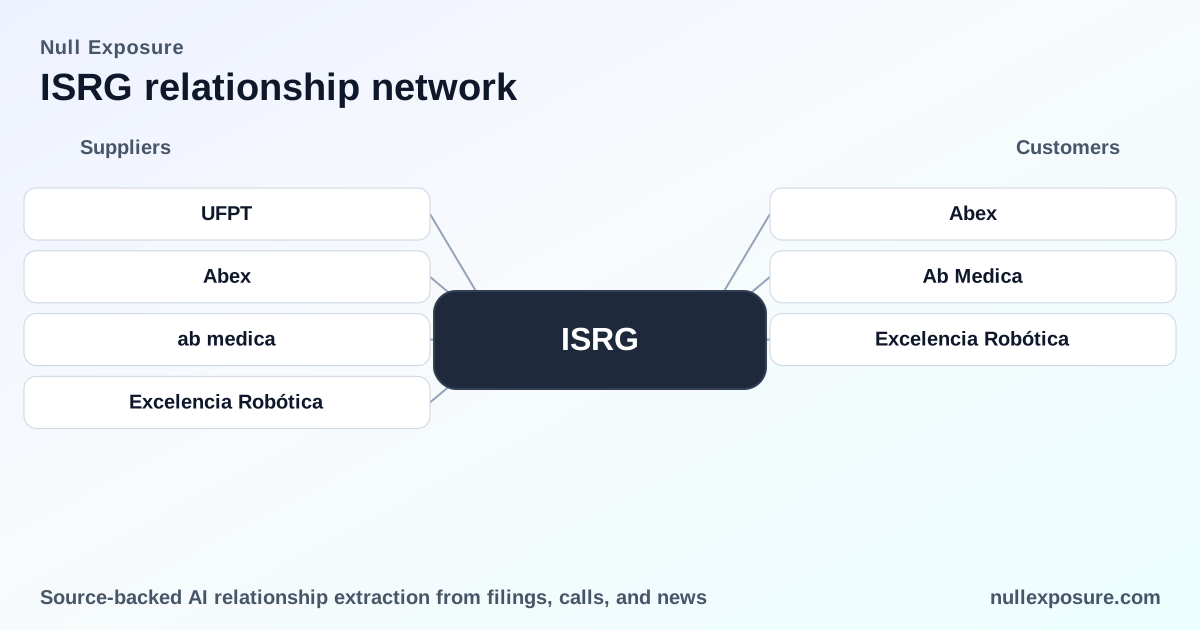
Intuitive Surgical (ISRG) — supplier relationships that change the supply map and operational risk
Intuitive Surgical builds and sells robotic surgical systems (primarily the da Vinci and Ion platforms) and monetizes through system sales, recurring consumables and instrument replacement, and service agreements that lock customers into ongoing revenue streams. For investors, supplier relationships are both an operations lever and a risk vector: they affect manufacturing throughput, product availability, and the margin profile on instruments and service revenue.
If you want a consolidated view of supplier and distribution moves around ISRG, visit the NullExposure homepage for ongoing coverage: https://nullexposure.com/
Why the recent supplier and distribution moves matter to investors
Intuitive’s business model blends high-capex device sales with high-margin recurring consumables and service. Supply continuity and distribution control directly influence installed-base growth and recurring revenue visibility, so contract renewals and acquisitions of distribution channels are material to revenue pacing and regional margin. The items below are the relationships surfaced in FY2026 reporting and press activity; each is summarized with source attribution and a concise investor takeaway.
The relationships you need on your radar
UFP Technologies, Inc. (UFPT) — extended manufacturing supply agreement
In late February 2026, UFP Technologies extended and expanded its manufacturing supply agreement with Intuitive through December 31, 2029, reinforcing a multi-year manufacturing relationship that supports component production. According to a Simply Wall St report covering FY2026, UFP’s announcement highlighted the extended term and the company’s stronger FY2025 sales and earnings. (Simply Wall St, March 2026)
Abex — distribution business acquired in Southern Europe
Intuitive completed the purchase of the da Vinci and Ion distribution business previously run by Abex as part of a broader move to bring southern European distribution in-house, increasing direct operational control in Italy, Spain, Portugal, Malta and San Marino. TradingView’s coverage of the March 2026 announcement framed this as part of Intuitive’s expansion of direct operations in those territories. (TradingView, March 2026)
ab medica — distribution business absorbed into direct operations
Intuitive acquired the da Vinci and Ion distribution operations from ab medica, transferring local responsibilities and staff to Intuitive’s direct-sales and service model in the same southern European footprint. Intuitive communicated the completion of this transaction in a company release distributed via GlobeNewswire on March 2, 2026. (GlobeNewswire / Intuitive press release, March 2, 2026)
Excelencia Robótica — distribution channel brought in-house
The distribution business operated by Excelencia Robótica was included in Intuitive’s March 2026 acquisition of the regional distribution network, aligning local market execution under Intuitive’s direct organizational control. GlobeNewswire reported the transaction as part of Intuitive’s strategic expansion of its European footprint for both da Vinci and Ion. (GlobeNewswire / Intuitive press release, March 2, 2026)
What these relationships say about Intuitive’s operating posture
Taken together, the FY2026 supplier and distribution items signal two parallel priorities: shoring up component manufacturing through multi-year supplier contracts and reducing distribution friction by converting local distributors into direct operations. That dual approach improves long-term margin capture on recurring consumables and service, while creating short-term integration and execution risk as the company absorbs personnel and responsibilities.
For deeper research and a consolidated supplier map, visit NullExposure: https://nullexposure.com/
Operating-model constraints and risk signals (company-level)
The company disclosures include clear operating constraints that investors should treat as company-level characteristics rather than isolated supplier facts:
- Contracting posture — short-term procurement: Intuitive states it purchases the majority of components and major assemblies through purchase orders rather than long-term agreements and does not carry large finished-goods inventories. This implies flexibility in supplier sourcing but elevated exposure to spot-market timing and supplier capacity.
- Concentration and criticality — reliance on sole/single sources: Management flags reliance on sole- and single-sourced suppliers as a potential constraint, indicating critical dependency points that can disrupt production or increase costs if a supplier fails.
- Role orientation — buyer with stringent supplier specs: Intuitive functions as a disciplined buyer, procuring custom and off-the-shelf components and imposing rigorous quality controls, which constrains supplier selection but supports product reliability and regulatory compliance.
- Service-provider exposure — IT and third-party vulnerabilities: The company acknowledges vulnerability in its own IT systems and those of third-party service providers, creating an operational risk vector that is non-manufacturing but material to continuity of sales, service scheduling, and regulatory records.
These signals together describe a business that is operationally mature and margin-focused, but sensitive to concentrated supplier risk and integration friction as it brings distribution in-house.
Investor implications and what to watch next
- Supply continuity versus inventory flexibility: The UFP contract extension reduces near-term component risk for manufacturing cadence, but Intuitive’s broader purchase-order posture still leaves the company exposed to supplier outages. Investors should watch supplier diversification disclosures in upcoming filings.
- Margin upside with distribution integration; execution risk while integrating: The southern Europe acquisitions reduce distributor margins and give Intuitive control over pricing, service, and installed-base monetization, which is positive for long-term margin expansion but introduces short-term costs and managerial distraction.
- Regulatory and service continuity: As Intuitive assumes local distribution responsibilities, pay attention to service-level KPIs and regulatory filings in those jurisdictions that can affect device availability and training cadence.
For on-going analysis and to track how these supplier and distribution moves affect ISRG’s operational risk profile, check NullExposure’s coverage hub: https://nullexposure.com/
Final read: balance of risk and strategic control
Intuitive’s FY2026 activity demonstrates a clear strategic trade-off: increase control over revenue-critical channels and secure component supply, at the expense of integration and concentrated supplier exposure. For investors, the dominant question is execution — whether the company converts these moves into higher installed-base growth and stronger recurring revenue without incurring lasting operational setbacks. Keep monitoring supplier disclosures, local regulatory updates in the absorbed markets, and quarterly commentary on integration costs and service metrics.
Stay informed on supplier and partner developments for ISRG at NullExposure for timely updates and structured analysis: https://nullexposure.com/