INVO Fertility (IVF): Clinic roll‑ups, device outsourcing, and a services‑first revenue base
INVO Fertility operates in the assisted reproductive technology market by combining clinical services with a device business (the INVOcell device) and selective clinic acquisitions; the company monetizes through patient services, sale/recurring supply of its device, and strategic acquisitions funded through a mix of cash and preferred securities. Investors should view IVF as a small, services‑centric healthcare operator where growth is driven by clinic add‑ons and device commercialization while profitability remains challenged by negative operating margins and constrained market capitalization. For a deeper look at supplier and counterparty exposures, visit https://nullexposure.com/.
How INVO generates revenue and where suppliers come into play
INVO’s revenue mix is dominated by fertility care services and the INVOcell device segment; trailing twelve‑month revenue is roughly $6.94M with gross profit of approximately $2.72M, while operating losses persist (EBITDA negative ~$7.12M). The operating model is outsourced and partner‑dependent: manufacturing, sterilization, logistics and certain clinical or research activities are frequently contracted to third parties rather than performed in‑house. These arrangements lower fixed capital requirements but increase supplier concentration and operational dependency.
- Contracting posture: The company routinely uses third‑party manufacturers and service providers for device production, sterilization, packaging, and logistics, indicating an asset‑light manufacturing posture and reliance on external capabilities.
- Geographic concentration: Company materials indicate manufacturing and supplier relationships are centered in the U.S. New England region, which concentrates operational risk regionally even as partners claim scalable capacity.
- Service vs. manufacturing split: INVO presents supplier relationships both as service providers (clinical/research support, CROs, logistics) and as contract manufacturers for the INVOcell device, creating dual dependency lines (clinical services and device supply).
- M&A and financing behavior: Recent acquisitions involve mixed consideration (cash plus preferred stock), showing a willingness to use equity‑linked instruments and structured payments to consolidate clinic capacity.
If you want a concise supplier exposure summary across counterparties, see https://nullexposure.com/ for structured supplier intelligence.
Material counterparties and what they indicate for risk and strategy
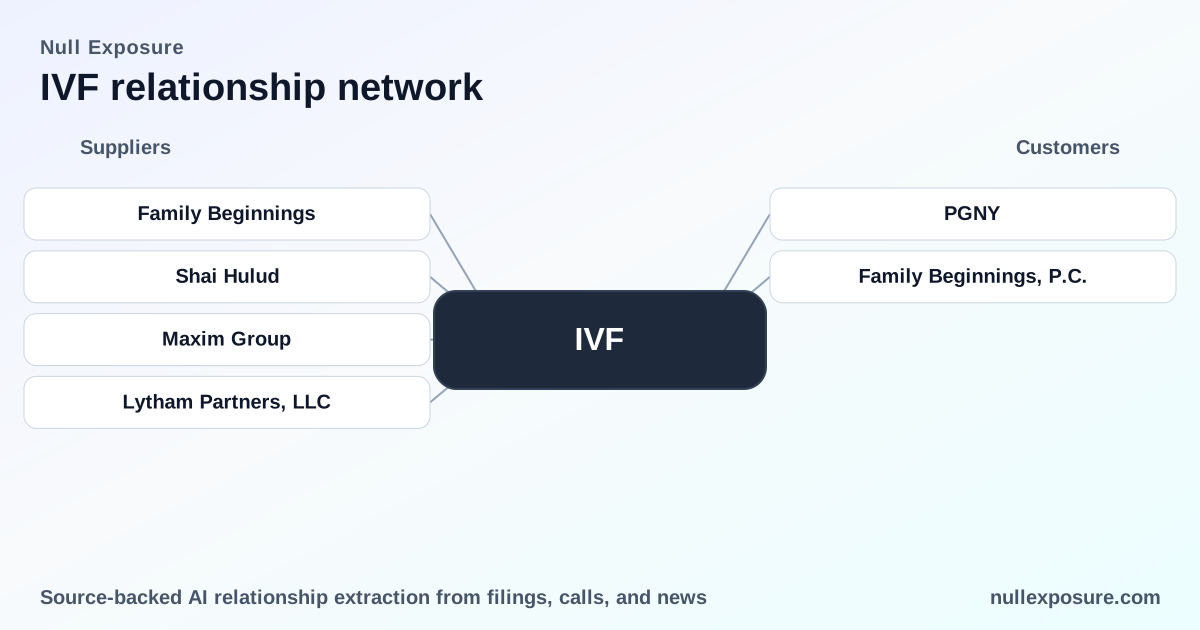
Family Beginnings — clinic acquisition expands footprint
INVO closed the acquisition of Family Beginnings, an Indianapolis fertility clinic, for $760,000 paid with $360,000 in cash (net $210,000 after holdback) and $400,000 in Series D preferred shares, signaling an M&A strategy that leverages equity‑linked consideration to preserve cash. According to TradingView coverage dated March 10, 2026, this transaction is positioned as an immediate increment to INVO’s clinic network and revenue base.
Shai Hulud — facility lease ties clinic operations to a landlord through 2033
The Indianapolis clinic is paired with a long‑term lease through 2033 at an annual base rent of $132,399, establishing a fixed occupancy cost profile for the acquired location and creating a landlord counterparty exposure to a named entity, Shai Hulud. TradingView’s March 10, 2026 coverage lists the lease terms and rent commitment that underpin the clinic’s operating cost structure.
Maxim Group — financing and warrant solicitation agent
INVO engaged Maxim Group as exclusive lead warrant solicitation agent with a fee equal to 6.5% of gross proceeds plus expense reimbursement, a capital‑markets engagement that highlights the company’s continued reliance on capital markets intermediaries to execute dilutive financing or restructuring transactions. TradingView reported the Maxim Group arrangement on March 10, 2026, in the context of multiple material agreements.
Lytham Partners, LLC — investor relations and outreach contact
Investor communications list Lytham Partners, LLC (contact Robert Blum) as an investor relation contact, suggesting INVO outsources at least part of its investor relations and capital‑markets communications function. A press release republished by The Manila Times / GlobeNewswire in late 2025 lists Lytham Partners as the investor contact for executive leadership announcements.
What these relationships collectively tell investors
Together, the counterparties reveal a coherent corporate strategy: grow clinic footprint via acquisitive add‑ons, conserve cash using preferred equity, and outsource manufacturing and non‑core functions to third parties. That strategy supports rapid scaling of clinical capacity while transferring manufacturing and infrastructure risk to specialist providers. However, outsourcing introduces operational concentration and single‑point‑failure risks in the supply chain — for instance, reliance on New England–based manufacturing partners and third‑party sterilization/logistics providers.
Operational constraints observed across company materials translate into three concrete investment signals:
- Supplier concentration risk at the company level: manufacturing and supply chain functions are largely contracted out and concentrated regionally, which reduces capital intensity but increases exposure to regional disruption and supplier performance.
- Service‑provider dependence: the company’s business model leverages external clinical, research, and logistics partners extensively, amplifying the importance of stable counterparty relationships and contract terms.
- Transactional financing and equity dilution: recent use of preferred shares to fund acquisitions and engagement of warrant solicitation agents indicate recurring reliance on structured and dilutive financing to support expansion.
If you want to evaluate supplier counterparty contracts and their financial implications for small healthcare operators like INVO, learn more at https://nullexposure.com/.
Investment implications, risks and opportunities
- Opportunity: Clinic roll‑ups can be accretive to top line quickly and offer highly visible revenue per patient if integration is executed cleanly; INVO’s acquisition of Family Beginnings is consistent with that playbook.
- Risk — margin recovery: operating margins are negative and EBITDA is materially negative, so scale and device commercialization must improve meaningfully before profitability normalizes. Current financials (TTM revenue ~$6.94M, negative EBITDA ~$7.12M) emphasize execution risk.
- Risk — supplier and lease obligations: long‑term leases and third‑party manufacturing commitments create fixed cost leverage that can pressure cash flow if clinic utilization lags expectations. The Indianapolis lease through 2033 and contracted manufacturing/sterilization relationships underscore this exposure.
- Governance/financing risk: use of preferred stock and warrant solicitation agents signals dilution potential; investors should underwrite future capital raises into valuation models.
Bottom line and next steps for investors
INVO Fertility is an acquisitive, services‑led fertility operator that outsources manufacturing and several operational functions — a business model that enables rapid clinic growth but centers the investment thesis on successful integration, supplier continuity, and the pathway to margin improvement. Key risks are supplier concentration, continued operating losses, and dilution from structured financing. For targeted supplier and counterparty due diligence across small healthcare operators, explore the supplier intelligence resources at https://nullexposure.com/.