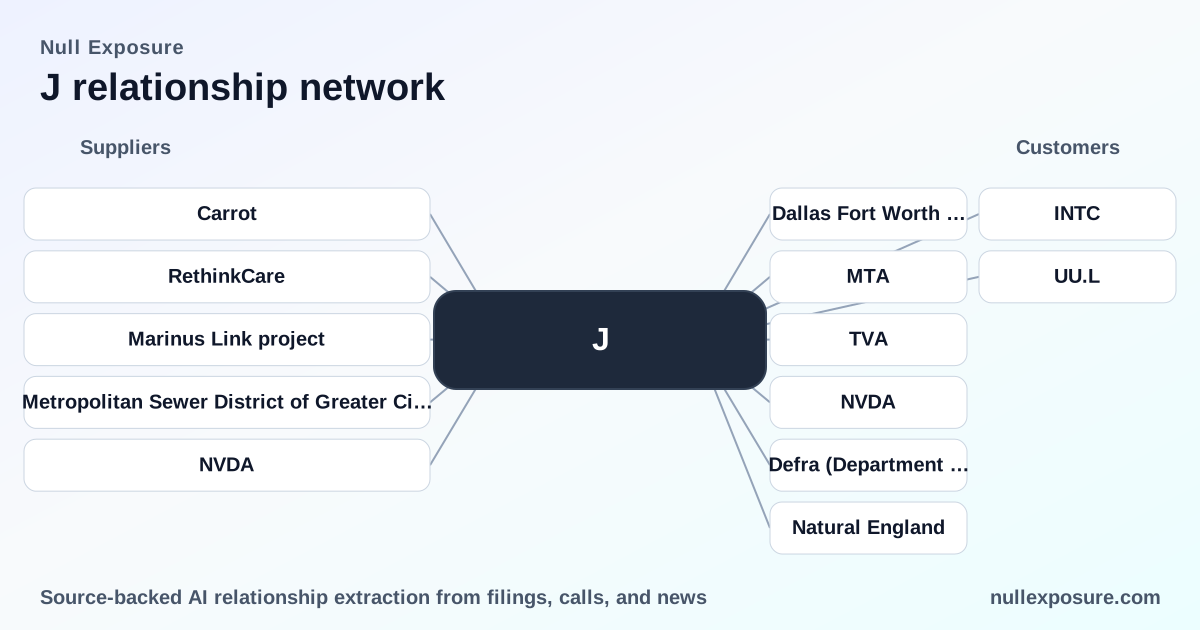
Supplier landscape for J: what investors need to know
J operates as an integrated professional-services and delivery partner across infrastructure, water, energy and technology-enabled engineering projects, and it monetizes through fee-based project delivery, integrated delivery contracts and services revenue where the company recognizes subcontractor materials and labor as part of revenue when it acts as principal. Revenue is driven by large, contract-based wins (public and private), recurring sector work and technology partnerships that improve margins through simulation and systems optimization. For a deeper supplier-risk and relationship map, visit https://nullexposure.com/.
How these supplier relationships translate into commercial value
J’s disclosed relationships span workforce benefits providers, municipal and national infrastructure clients, and a strategic technology partner. That mix signals a dual operating model: project-centric contracting for large infrastructure scope, and ongoing supplier/service relationships that support employee benefits and digital transformation. The FY2025 disclosures and the 2025 Q3 earnings call together outline a company that wins long-duration projects delivered as an integrated partner and also invests in digital tools to drive operational efficiency.
- Contracting posture: The company explicitly recognizes subcontractor materials, labor and equipment in revenue when it acts as principal, which is a commercial stance that concentrates execution risk and margin responsibility inside the firm rather than outsourcing full contractual liability (FY2025 10‑K).
- Supplier risk and cyber exposure: J identifies cybersecurity threats that can originate from third‑party suppliers and service providers, making supplier governance a control priority (FY2025 10‑K).
- Criticality and maturity: Large integrated delivery roles such as the Marinus Link engagement in Australia indicate high criticality and sophisticated program-management maturity; partnerships with technology leaders like NVIDIA indicate an active push to industrialize digital twins.
Explore an expanded supplier-risk view and supporting documents at https://nullexposure.com/.
Relationship-by-relationship read
Carrot — fertility, family-forming and related health benefits
Carrot provides free, inclusive fertility healthcare and family‑forming benefits as part of J’s employee benefit ecosystem; the FY2025 10‑K lists Carrot among providers (FY2025 10‑K, filed 2025-09-26). This indicates an outsourced benefits relationship focused on employee well‑being, not a project-supply relationship.
RethinkCare — parental support and neurodiversity training
RethinkCare supplies free parental support and neurodiversity training according to the FY2025 10‑K (FY2025 10‑K, filed 2025-09-26). The relationship is employee‑support oriented, reflecting HR/vendor sourcing decisions that influence retention and total cost of workforce.
Marinus Link project — integrated delivery partner on a major Australian energy link
On the 2025 Q3 earnings call J reported that its Energy & Power team "secured one of the company's largest wins in Australia year‑to‑date as the integrated delivery partner for the Marinus Link project" (2025 Q3 earnings call, March 2026). This is a high‑value, high‑execution-risk infrastructure contract that drives near‑term backlog and requires substantive project-management bandwidth.
Metropolitan Sewer District of Greater Cincinnati — expanded scope on wastewater facility
The company disclosed additional scope for the Little Miami Wastewater Treatment Facility with the Metropolitan Sewer District of Greater Cincinnati on the 2025 Q3 earnings call (2025 Q3 earnings call, March 2026). This municipal engagement is representative of repeat public‑sector water work that underpins steady project pipelines and positions J as a contractor on critical civic infrastructure.
NVIDIA — Omniverse Blueprint and Digital Twins for AI factories
During the 2025 Q3 earnings call J announced a partnership with NVIDIA to advance the Omniverse Blueprint and create Digital Twins of AI factories to optimize power, cooling and network systems (2025 Q3 earnings call, March 2026). This strategic technology partnership targets operational efficiency and margin improvement via high‑fidelity simulation, and it indicates J’s push into digitally enabled delivery.
What the constraints reveal about J’s operating model
Company-level disclosures in the FY2025 10‑K provide two actionable signals:
- Supplier-origin cybersecurity risk is a formalized concern. J explicitly calls out unauthorized access and breaches that could originate through third‑party suppliers and service providers, which elevates the importance of vendor cyber due diligence and contractually enforced security controls.
- The firm adopts a principal contracting posture on many engagements. The filing states that subcontractor materials, labor and equipment are included in revenue and cost of revenue when management determines the company is acting as principal, indicating J frequently assumes primary fulfillment responsibility and absorbs associated execution and margin risk.
Both signals frame governance priorities: robust supplier onboarding, cyber clauses, and project execution controls are central to protecting revenue and margin.
Investment implications — what to watch and why it matters
- Backlog quality and integrated delivery wins. Large integrated wins (e.g., Marinus Link) are revenue-accretive but concentrate project risk; investors should monitor award-to-completion milestones and margin recognition practices.
- Public-sector water work as steady revenue base. Repeat municipal work like the Little Miami wastewater expansion provides defensibility and cadence in bookings.
- Technology partnerships to improve margins. The NVIDIA Omniverse collaboration is a clear strategic move to industrialize digital twins and extract operational efficiencies; track commercialization timelines and measurable margin effects.
- Supplier governance and cybersecurity. Given the explicit supplier-origin cyber risk, contractual protections and third‑party security posture are material risk factors for operations and reputation.
- Revenue recognition posture. The principal-agent determination around subcontractor materials influences reported revenue composition and gross margin volatility.
For deeper supplier and risk profiles, see the full coverage and source documents at https://nullexposure.com/.
Bottom line and near-term checklist for investors
J’s disclosed supplier relationships portray a company that wins large, integrated projects while outsourcing specialized services like employee benefits and training. The commercial model combines high‑value project delivery risk with targeted technology partnerships designed to improve long‑term margins. Monitor project execution on Marinus Link and municipal water scopes, progress on the NVIDIA digital‑twin rollout, and the company’s enforcement of supplier cybersecurity controls.
If you want a consolidated, investor‑grade supplier risk report and the primary source documents behind these relationships, start here: https://nullexposure.com/.