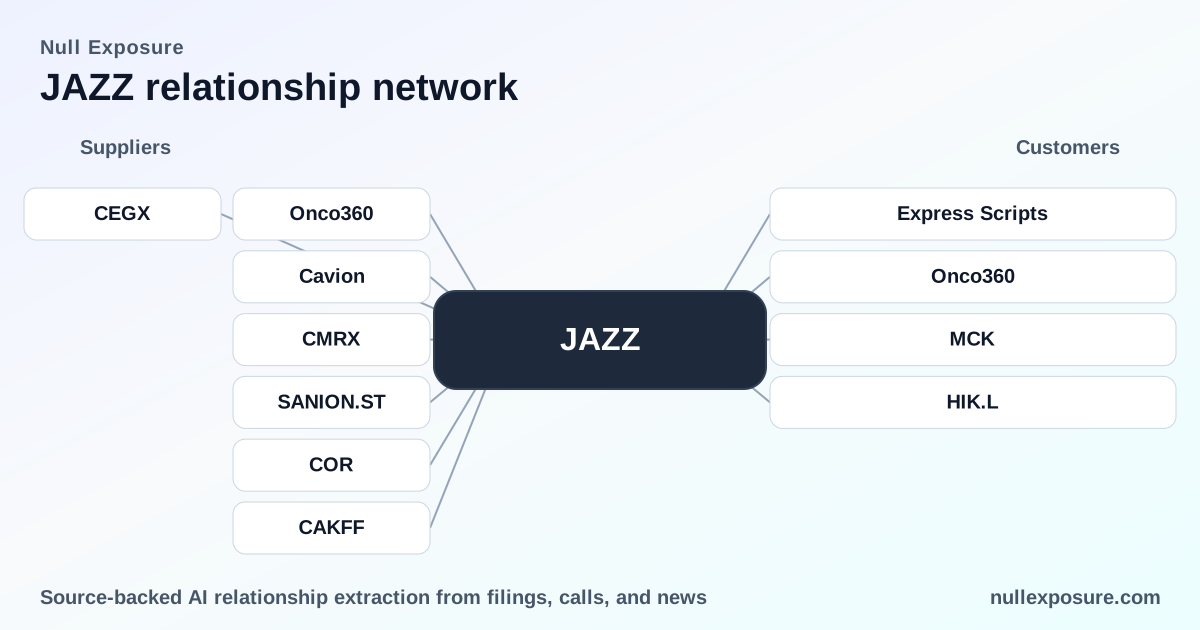
Jazz Pharmaceuticals: supplier relationships that determine operational risk and upside
Jazz Pharmaceuticals develops and commercializes specialty medicines—primarily in neurology, oncology, and rare diseases—and monetizes through product sales, targeted acquisitions, and licensing/distribution partnerships that extend market reach for specialty hospital and outpatient channels. Revenue depends on a mix of in-house manufacturing, single-source APIs, and specialty distributor networks, while corporate development is a deliberate engine for near-term product launches. For investors evaluating counterparty risk, the supplier map is as important as pipeline milestones. Learn more on the Null Exposure homepage: https://nullexposure.com/
Quick, investor-oriented takeaways
- Concentration drives both leverage and operational risk. Jazz relies on single-source suppliers for several APIs and uses a small set of specialty distributors for commercial reach.
- Distribution is structured through large wholesale partners and specialized specialty service providers, making payment and logistics disruption risks manageable but regulatory compliance risks elevated.
- M&A is an active growth lever; acquisitions have delivered approved products and filled white-space indications quickly, increasing near-term revenue but also integration risk.
Supplier and partner map — every relationship identified
- Onco360: Jazz describes an exclusive distribution partnership with Onco360 to deliver patient access and support services, indicating Onco360 plays a role in specialty distribution and patient programs. Source: Jazz Q3 2025 earnings call (first seen 2026-03-08).
- Cavion: Jazz acquired a candidate from Cavion in 2019 for $312.5 million; the transaction is cited in coverage of an essential tremor program that later failed an endpoint, underscoring acquisition-driven pipeline exposure. Source: ClinicalTrialsArena coverage of FY2026 reporting (first seen 2026-03-10).
- Chimerix (Q3 mention): Jazz reported that approval of Modeyso followed the acquisition of Chimerix earlier that year, signaling rapid commercialization after deal close and confirming M&A as a source of new product revenue. Source: Jazz Q3 2025 earnings call (first seen 2026-03-08).
- Chimerix (Q4 mention): Jazz reiterated that the April acquisition of Chimerix led to a fast approval and launch of Modeyso, emphasizing the company’s ability to integrate and commercialize acquired assets quickly. Source: Jazz Q4 2025 earnings call (first seen 2026-03-07).
- Saniona: Jazz reported a global licensing agreement with Saniona to strengthen its early-stage epilepsy pipeline, reflecting continued use of licensing to augment internal R&D. Source: Jazz Q3 2025 earnings call (first seen 2026-03-08).
- Cencora: Jazz’s FY2024 10-K states that products including Zepzelca, Rylaze, Vyxeos, and Ziihera are sold through subsidiary specialty distributors of McKesson, Cencora, and Cardinal, confirming reliance on large-scale specialty wholesalers for market access. Source: Jazz 2024 Form 10-K (FY2024).
- McKesson: The 10-K specifically notes Defitelio is sold to hospital customers through McKesson’s specialty distribution subsidiaries, indicating channel concentration for hospital-facing products. Source: Jazz 2024 Form 10-K (FY2024).
- Cardinal: Cardinal is named alongside other specialty distributors as a channel for several Jazz products, reinforcing a multi-wholesaler but still concentrated distribution model. Source: Jazz 2024 Form 10-K (FY2024).
Operating constraints and what they imply for counterparty risk
Jazz’s public disclosures and filings establish several company-level constraints that define supplier posture and risk exposure:
- Long-term contracting posture. Evidence of multi-year agreements and office/term references suggests Jazz structures enduring vendor relationships, which supports operational continuity but increases the cost of switching suppliers.
- Counterparties are large enterprises. Jazz explicitly references large multinational commercial banks and major wholesalers as counterparties, which reduces counterparty default risk but concentrates negotiation leverage.
- North America-centric distribution dependencies. Jazz depends on vendors to distribute key narcotic and REMS-regulated products in the U.S., which concentrates regulatory and logistical risk in NA.
- Material and critical single-source suppliers. Jazz discloses single-source manufacturing for several products and APIs, and names sole producers for items like defibrotide API and an exclusive Vyxeos manufacturer—this creates critical operational vulnerability if a sole supplier falters.
- Multiple relationship roles across manufacturing, distribution and services. Jazz routinely uses third parties as manufacturers, distributors, and cybersecurity/service providers, indicating a mature third-party management program but persistent exposure across multiple vendor categories.
These signals combine into a clear profile: Jazz runs a specialty-biopharma operating model where revenue upside from M&A and specialty launches coexists with concentrated supply-chain and regulatory execution risk. If you want a deeper supplier-risk scorecard, visit https://nullexposure.com/ for the full analysis.
Investment implications — upside, leverage, and the key risks
- Growth vector: M&A shortens commercialization timelines. The Chimerix/Modeyso example shows Jazz converts deals to revenue quickly, improving near-term visibility for investors. M&A success raises the probability of beating near-term sales forecasts when integration proceeds smoothly.
- Channel risk: Reliance on McKesson, Cencora and Cardinal centralizes distribution economics. That creates stable go-to-market capability but also single-event distribution disruption risk; contracts with these wholesalers are strategic and likely long-term.
- Manufacturing risk: Single-source APIs and sole-site manufacturing for certain products are critical constraints. Production interruptions at a named third party would materially affect supply, given Jazz’s admitted single-source posture. This elevates operational beta despite low equity beta historically.
- Regulatory and compliance risk: Jazz’s products include REMS- and DEA-regulated therapies; failure by Jazz or a contracted party to maintain compliance can trigger abrupt supply or market access impacts. Regulatory non-compliance is a higher-probability, high-impact scenario relative to more diversified commercial-stage peers.
- Financial posture: Jazz’s balance of strong gross profit and active dealmaking gives it flexibility, but investors should monitor integration costs and product-level margin dilution from licensing or newly launched assets.
Practical next steps for analysts and operators
- Map counterparty criticality by product: prioritize review of suppliers tied to Xyrem/Xywav, Vyxeos, Defitelio and recently acquired launches.
- Track contract expiries and exclusivity windows (evidence shows some supplier agreements extend by multi-year automatic renewals).
- Model a two-tier scenario: (1) base case with stable distributor relationships and expected M&A lift; (2) disruption case reflecting single-source supplier outage plus DEA/REMS enforcement. For a deeper supplier-risk model and vendor-level coverage, go to https://nullexposure.com/.
Bottom line
Jazz’s business model delivers differentiated specialty revenue through focused commercial channels and aggressive M&A, but the same structure concentrates operational risk in single-source manufacturing and a small set of specialty distributors. Investors should value Jazz’s near-term launch cadence and gross-profit strength while pricing in regulatory and supplier-concentration risks that could produce outsized volatility in product availability and revenue if a key counterparty fails.
Explore full supplier maps and risk analytics at Null Exposure: https://nullexposure.com/