Jade Biosciences (JBIO): supplier map and operational signals for investors
Jade Biosciences is a clinical-stage biotechnology company that advances inhaled and immunology therapies derived from licensed antibody assets and seeks value through clinical progress, strategic transactions and commercialization partnerships. The company monetizes by progressing proprietary compounds through clinical trials to unlock licensing or product revenues, while relying on third-party manufacturers and service providers for drug substance, fill/finish and trial execution. Recent corporate activity — including a merger with Aerovate Therapeutics and a significant private placement — recasts supplier dependencies as strategic levers rather than fixed cost lines. For further supplier intelligence and relationship tracking, visit https://nullexposure.com/.
Why the operating model centers on outsourced manufacturing and licensed assets
Jade’s business model is built on two linked primitives: licensed discovery assets and outsourced production and trial services. The company was launched with assets licensed from an external antibody discovery group and has structured clinical programs and product manufacturing through contract partners rather than internal large-scale production facilities. This produces a capital-light asset advancement strategy: spend on R&D and outsourced services today in exchange for clinical milestones and future licensing or product revenue.
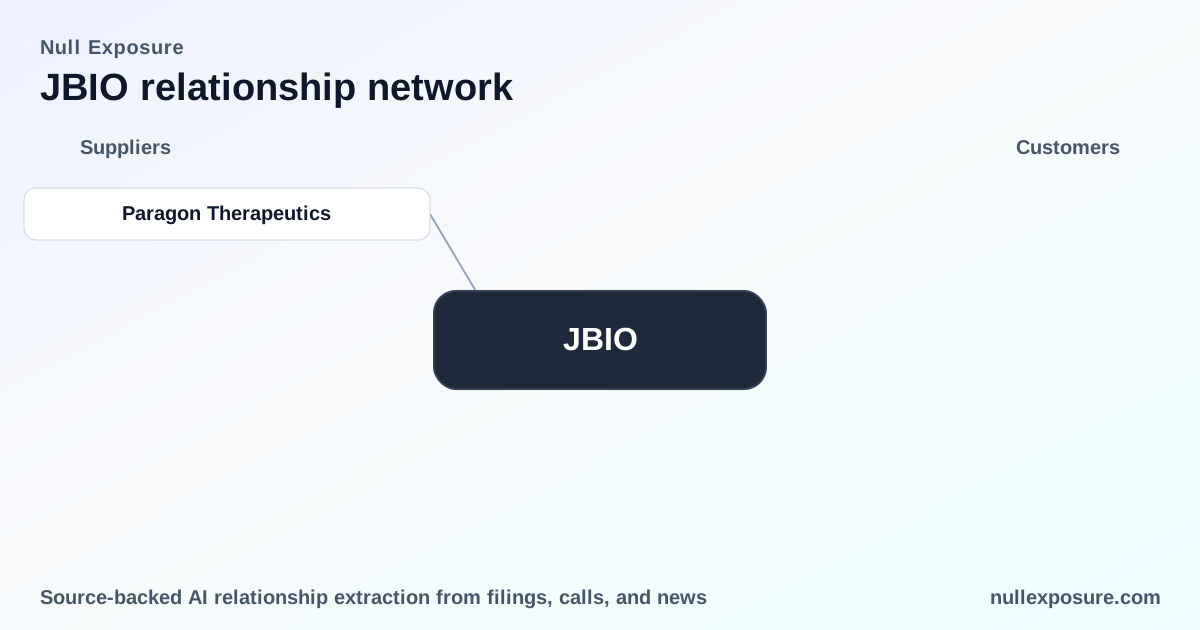
- Licensed origin of assets is a primary value driver. According to corporate disclosures and press coverage, Jade was launched based on assets licensed from Paragon Therapeutics, an antibody discovery engine (news reports, 2025).
- Outsourcing governs operational risk and speed-to-market. The company uses third-party contract manufacturers for its combination product AV-101 and relies on contract research organizations and fill/finish providers for trials and drug product conversion (company filings, 2024–2025).
Market signals support the strategic-transact model: market capitalization is listed at approximately $684 million, and analysts collectively rate JBIO with buy-side interest and an analyst target price of $21.50 (company overview). These valuations reflect forward optionality tied to clinical readouts, partner deals and the recently completed merger and financing.
For more supplier and counterparty detail, see https://nullexposure.com/.
Supplier relationships reported in public sources
Below are the supplier and origin relationships surfaced in public reporting and press coverage. Each entry reproduces the plain-English linkage and cites the source.
Paragon Therapeutics — launch/licensing origin (GlobeNewswire, April 28, 2025)
Jade was launched based on assets licensed from Paragon Therapeutics, described as an antibody discovery engine founded by Fairmount; the launch-origin relationship frames the company’s early IP and pipeline composition. Source: GlobeNewswire press release dated April 28, 2025.
Paragon Therapeutics — mentioned in merger approval coverage (CityBiz, 2025)
Local reporting on the Aerovate–Jade merger reiterated that Jade’s foundational assets were licensed from Paragon Therapeutics, reinforcing that several pipeline assets trace back to a single discovery partner. Source: CityBiz article on the Aerovate–Jade merger (reported 2025).
Operational constraints and what they reveal about supplier posture
Company disclosures and regulatory excerpts provide direct signals about contracting posture, geography, concentration and maturity of supplier relationships. These are company-level characteristics; they are not specific claims about any single supplier unless explicitly named.
- Contracting posture: a mix of short- to medium-term facility leases but long-term outsourcing relationships. The company disclosed a Waltham lease with a 39‑month term and disclosed future minimum lease payments (company filings, lease disclosures through Dec 31, 2024). Lease expirations around late 2025 highlight near-term facility footprint decisions tied to corporate strategy.
- Geography: global clinical and manufacturing acceptance with a North American operational base. The company states that its API, finished product and single‑dose inhaler producers are accepted by health authorities across countries included in its global Phase 2b/Phase 3 program, while manufacturing conversion is performed by one of two U.S.-based contract fill/finish providers (company disclosures, 2024–2025). This dual footprint increases regulatory complexity but provides geographic diversification of approvals.
- Role concentration: heavy reliance on contract manufacturers and service providers. Multiple disclosures identify contract manufacturers for AV-101, CROs for clinical work, and external fill/finish partners; the company explicitly recognizes IP and confidentiality exposure from these third parties (MD&A / risk disclosures, 2024). Third parties are operationally critical to clinical timelines and potential commercialization.
- Relationship maturity and stage: strategic pause and re-evaluation of manufacturing. The company disclosed that it has paused manufacturing of AV-101 while it evaluates strategic alternatives, including the merger, signaling a temporary winding‑down of active production (company filings). That pause is a material operational pivot that affects timing of any near-term product supply or partnering milestones.
- Spend scale signal: modest lease-level commitments consistent with a lean operating model. Reported minimum lease payments (2025: $429k) align with a small physical footprint and an outsourcing-heavy model (company lease disclosures, 2024).
What investors and operators should monitor now
The combination of licensed pipeline origin, outsourced manufacturing and a manufacturing pause creates a focused list of monitoring priorities:
- Confirm manufacture and supply contracts with the two U.S. fill/finish providers and the status of AV-101 manufacturing after the pause; vendor continuity will determine restart timelines. Corporate filings indicate reliance on two U.S. contract fill/finish providers (company disclosures, 2024–2025).
- Track integration outcomes following the Aerovate merger and the ~$300 million private placement referenced in the merger closing announcement — these capital moves change bargaining power with suppliers and the company’s ability to re-start manufacturing (GlobeNewswire press release, April 28, 2025).
- Monitor lease expirations and facility decisions in late 2025, which will reveal whether management intends to scale an in‑house footprint or remain outsourcing-centric (lease disclosures, 2024).
For continuous supplier intelligence and to map counterparty concentration trends, visit https://nullexposure.com/.
Bottom line: focused exposure, concentrated operational levers
Jade Biosciences presents concentrated supplier exposure in manufacturing and clinical services paired with value that derives from licensed discovery assets. The recently-completed strategic transaction and capital raise increase runway and negotiating leverage with suppliers, while the pause in manufacturing re-prioritizes where value and risk live — in clinical readouts, integration execution and supplier restarts. Investors should treat supplier contracts, manufacturing restart timelines and regulatory acceptance across geographies as primary drivers of near-term value realization.
For a deeper supplier risk profile and to monitor these relationships over time, explore https://nullexposure.com/.