Jewett‑Cameron Trading Company (JCTC): Supply‑side relationships that determine operational risk and upside
Jewett‑Cameron is a small, distribution‑centric manufacturer/wholesaler that monetizes by buying finished specialty metal and wood products from third‑party manufacturers and selling them into home centers, eCommerce channels and direct retail customers. The company runs a working‑capital intensive model: inventory sourcing and distribution are the revenue drivers, while short‑term financing and third‑party distribution partners determine margin scalability and channel reach. For counterparty and supplier intelligence on JCTC, start your diligence at https://nullexposure.com/.
How JCTC is wired: sourcing, financing and commercial posture
Investors should treat JCTC as a non‑integrated distributor with concentrated external dependencies. The company does not operate its own manufacturing and relies on a limited number of contract manufacturers in Asia for the majority of its metal products, creating single‑source and geography concentration that is central to operational risk. According to company disclosures, the firm historically sourced from one factory in China but has expanded suppliers to Bangladesh and Vietnam under a strategic sourcing program completed in September 2024. That program’s completion signals an active supplier management posture rather than passive supplier exposure.
Key operating characteristics to keep front of mind:
- Contracting posture: Short‑term, transactional supplier contracts with a reliance on contract manufacturers offshore; financing is provided through receivables purchases and inventory‑backed loans.
- Concentration: Four suppliers each accounted for >10% of purchases in FY2025; aggregate purchases from those suppliers totaled $20,972,994 for the year.
- Criticality: Sourcing of metal products from a handful of Asian factories is operationally critical to revenue continuity.
- Maturity: Supplier base is active and recently restructured—the company completed an 18‑month sourcing and onboarding process in 2024.
- Spend scale: FY2025 supplier spend places the company in the $10m–$100m annual supplier spend band, consistent with mid‑tier purchasing scale.
Supplier and service relationships that matter
Below are the named relationships surfaced in public reporting and press coverage; each is summarized and sourced.
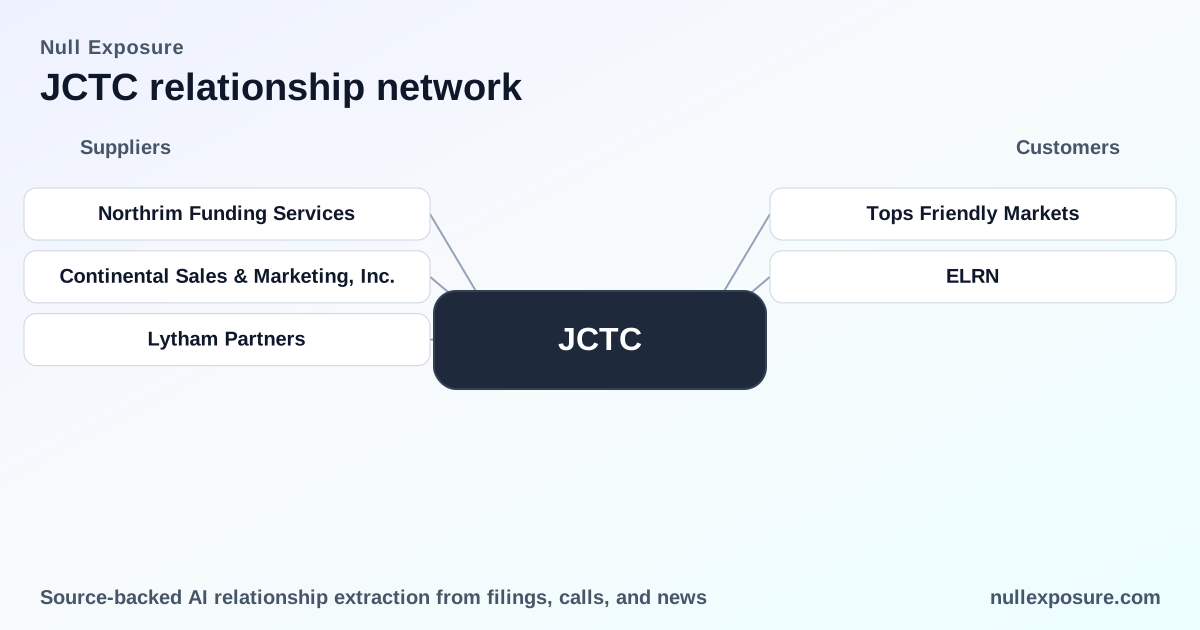
Northrim Funding Services
Jewett‑Cameron maintains a line of credit with Northrim Funding Services that provides short‑term operating capital up to $6.0 million, and the company had borrowed $2.1 million against that facility as of August 31, 2025. Northrim’s program can either purchase accounts receivable or issue loans secured by inventory, giving JCTC flexible working‑capital options. This information is disclosed in the company’s FY2025 reporting and summarized in market notices (company 10‑K coverage on TradingView and a FY2025 press release covered by Sahm Capital).
Continental Sales & Marketing, Inc.
Jewett‑Cameron partnered with Continental Sales & Marketing to expand distribution into home improvement retail channels, a commercial move intended to broaden retail placement and shelf presence. The partnership was announced in FY2024 via press release coverage aggregated on market sites (GlobeNewswire headline cited on Finviz).
Lytham Partners
The company retained Lytham Partners to lead strategic investor relations and shareholder communications, signaling an intent to professionalize external communications and improve investor access. This engagement was publicized in FY2024 through GlobeNewswire coverage summarized on Finviz.
What these relationships imply for investors: risk, runway and upside
The Northrim facility is the primary liquidity lever for JCTC. The availability of up to $6 million in receivables/inventory financing reduces short‑term liquidity stress but introduces financing dependency and potential covenant or lien constraints that can accelerate supplier or inventory risk if capital access tightens. Investors should prioritize covenant schedules and security interests in a diligence review.
The Continental distribution partnership is a commercial growth lever: retail channel expansion can increase volume and margin scale if merchandising and inventory cadence align with retailer programs. However, channel expansion does not eliminate supplier concentration risk: expanded sales are still dependent on product availability from a small set of overseas contract manufacturers.
Retention of Lytham Partners for investor relations is an operational signal: management is prioritizing transparency and investor access, which is important for a small‑cap company with low institutional ownership and high insider percentage.
Company‑level supply constraints deserve attention. The firm’s reliance on contract manufacturers in China, Bangladesh and Vietnam introduces geopolitical, logistics and quality control risk, and four suppliers accounted for a material portion of FY2025 purchases totaling roughly $21.0 million—a substantial share relative to trailing‑twelve‑month revenue of about $40.7 million. That concentration drives both downside exposure and negotiating leverage with suppliers.
If you are evaluating JCTC as a supplier risk or investment case, quantify three items early:
- Confirm the terms and encumbrances tied to the Northrim facility.
- Validate supply continuity and lead times for the top four suppliers and the extent of single‑factory dependency.
- Assess the impact of Continental’s distribution on average selling price and inventory turns.
For more detailed counterparty breakdowns and monitoring tools, visit https://nullexposure.com/ to see how supplier relationships map to financial exposures.
Actionable risk checklist and next steps
Bottom line: JCTC’s value creation engine is distribution and working‑capital management, not manufacturing. That dynamic produces upside from channel expansion but concentrated supplier sourcing and financing dependence are the defining risks.
Recommended next steps for investors and operators:
- Review the full FY2025 10‑K and receivables financing schedule to understand liens and covenant triggers.
- Obtain supplier scorecards for the four >10% vendors: lead times, quality metrics, alternative sources and escalation protocols.
- Model scenarios where Northrim access is reduced and quantify required cash burn and inventory liquidation timelines.
For continuous monitoring and supplier relationship intelligence, go to https://nullexposure.com/ and set up alerts that track material changes in financing, vendor concentration and commercial partnerships.
Bold takeaway: JCTC can scale through distribution, but scalability is gated by its financing arrangements and a concentrated, offshore manufacturing footprint—those are the levers that will determine risk‑adjusted returns.