J.Jill Inc (JILL): Supplier relationships that shape margin resilience and inventory risk
J.Jill is an omnichannel womenswear retailer that monetizes through merchandise sales across e‑commerce and leased retail stores, supported by third‑party manufacturing and a working capital financing structure. The company sources product globally, operates with a mix of short‑order purchasing and secured long‑term credit facilities, and converts inventory through seasonal promotions to sustain gross margin. For investors and operators, the supplier picture matters because sourcing concentration and purchasing posture directly affect inventory risk and margin volatility. Learn more about supplier risk intelligence at https://nullexposure.com/.
How J.Jill runs the supply side: a concise investor thesis
J.Jill outsources all manufacturing and buys primarily on an order‑by‑order basis to preserve assortment flexibility, while relying on secured credit (a term loan and an ABL) to finance inventory and operations. This hybrid approach delivers fast merchandising agility but concentrates execution risk: one supplier represented 11.0% of purchases in FY2024, and the company sources from multiple countries (India, Indonesia, Vietnam) which introduces geopolitical and logistical exposure. Company filings and commercial disclosures show the retailer balances short‑term purchasing flexibility with longer‑dated financing commitments that are material to liquidity planning.
What the public signals say about specific product relationships
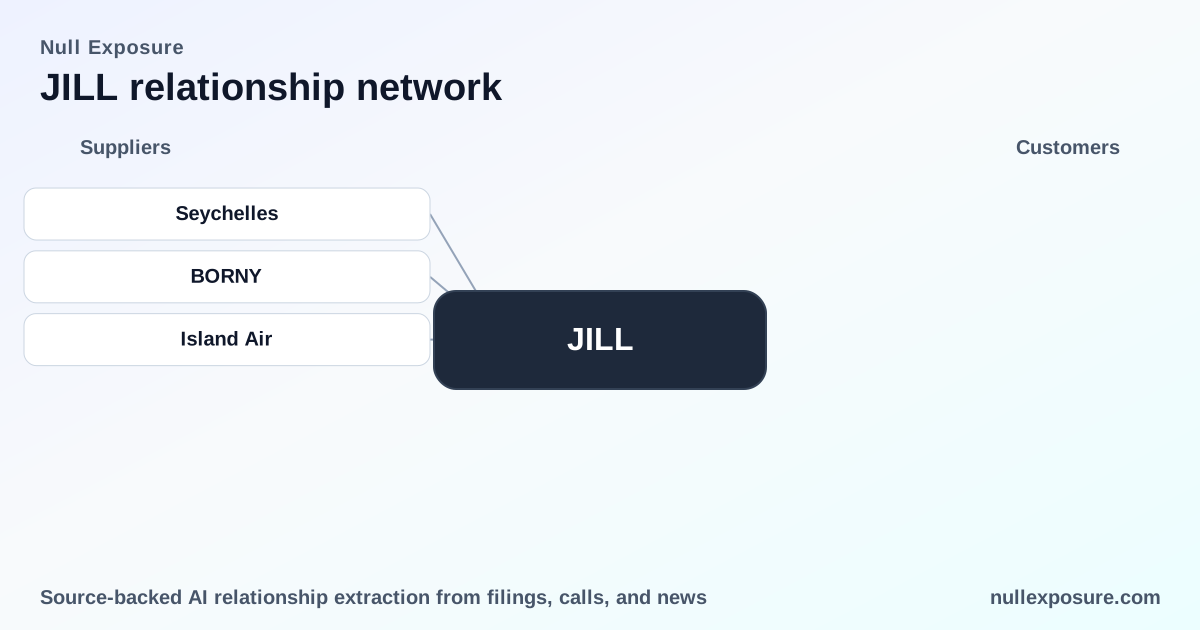
Below are every supplier/brand relationship identified in the available results, with a plain‑English takeaway and source reference.
-
Seychelles — footwear stocked by J.Jill. J.Jill offered Seychelles “Word for Word Sandals” as part of promotional merchandising, indicating the company buys branded third‑party footwear to supplement its core assortment. According to a Today.com shopping piece (March 2026), Seychelles sandals were featured in a J.Jill sale listing.
Source: Today.com shopping article (March 2026). -
Born (inferred symbol BORNY) — branded sandals carried in promotions. J.Jill promoted Born Iwa Woven Sandals at a discounted price during a summer sale, showing J.Jill’s use of established footwear brands to drive seasonal traffic and clearance velocity. The product listing and pricing were reported by Today.com (March 2026).
Source: Today.com shopping article (March 2026). -
Island Air — fashion jewelry sourced for promotional assortments. J.Jill retailed Island Air’s Whimsy Shell‑Inspired Necklace in a promotional context, demonstrating the retailer supplements apparel with accessories from small branded suppliers to increase average order value. The placement was documented in the same Today.com piece (March 2026).
Source: Today.com shopping article (March 2026).
What these relationship signals imply for investors and operators
The product mentions confirm that J.Jill operates as a curated retailer that mixes owned labels with third‑party brands to manage assortment breadth and margin. Promotional listings for Seychelles, Born, and Island Air are consistent with an inventory strategy focused on seasonal turn and markdown management rather than exclusive long‑term private‑label manufacturing.
- Concentration and materiality are meaningful company‑level risks. Company disclosures note one supplier accounted for 11.0% of purchases in FY2024, which elevates operational dependency even though sourcing is geographically diversified across India, Indonesia, and Vietnam. This is a company‑level signal that a disruption to a primary vendor would be material to results.
- Contracting posture mixes short and long horizons. The company states it typically transacts merchandise on an order‑by‑order basis to retain flexibility, yet corporate financing is tied to longer‑dated secured facilities — a $175.0 million Term Loan maturing May 8, 2028, and an amended ABL with an extended maturity to May 10, 2028 — creating a mismatch between short purchasing cycles and long financing commitments. According to company filings, these credit facilities underwrite working capital but also add covenant and refinancing considerations.
- Operational model relies on third‑party manufacturers and leased retail/service assets. J.Jill discloses that it does not own manufacturing facilities and depends on independent suppliers and buying agents for production; it also leases stores, distribution, and office space, which frames supplier relationships as primarily manufacturing and logistics partnerships rather than vertical ownership structures.
If you want a deeper drill into supplier dependencies and contract maturity exposure, explore our supplier risk tools at https://nullexposure.com/.
Tactical implications: what investors should watch next
- Inventory turns and markdown cadence. Promotional activity with branded footwear and jewelry underlines the importance of clearance execution to protect gross margin; watch quarterly inventory days and promotional markdowns for margin signal.
- Supplier concentration remediation. With a single supplier at 11% of purchases, management actions to diversify or secure alternative production could materially change risk; monitor vendor disclosure in the next 10‑K/10‑Q.
- Financing runway and covenants. The Term Loan and ABL maturities through 2028 create a financing horizon that requires steady cash conversion; covenant tests and refinancing optionality will influence strategic options.
Practical guidance for procurement and treasury teams
- Prioritize contingency planning for high‑share suppliers and develop secondary sources in India, Indonesia and Vietnam to reduce single‑vendor exposure.
- Align procurement lead times to the treasury calendar, since short‑term order‑by‑order purchasing sits alongside multi‑year secured credit, creating potential mismatches under stressed demand.
- Use branded third‑party assortments (Seychelles, Born, Island Air) to manage traffic and average order value, but track margin contribution per vendor to avoid disproportionate markdown impact.
Final takeaways and next steps
J.Jill’s supplier model is deliberately flexible on procurement but materially concentrated in vendor spend and anchored to multi‑year financing. For investors, this combination translates to opportunity—through agile merchandising and brand partnerships—and risk—through supplier concentration and financing cadence. Operators should focus on supplier diversification, margin attribution for third‑party brands, and synchronization between purchasing cycles and liquidity planning.
For a comprehensive supplier risk profile and comparative analysis, visit https://nullexposure.com/. For tailored intelligence or a brief on specific vendor concentration scenarios, start with the Null Exposure portal at https://nullexposure.com/.