Jack Henry & Associates (JKHY): Supplier relationships, integration strategy, and operational constraints
Jack Henry & Associates is a fintech platform and payment processor for banks and credit unions that monetizes through recurring software subscriptions, transaction processing fees, and professional services tied to its core systems and the Banno digital platform. The company leverages an ecosystem model — a proprietary core plus a Fintech Integration Network — to extend product functionality without building every capability in‑house, creating recurring revenue with scalable aftermarket services. For a manager or investor tracking supplier exposure and partner-driven growth opportunities, a focused look at recent integrations and contract risk is essential. Learn more about supplier intelligence at https://nullexposure.com/.
How Jack Henry earns money and why partners matter
Jack Henry operates as a vertically specialized software-and-services provider to the financial services industry. Revenue is driven by a mix of subscription and transaction fees (Revenue TTM $2.46B), solid profit margins (Operating margin ~25.7%) and a sizable installed base (Market cap ~$12.1B). The company’s go‑to‑market blends direct sales with partner-led distribution: the Fintech Integration Network (FIN) enables third parties to surface new capabilities to Jack Henry’s customers while Jack Henry retains monetization through integration, distribution, and ancillary professional services.
That business model produces predictable cash flow but introduces supplier concentration and operational dependencies: Jack Henry outsources specialized functionality to partners to accelerate innovation and reduce development costs, while relying on service-level continuity to protect the core customer experience.
Operational constraints that investors must treat as company-level signals
- Third‑party reliance can be material. Jack Henry acknowledges that failures by third‑party providers supporting key operations could have a material impact on service delivery; this is a company-level exposure that elevates counterparty risk and operational monitoring needs.
- Some solutions depend on third‑party manufactured technology. The company explicitly notes that key solutions rely on technology manufactured by external suppliers, which raises supplier sourcing and component‑supply considerations for product stability and future upgrades.
Both constraints speak to contracting posture and criticality: Jack Henry needs robust vendor contracts, strong SLAs, and contingency plans to preserve uptime and client trust. These are maturity indicators investors should monitor via SEC filings and vendor-disruption disclosures.
Partners added to the Fintech Integration Network — who they are and what they do
-
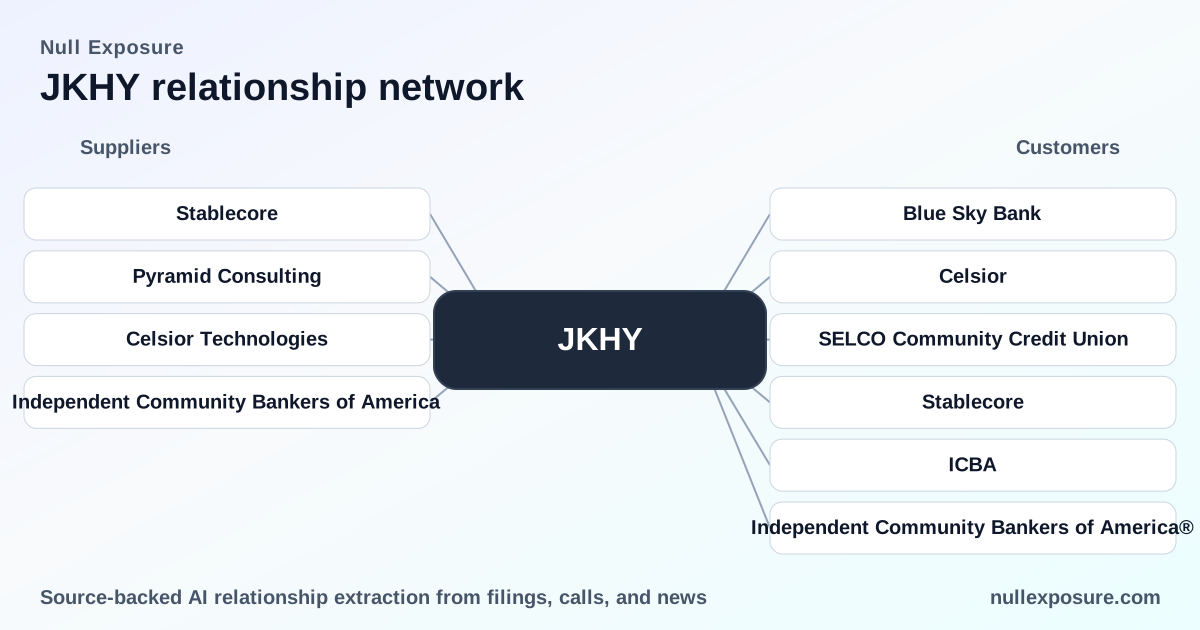
Stablecore — Stablecore integrates stablecoin, tokenization and digital‑asset capabilities directly into Jack Henry cores and the Banno Digital Platform, enabling banks and credit unions to offer stablecoin accounts, payments, and acceptance. This expands Jack Henry’s product breadth into digital‑asset rails and payments (Digital Transactions, March 2026; SimplyWallSt, March 2026: https://www.digitaltransactions.net/stablecore-marks-jack-henry-integration-to-enable-stablecoin-payments-and-acceptance/).
-
Celsior Technologies — Celsior joined the Fintech Integration Network bringing workflow and efficiency capabilities focused on regulated-industry digital transformation and workforce solutions, which supports implementation scale and operational automation for Jack Henry clients (Finviz / company announcement, March 2026; SimplyWallSt, March 2026: https://finviz.com/news/317511/pyramid-consulting-joins-the-jack-henry-fintech-integration-network).
-
Pyramid Consulting — Pyramid Consulting joined Jack Henry’s FIN as a systems integrator and implementation partner, broadening the channel for professional services and custom integrations that help convert platform capabilities into deployed customer outcomes (Finviz, March 2026: https://finviz.com/news/317511/pyramid-consulting-joins-the-jack-henry-fintech-integration-network).
-
Independent Community Bankers of America (ICBA) — Jack Henry’s Financial Crimes Defender platform was named an ICBA Preferred Service Provider, reinforcing its credibility and distribution reach among community banks and elevating adoption potential for compliance‑focused tools (SimplyWallSt coverage of ICBA status, March 2026).
Each relationship expands Jack Henry’s reach in a different dimension: product innovation (Stablecore), implementation and efficiency (Celsior, Pyramid), and channel credibility for compliance tools (ICBA). The original reporting on these additions surfaced in March 2026 across trade and market outlets.
What these integrations mean for revenue, risk and competitive positioning
- Revenue upside: Stablecoin and tokenization capabilities represent a new addressable market with transaction revenue potential and subscription demand for custody, settlement, and ledger services. Partner-enabled product expansion is a low-capex way to pursue incremental fees.
- Execution leverage: Integrators like Pyramid and Celsior accelerate deployments across the installed base and reduce time-to-value, which supports higher services revenue and stickiness. Professional services channels de‑risk rollout at scale.
- Risk vectors: Adding digital-asset partners brings regulatory and operational complexity; stablecoin integrations increase compliance burden and potential reputational exposure if partners or rails fail. The ICBA designation reduces adoption friction for compliance tools, but the company-level admission that third-party failures could be material amplifies the need for strong vendor governance.
For deeper supplier mapping and continuous monitoring of partner relationships, visit https://nullexposure.com/ to review structured supplier intelligence and alerts.
How investors and operators should act
- Monitor contract disclosures and vendor‑failure clauses in SEC filings and investor presentations; third‑party reliance is a material company-level risk that requires active oversight.
- Track adoption metrics for partner-enabled products (customer count, transaction volumes) and professional-services revenue, since those flow through to margins and subscription retention.
- Watch regulatory developments around stablecoins and digital assets; partner integrations that scale will attract scrutiny and require operational hardening.
If you are evaluating JKHY supplier relationships for due diligence or portfolio risk management, prioritize SLA terms, integration testing records, and evidence of contingency planning in vendor contracts. For curated supplier intelligence and ongoing alerts on partner changes, see https://nullexposure.com/.
Bottom line
Jack Henry’s Fintech Integration Network is an intentional growth lever: it lets the company monetize partner innovation while keeping core customer relationships and recurring revenue intact. That model accelerates product breadth with limited development capital, but elevates vendor-governance requirements and regulatory exposure—two company-level constraints investors must monitor closely. For active monitoring and supplier-level detail tied to investment decisions, visit https://nullexposure.com/.