JinkoSolar (JKS) — Supplier Relationships and Operational Signals investors need to know
JinkoSolar operates as a vertically integrated photovoltaic manufacturer that designs, produces and sells solar modules and balance‑of‑system components to global installers, utilities and project developers. The company monetizes through high‑volume module sales, downstream partnerships and component supply agreements that enable scale advantages in cost-per-watt; revenue generation is manufacturing-driven and dependent on reliable upstream supply and certification of module systems.
For a concise, commercial view of supplier exposures and certifications that matter when underwriting counterparty risk, visit https://nullexposure.com/ for an executive snapshot.
Why supplier relationships drive valuation for module manufacturers
Solar module manufacturers are commodity producers with thin operational margins at scale; supplier deals determine unit economics and market access. JinkoSolar’s trailing twelve‑month revenue of roughly RMB 83 billion and material gross profit indicate large scale, but negative operating margins and EPS reflect cyclical pricing pressure and cost volatility. That profile shapes supplier dynamics:
- Contracting posture: High-volume buyers like JinkoSolar negotiate multi‑year agreements to stabilize input costs and secure prioritized capacity. Multi-year deals for structural components or frames lower execution risk on large projects.
- Concentration and criticality: Single‑source or gigawatt‑scale suppliers for critical components (frames, glass, cell inputs) create operational concentration risk; conversely diversified suppliers reduce delivery and price shock exposure.
- Maturity and governance: Certifications and third‑party attestation are operational signals of process maturity and supply‑chain control—important for procurement in regulated markets (e.g., U.S. content rules).
No explicit contractual constraints were included in the supplier intelligence reviewed; at the company level, that absence is a signal itself: no relationship-level restrictive covenants surfaced in the available results, increasing the importance of observable commercial terms and certifications to assess operational resilience.
Notable supplier relationships discovered in public reporting
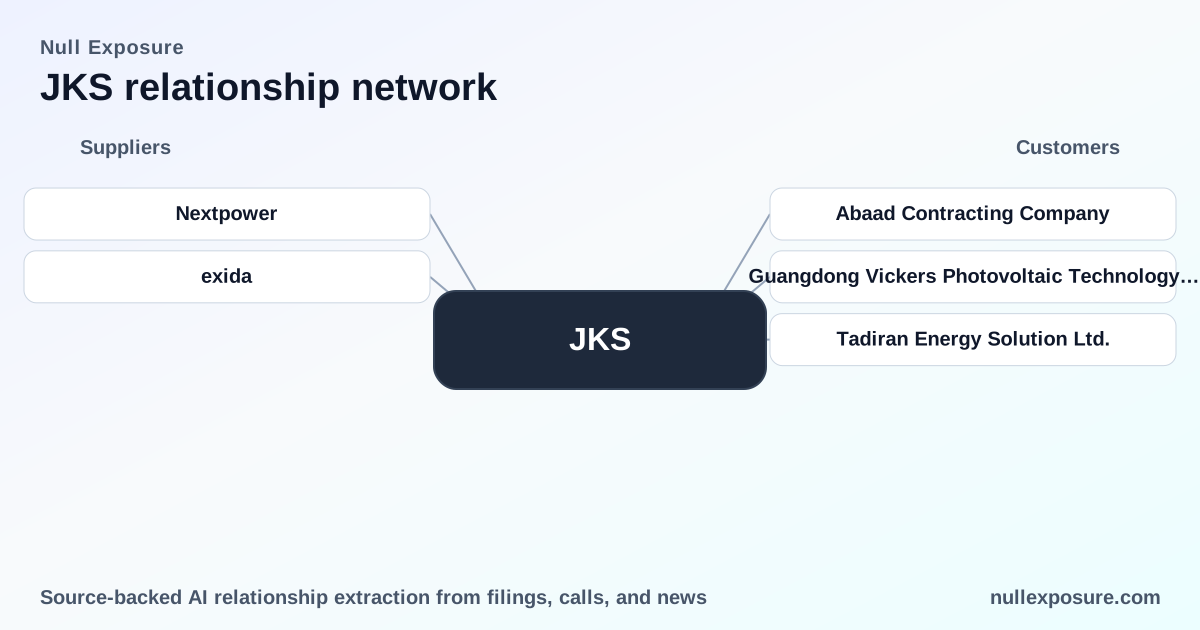
Below I summarize every supplier relationship identified in the review and provide the source for verification.
Nextpower — multi‑year steel‑frame supply for U.S. modules
Nextpower has entered a multi‑year supply agreement to deliver over 1 gigawatt of steel frames across three years, with production expected to start mid‑2026 to support U.S.–manufactured modules for JinkoSolar’s American unit. According to Intellectia’s March 10, 2026 news report and echoed by Finviz coverage on the same date, the deal is pitched as enhancing competitiveness for U.S. assembly and module scaling (https://intellectia.ai/news/stock/jinkosolar-jks-estimates-2025-net-loss-of-rmb-69-billion; https://finviz.com/news/167230/nuveen-increases-jinkosolar-holding-co-ltd-jks-amid-300m-share-sale).
exida — IEC 62443‑2‑4 cybersecurity certification for North America
JinkoSolar’s North American business unit received IEC 62443‑2‑4 certification from exida, reflecting adherence to secure development lifecycle practices for industrial automation and control systems, as reported by Intellectia on March 10, 2026. This certification signals elevated operational controls for manufacturing and SCADA systems in a regional unit that supplies modules to the U.S. market (https://intellectia.ai/news/stock/jinkosolar-jks-estimates-2025-net-loss-of-rmb-69-billion).
What these relationships imply for risk and execution
The Nextpower frame contract and exida certification together reveal a dual focus: securing physical inputs for U.S. assembly and hardening operational controls. That combination addresses two separate but related investor concerns—input availability and regulatory/commercial acceptance in critical markets.
- The Nextpower agreement indicates JinkoSolar is locking in a downstream assembly supply chain element within the U.S., reducing logistics and tariff friction for locally assembled modules and supporting near‑term volume growth in North America.
- The exida certification demonstrates process maturity required by sophisticated buyers and utilities; third‑party cybersecurity certification materially lowers buyer friction on grid‑connected projects and reduces non‑technical project risk.
These are execution‑level positives for scaling U.S. shipments. However, company financials show negative operating margins and quarterly revenue declines year‑over‑year, which keep supplier performance and cost pass‑through as central monitoring points for underwriters and portfolio managers.
For access to curated supplier maps and a concise risk scorecard for JinkoSolar, see https://nullexposure.com/.
Operating model characteristics — practical investor takeaways
Translate the signals into underwriting language:
- Contracting posture: Evidence of multi‑year supply deals (Nextpower) suggests JinkoSolar secures long‑lead, high‑volume components through bilateral contracts—this reduces short‑term procurement volatility but raises counterparty reliance on a small number of specialized suppliers.
- Concentration: The reporting shows specific gigawatt‑scale commitments for frames; if additional similar dependencies exist for cells, glass or other critical inputs, concentration risk elevates. The current intelligence does not list multiple frame suppliers, so treat single‑supplier gigawatt contracts as concentration that requires monitoring.
- Criticality: Frames and certified cybersecurity are operationally critical—frames affect module assembly throughput, and IEC 62443 compliance affects buyer acceptance in regulated procurement. Both have immediate commercial consequences.
- Maturity: exida certification is a positive governance signal: process maturity for industrial control and secure development lifecycle is now on record for the North American unit, improving the company's standing with large utilities and EPCs.
No relationship-level contractual constraints were reported in the results provided; investors should therefore focus on observable commercial terms and certifications when assessing execution risk instead of relying on disclosed covenants.
Investment implications and a pragmatic checklist
JinkoSolar’s supplier activity reflects a deliberate push to secure U.S. competitiveness and operational governance. For investors and operators evaluating exposure, prioritize these actions:
- Verify contract duration and termination terms for the Nextpower frame agreement and assess fallback sources for frames in the event of disruption.
- Confirm scope and coverage of the exida IEC 62443 certification—does it cover manufacturing control systems, factory acceptance testing, and firmware update processes?
- Monitor margin recovery versus procurement costs: supplier deals that lower landed cost per watt materially affect near‑term profitability for a company with negative operating margins.
- Track additional supplier announcements to detect concentration increases or diversification.
For a streamlined supplier-risk briefing and model-ready exposure report, visit https://nullexposure.com/ — we convert relationship intelligence into underwriter‑grade signals.
Bottom line
JinkoSolar’s disclosed supplier moves—gigawatt‑scale frames with Nextpower and exida cybersecurity certification—are strategic operational levers that reduce execution friction in the U.S. market. These developments improve commercial access and process governance but do not eliminate macro pricing pressure reflected in the company’s margins. Investors should treat supplier contracts and certifications as leading indicators for throughput and buyer acceptance, and maintain active monitoring of supplier concentration and contract terms.