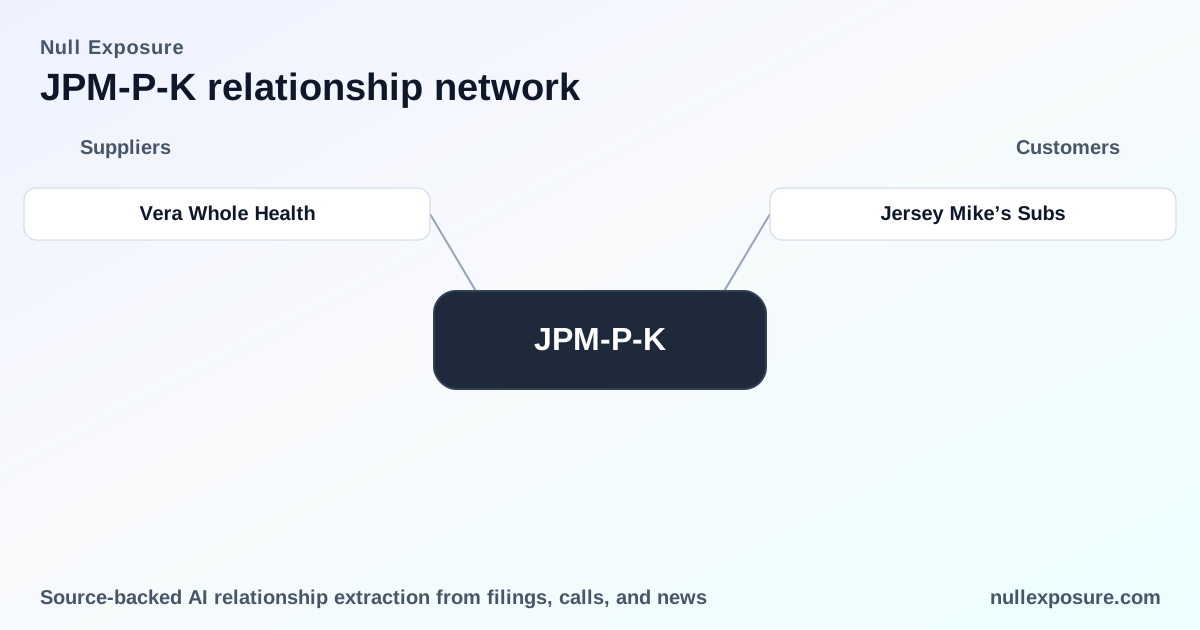
JPM-P-K: What investors should know about JPMorgan’s supplier relationships
JPMorgan Chase operates as a universal bank and financial services franchise that monetizes through diversified fee income, trading and underwriting revenues, asset management fees, and interest-related businesses across retail, corporate and institutional customers. For holders or analysts of JPM-P-K preferred shares, supplier relationships matter because they reveal where the firm outsources critical services that can influence operating continuity, employee productivity, and reputational risk. For a concise look at supplier touchpoints and practical implications, visit the Null Exposure homepage: nullexposure.com.
How JPMorgan’s operating model shapes supplier behavior
JPMorgan is a mature, global banking platform with centralized decision-making for enterprise-wide programs and decentralized execution across business lines. That operating model creates a set of predictable supplier dynamics:
- Contracting posture: As a Bulge Bracket bank, JPMorgan exercises strong negotiating leverage, routinely extracting enterprise-level pricing, SLAs, and indemnities from suppliers. Contracts typically reflect sophisticated risk allocation and regulatory compliance demands.
- Concentration and criticality: Supplier relationships vary from low-criticality commoditized services to high-criticality strategic partnerships (technology platforms, custody, specialized health services for employees). Concentration risk matters more in categories where switching costs are high or regulatory approvals restrict alternatives.
- Maturity and scale: JPMorgan’s maturity means many supplier engagements are long-term and integrated into core operations. That lowers short-term churn but raises governance requirements for vendor oversight and third-party risk management.
These signals shape what investors should watch when reading supplier disclosures or evaluating counterparty exposure for JPM-P-K investors: contract terms, indemnity and termination clauses, concentration in strategic categories, and the vendor oversight framework.
The supplier relationships in scope
Below is a concise coverage of every supplier relationship returned for JPM-P-K.
Vera Whole Health — employee health services
JPMorgan’s Morgan Health unit committed to offering Vera Whole Health’s services to JPMorgan employees during a benefits enrollment period, integrating Vera’s primary care and care-coordination model into employee benefits after Morgan Health launched as an internal health initiative following the unwinding of a previous joint venture with Amazon and Berkshire Hathaway. According to CNBC reporting from August 4, 2021, the engagement positions Vera as a provider in JPMorgan’s employer-facing benefits mix and reflects Morgan Health’s strategy to improve employee health outcomes. (CNBC, Aug 4, 2021)
What this single relationship signals for investors and operators
The Vera Whole Health relationship is a practical example of how JPMorgan sources specialized employee benefits services rather than building every capability in-house. From an investor and operational risk perspective, several conclusions follow:
- Strategic outsourcing of non-core expertise: JPMorgan prefers to partner with specialized providers for employee health programs, which reduces capital outlay and accelerates program deployment while placing emphasis on vendor performance and compliance reporting.
- Operational criticality is moderate-to-high: Employee health services touch workforce productivity and retention metrics; a failure or material provider disruption can carry reputational costs and indirect operational impacts.
- Regulatory and data governance implications are material: Health services entail sensitive data and regulatory obligations; contract terms and vendor controls determine the bank’s risk exposure.
- Limited direct counterparty credit exposure: Unlike cash custodial or funding partners, vendors like Vera represent operational rather than balance-sheet counterparties, shifting the risk analysis from credit metrics to service continuity and regulatory compliance.
Key takeaway: For JPM-P-K investors, supplier engagements such as this are operational levers that influence cost and workforce productivity, not direct balance-sheet credit exposures — but they carry reputational and governance risks that affect long-term franchise value.
Practical signs to monitor (how to watch for supplier risk)
Investors and procurement-focused operators should track a handful of observable indicators to evaluate supplier posture and JPMorgan’s vendor risk governance:
- Contract disclosure language in filings and proxy materials, especially around termination rights and indemnities.
- Public announcements and media coverage for changes to strategic programs like Morgan Health, which indicate evolving supplier roles.
- Employee benefit plan descriptions and changes during enrollment seasons, which reveal when new suppliers are being integrated.
- Regulatory filings or enforcement actions involving vendor data or compliance failures, which carry elevated investor risk signals.
For a deeper view into supplier disclosures and third-party risk, consult Null Exposure for supplier relationship intelligence: nullexposure.com.
Actionable steps for investors and procurement teams
Investors and operators can convert these observations into practical steps:
- Request or review governance disclosures that outline vendor oversight, SLAs and incident response protocols for high-criticality suppliers.
- Conduct scenario analysis on service disruption to quantify potential operational losses and reputational impact.
- Monitor changes to employee benefits programs each enrollment cycle; new supplier introductions are often announced in HR communications or press releases.
- Validate data protection and regulatory controls for any supplier handling health or personally identifiable information.
If you track supplier exposure across portfolios or need targeted supplier intelligence for due diligence, Null Exposure provides focused research and reporting: nullexposure.com.
Final read: balancing operational outsourcing with franchise resilience
JPMorgan’s use of third-party vendors like Vera Whole Health reflects a pragmatic strategy: deploy external specialists to improve employee outcomes while the bank preserves capital and focuses on core financial services. For JPM-P-K investors, that means supplier relationships are an operational risk vector rather than a direct solvency concern. The material investor risks are governance, reputational exposure, and the effectiveness of vendor controls — all of which are visible through careful monitoring of disclosures, program announcements, and regulatory interactions.
For investors who want to move from high-level signals to actionable supplier intelligence, explore tailored research and reporting options at Null Exposure: nullexposure.com.