JPM-P-M Supplier Relationships: What Investors Need to Know
JPMorgan Chase & Co. operates as a universal bank and monetizes through diversified banking franchises—investment banking fees, treasury and custody services, asset and wealth management, and retail banking—while specific securities like JPM-P-M (preferred stock) give investors exposure to the firm's capital structure. For investors evaluating supplier risk around JPM-P-M, the supplier footprint documented here is narrow and concentrated on custody/transfer and benefits administration exposures, which are operationally important but not material to capital generation. Learn more about how supplier relationships affect issuer risk at https://nullexposure.com/.
The supplier list: short, but operationally relevant
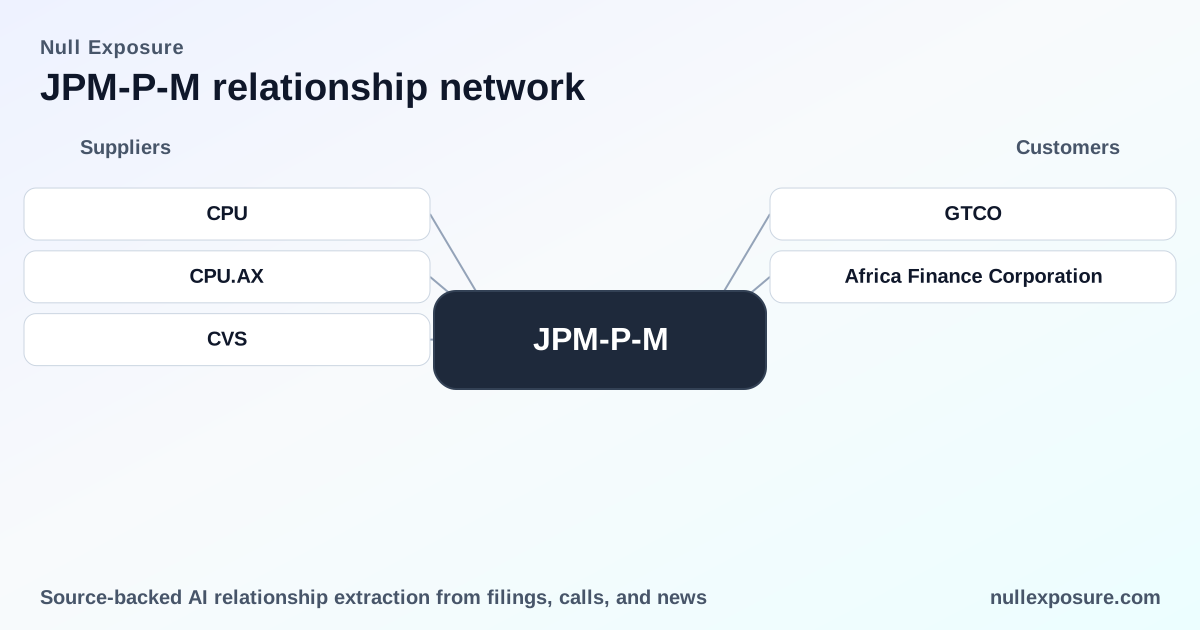
The gathered evidence identifies two external supplier relationships tied to JPMorgan Chase’s operational plumbing.
Computershare — transfer agent for preferred securities (FY2024, FY2025)
Computershare provides stock transfer agent services for JPMorgan Chase’s preferred-stock series, handling shareholder records and dividend distributions; JPMorgan’s investor-relations notices in FY2024 and FY2025 explicitly list Computershare as the transfer agent for declared preferred-stock dividends (FY2024 and FY2025 investor-relations releases). According to JPMorgan Chase IR announcements in 2024 and 2025, Computershare is the operational counterparty for preferred-holder servicing and dividend logistics (JPMorgan Chase IR, FY2024; JPMorgan Chase IR, FY2025).
CVS Caremark — litigation tied to employee benefits (FY2021)
A judicial development reported in 2021 involves CVS Caremark in a lawsuit alleging mismanagement of health benefits for JPMorgan employees; a federal judge allowed employees to pursue claims that include overpayments for prescriptions and premiums connected to CVS Caremark’s role in benefits administration (TradingView coverage summarizing the FY2021 action). The case is relevant to supplier oversight because it implicates employee-benefits administration and reimbursement processes that affect internal cost control and potential contingent liabilities (TradingView, FY2021).
What these relationships mean for investors
The supplier map for JPM-P-M is not broad—instead it concentrates on two operational areas that support the bank’s people and securities. That concentration produces clear, actionable signals about contracting posture, criticality, and supplier maturity.
- Contracting posture: JPMorgan uses established third-party service providers for highly standardized functions—stock transfer agency and benefits administration. This reflects a transactional contracting posture: long-standing, service-level driven engagements with regulated vendors rather than bespoke, strategic integrations.
- Concentration risk: The supplier inventory shown is low in count but high in functional importance. A disruption at a transfer agent affects shareholder communications and dividend processing; a disruption with benefits administration can create legal exposure and employee relations costs.
- Operational criticality: Both suppliers are operationally critical for specific processes—preferred-shareholder servicing and employee benefits—yet neither relationship is central to JPMorgan’s revenue engines (investment banking, trading, or asset management). These suppliers are therefore important to execution and compliance, not core profit generation.
- Maturity and governance: The named providers—Computershare and CVS Caremark—are mature, market-leading firms in their domains, indicating mature supplier selection and established contractual governance rather than start-up or single-source fragility.
These characteristics collectively indicate a supplier model that prioritizes operational reliability and regulatory compliance over strategic vendor dependency. For more context on supplier concentration and governance implications for financial issuers, visit https://nullexposure.com/.
Practical investor implications by channel
Computershare’s role makes dividend mechanics and shareholder recordkeeping a monitoring point for preferred investors: timeliness of distributions and accuracy of shareholder registers are the primary operational KPIs. For JPM-P-M holders, expect standard operational disclosures in investor relations notices when dividends are declared; Computershare’s presence signals conventional third-party handling, not an internal process risk.
The CVS Caremark matter highlights legal and contingency risk in benefits administration. Although the litigation stems from employee-benefits administration rather than securities operations, legal exposure tied to suppliers can create headline risk and contingent liabilities that affect overall credit perception. Investors should monitor legal filings and JPMorgan’s disclosures around contingent liabilities and litigation reserves.
Risk factors and monitoring checklist
Keep focus on a handful of practical indicators rather than a long vendor scorecard:
- Track JPMorgan Chase IR announcements for dividend declarations and any changes to transfer-agent arrangements (Computershare references were explicit in FY2024 and FY2025 IR releases).
- Watch legal docket updates and annual report litigation notes for supplier-linked contingent liabilities, particularly those tied to employee-benefits vendors.
- Evaluate JPMorgan’s supplier governance disclosures in SEC filings and proxy materials for evidence of periodic supplier audits, SLA enforcement, and transition plans.
These monitoring items translate operational supplier signals into investor-relevant risk assessment.
Bottom line and next steps
The supplier exposure for JPM-P-M is narrow and operationally focused: Computershare for transfer-agent duties and CVS Caremark in the context of a past benefits-related legal action. Neither relationship presents direct revenue dependency for JPMorgan’s core franchises, but both warrant operational and legal monitoring because they affect dividend servicing and contingent liabilities.
If you want continuous, structured visibility into supplier relationships and their implications for capital instruments like preferred stocks, explore the research tools and coverage available at https://nullexposure.com/. For an ongoing supplier-risk feed and analyst-ready supplier summaries tailored to capital markets due diligence, visit https://nullexposure.com/ to start a subscription or request a briefing.
Sources referenced in-text:
- JPMorgan Chase investor relations announcements detailing preferred stock dividends and listing Computershare as the stock transfer agent (IR releases, FY2024 and FY2025).
- TradingView coverage summarizing a FY2021 federal-court decision allowing JPMorgan employees to pursue claims related to CVS Caremark and benefits administration (FY2021).