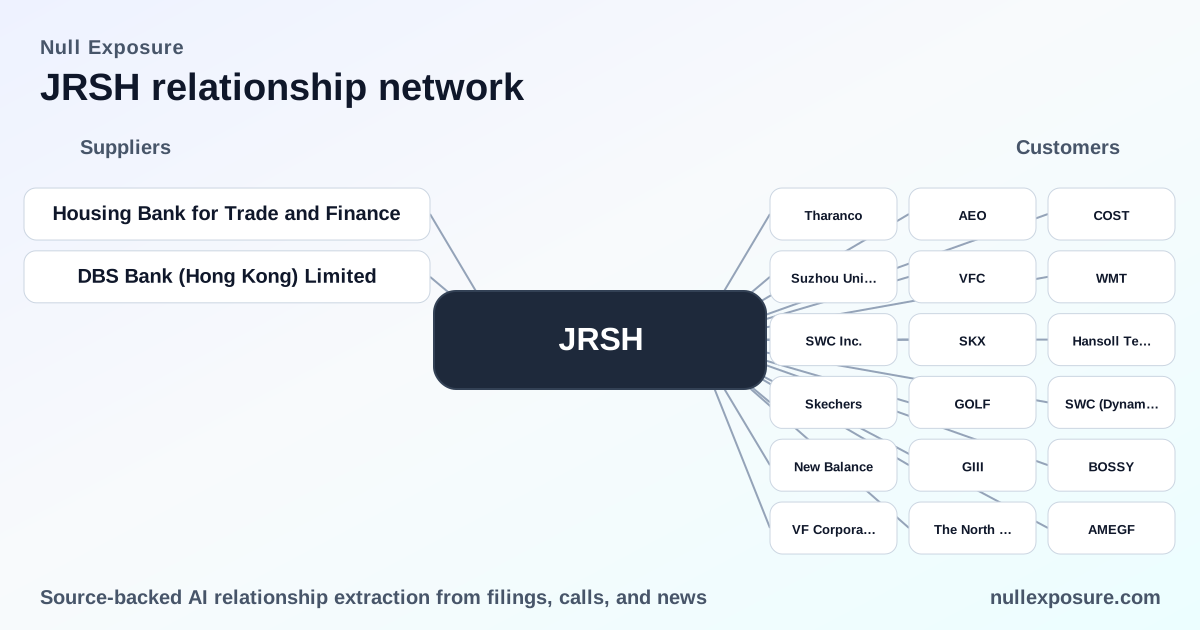
JRSH: A focused read on supplier and lender relationships that drive working capital
Jerash Holdings (JRSH) operates as a vertically integrated garment manufacturer through its Jerash Garments subsidiary, monetizing by producing apparel for third‑party customers while funding growth and operations through a mix of short‑term working capital facilities and targeted asset financing. Recent disclosures show the company is actively financing capacity expansion and sustaining inventory purchases via bank credit lines—an operational posture that links liquidity, supplier sourcing, and capital structure more tightly than peers that carry long vendor contracts. For investors, the key questions are how concentrated payables and spot sourcing affect margin volatility, and whether lender relationships provide durable capacity for both capex and raw‑material finance.
Explore more supplier intelligence on NullExposure.
What the recent filings and press coverage reveal about how JRSH runs the factory floor
Jerash’s public disclosures and news coverage converge on two themes: asset financing for manufacturing capacity and bank‑backed working capital for raw materials. In early‑2026 reports, Jerash committed a $0.6 million down payment to acquire a 184,000 sq. ft. manufacturing building in South Amman, and the Housing Bank for Trade and Finance underwrote the remaining purchase price with an eight‑year loan of $2.8 million; the first principal payment is scheduled for February 2027. Separately, Jerash utilized a $5.0 million credit facility from DBS Bank (Hong Kong) Limited for raw‑material purchases, with $4.5 million outstanding at the fiscal year‑end reported in FY2025.
These disclosures underscore a working‑capital reliant procurement model: Jerash buys fabric, zippers, and labels on purchase orders rather than under long‑term supplier contracts, and relies on bank facilities to bridge cash‑flow timing. That operating posture increases sensitivity to short‑term funding conditions and supplier pricing moves.
Company‑level operating constraints and what they imply
The company’s own language flags two actionable operating signals:
- Contracting posture — Spot purchasing dominates. Jerash states it does not maintain long‑term supply contracts; raw materials are purchased on a purchase‑order basis and customer designations often determine suppliers. This increases procurement flexibility but raises price exposure and execution risk if market or logistical conditions shift.
- Supplier concentration — Payables concentrated among a few vendors. As of March 31, 2025, the three largest suppliers accounted for 24%, 12%, and 11% of accounts payable respectively, which signals counterparty concentration on the supplier side even without named long‑term contracts.
Treat these signals as company‑level characteristics: superior for short‑cycle cost management and agility, but challenging for margin predictability and supplier negotiation leverage during tight markets.
Assess supplier concentration trends and lender exposures at NullExposure.
Counterparty roll call: each disclosed relationship, plain English, with sources
Housing Bank for Trade and Finance
Jerash Garments secured approval from Housing Bank for Trade and Finance to proceed with the purchase of a 184,000 sq. ft. manufacturing building in South Amman, where Jerash paid a $0.6 million down payment and the Housing Bank underwrote the remaining $2.8 million in financing over eight years, with the first principal payment due February 2027. This transaction positions the bank as a strategic asset lender supporting capacity expansion rather than just short‑term working capital. (Reported by TradingView and CityBiz, March 2026.)
DBS Bank (Hong Kong) Limited
Jerash utilized a $5.0 million credit facility from DBS Bank (Hong Kong) Limited to finance raw‑material purchases; $4.5 million remained outstanding at the FY2025 year‑end, reflecting material reliance on that facility for inventory funding. DBS functions here as a core working‑capital lender whose utilization level directly affects Jerash’s ability to maintain production throughput. (Disclosed in company filing coverage reported on TradingView, FY2025.)
Investment implications: where the risks and optionality sit
- Liquidity linkage: The combination of spot procurement and significant utilization of bank credit means bank covenants and access to trade finance are primary operational levers for JRSH; any tightening would compress working capital and delay capex servicing. Lender relationships are therefore critical to ongoing production.
- Concentration risk: With three suppliers representing a material share of payables, disruptions to any of these counterparties would have outsized operational impact. The lack of contract locks increases the immediacy of that risk.
- Capex financed externally: The Housing Bank facility converts a previously variable cost structure into a funded, amortizing liability tied to a specific real‑estate asset—this improves fixed‑asset coverage but introduces scheduled principal outflows beginning in 2027 that investors should model explicitly.
- Margin volatility: Spot sourcing buys flexibility but exposes gross margins to feedstock and freight swings; the working capital lines smooth timing but not price. Expect earnings sensitivity to cotton/fabric prices and shipping cost cycles.
Tactical considerations for investors and operators
Operators should prioritize resilience in working capital lines and diversify supplier relationships to lower concentration. Investors should monitor:
- Utilization levels of the DBS working capital facility at quarterly reporting.
- Scheduled amortization on the Housing Bank loan beginning February 2027 and any covenant language that could accelerate under stress.
- Changes in the composition of accounts payable and whether the company moves toward longer supplier contracts or trade‑finance instruments that reduce price exposure.
Bottom line and next steps
Jerash’s model is liquidity‑intensive and finance‑enabled: asset financing supports growth while bank lines sustain production. That combination offers upside if management preserves access to trade finance and reduces supplier concentration, but it also concentrates risk in counterparty and funding channels that investors must monitor closely.
For a deeper read on supplier concentration and lender exposure across small‑cap industrials, visit NullExposure for vendor intelligence and risk scoring: https://nullexposure.com/. If you track JRSH closely, set alerts around quarterly disclosures of facility utilization and the first principal payment window in early 2027. Learn more about how these supplier and lender signals shape valuation at https://nullexposure.com/.