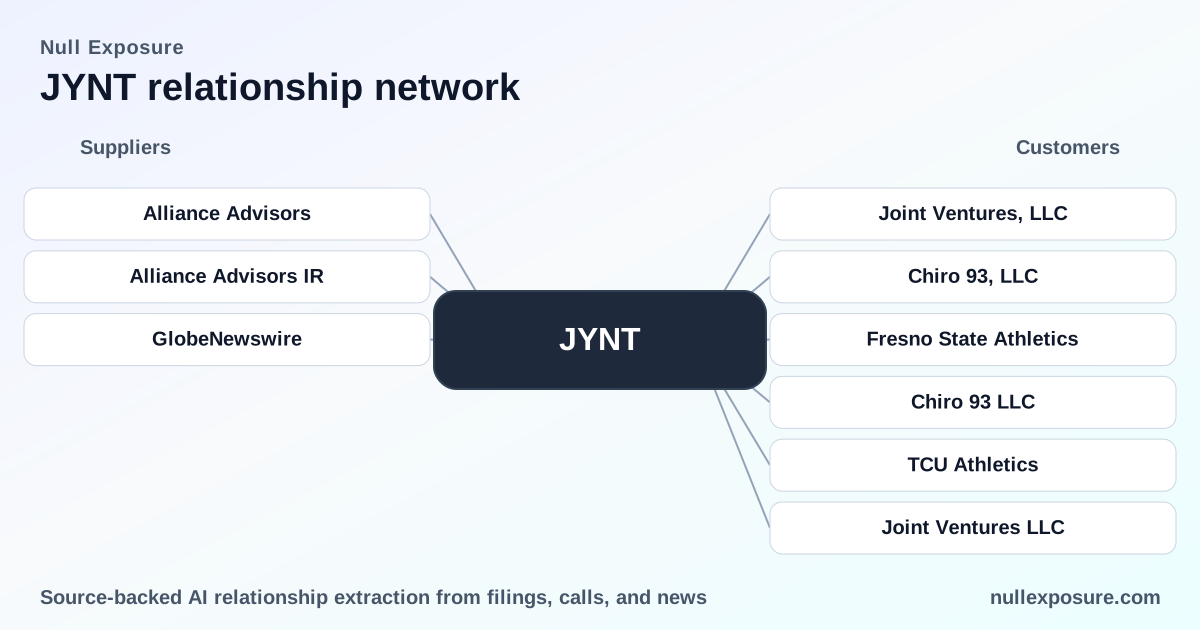
The Joint Corp (JYNT): How a franchised clinic operator monetizes growth and what its supplier/IR footprint reveals
The Joint Corp operates a franchised network of chiropractic clinics and monetizes through two parallel revenue streams: franchise and developer fees plus recurring royalties from franchised clinics, and revenue from company-owned clinics. Investors should view JYNT as a franchise-driven healthcare services operator where cash flow and margin expansion depend on development activity, same-clinic throughput, and the economics of regional developer agreements. For primary research and supplier checks, see more at https://nullexposure.com/.
How The Joint runs the business and collects fees
The Joint’s operating model is straightforward: it scales via franchising while retaining a portfolio of corporate clinics. Franchise growth produces upfront fees that subsidize regional developer payments, and a royalty stream—reported as roughly 3% in the company’s developer program language—contributes to recurring revenue. On the corporate side, clinic-level revenue and operating margins determine near-term profitability, while development pace drives top-line expansion. Market capitalization and trailing metrics confirm a small-cap profile: market cap around $126M, revenue roughly $54.9M trailing twelve months, and operating margin near 4.25% (company filings through FY2025–FY2026 periods).
What investors should watch in the supplier and IR landscape
Investor relations and media distribution are the visible suppliers in the public record; operational suppliers include franchise developers who act as service providers under exclusive territory agreements. Supplier relationships are not merely procurement: they are structural to the business model, because regional developers are both customers (franchisees) and compensated partners under the developer program, creating a blended supplier/customer dynamic that affects cash flow timing and concentration risk. For ongoing monitoring and intelligence, visit https://nullexposure.com/ for curated coverage.
Relationship inventory — the public record, item by item
Below are every relationship referenced in the collection of news and press distribution items associated with JYNT in the provided results.
-
Alliance Advisors / Alliance Advisors IR — The Joint’s investor relations firm is named repeatedly in press releases as the investor contact, listing Richard Land and contact details for investor inquiries, which centralizes investor communications through a single IR provider (GlobeNewswire press releases, December 11, 2025; January 5, 2026; February 26, 2026).
Source: GlobeNewswire releases (Dec 11, 2025; Jan 5, 2026; Feb 26, 2026) and QuiverQuant reposts that cite Alliance Advisors contact lines. -
GlobeNewswire — GlobeNewswire is the distribution channel used for The Joint’s official press releases, including announcements about clinic asset sales and executive appointments (for example, the December 11, 2025 asset purchase announcement and the January 5, 2026 appointment of Ron Stilwell as SVP Operations and Patient Experience). This indicates the company’s choice of a broad investor/media distribution service to reach capital markets and franchising stakeholders.
Source: GlobeNewswire press releases (Dec 11, 2025; Jan 5, 2026). -
QuiverQuant — QuiverQuant republished The Joint’s investor notices (for example the Q2 2025 results announcement referencing Alliance Advisors contacts), acting as a secondary news aggregator that amplifies distribution to retail and quant-focused audiences. The republished notices carry the same investor-contact details used in primary releases.
Source: QuiverQuant article on Q2 2025 financial results release (original press date Aug 7, 2025, republished).
Operating constraints and what they mean for supplier risk
Company-level signals from the constraints evidence reveal structural features investors must factor into supplier and partner assessments:
-
Contracting posture: The Joint uses a regional developer program that grants exclusive territorial rights and obligates minimum development targets; the company pays regional developers fees funded by initial franchise fees and collects a 3% royalty on sales in those territories. This is a hybrid franchisor-developer contract design that transfers some growth risk to developers while creating recurring royalty upside for the company.
-
Concentration and counterparty risk: Because the developer program relies on exclusive territories and minimum development commitments, a small number of regional developers can influence near-term expansion. That creates concentration risk in development pipelines, and supplier payments (developer fees and royalties) will be materially linked to developer performance.
-
Criticality and cash-flow sequencing: Developer payments are funded by initial franchise fees, so the timing between franchise sales and development milestones is critical. Cash collection timing and the ability to convert franchise sales into opened clinics are material to reported cash flows and working capital.
-
Maturity: The presence of a formal regional developer program with explicit royalties indicates an established franchising model rather than an early pilot—this is a mature franchising posture, though company financials (small market cap, modest operating margin) show the business is still scaling at a small-cap healthcare level.
These constraints are company-level signals derived from the program description and do not attribute contract terms to any single named supplier.
What the relationships and constraints imply for investors
The visible IR and distribution relationships (Alliance Advisors, GlobeNewswire, QuiverQuant) are standard capital markets suppliers: they don’t change operational economics but do control investor access and narrative. The real operational suppliers are the regional developers and franchisees embedded in the developer program, which are both partners and revenue sources. That dual role increases systemic importance: a handful of underperforming regional developers will depress royalty collections and slow reported growth, while strong developers accelerate reliable recurring revenue.
Key investment implications:
- Revenue growth is levered to franchising activity, not purely to organic same-clinic demand. Tracking franchise sales and territory conversion is essential.
- Cash-flow volatility risk exists because upfront franchise fees fund developer payments; the timing mismatch can compress operating liquidity in quarters with slower openings.
- Investor communications are centralized, reducing the risk of mixed messaging—Alliance Advisors is the primary IR contact across multiple releases.
For deeper supplier diligence and to monitor changes in partner composition, see our research hub: https://nullexposure.com/.
Near-term catalysts and risk checklist
- Catalysts: acceleration in franchise sales, successful conversion of developer pipeline into opened clinics, and same-clinic revenue recovery will drive upside to margins and free cash flow.
- Risks: concentrated developer obligations, timing mismatch between franchise fee receipts and developer payouts, and small-cap liquidity that can amplify market reaction to operational misses.
Watchlist items for the next quarters:
- Quarterly announcements and investor calls that detail the developer pipeline and clinic opening schedules (the company calendar has repeated Q2/Q4 reporting dates disclosed through IR releases).
- Any amendments to the regional developer program or changes to royalty structure disclosed in press releases or filings.
Bottom line and next steps
The Joint is a franchise-first healthcare operator whose supplier relationships—particularly its regional developers—are structural to revenue generation and cash-flow timing. Public-facing suppliers (IR and wire services) centralize external communication, while the developer program underpins growth with inherent concentration and timing risks. For active surveillance of JYNT’s supplier posture and to get structured, supplier-focused intelligence, visit https://nullexposure.com/.
Contact NullExposure for tailored diligence on franchisor-developer agreements and real-time supplier signal tracking.